

Beyond the Algorithm: Decoding Human Behavior for Creative Business Success.
Golden Hook & Introduction
SECTION
Nova: Atlas, five words. Describe the biggest business mistake creative people make.
Atlas: Passion projects, no people strategy. Boom.
Nova: Ooh, bold. My five words? "Algorithms don't buy art, humans do."
Atlas: That's a mic drop. And I think that hits right at the heart of what we're peeling back today.
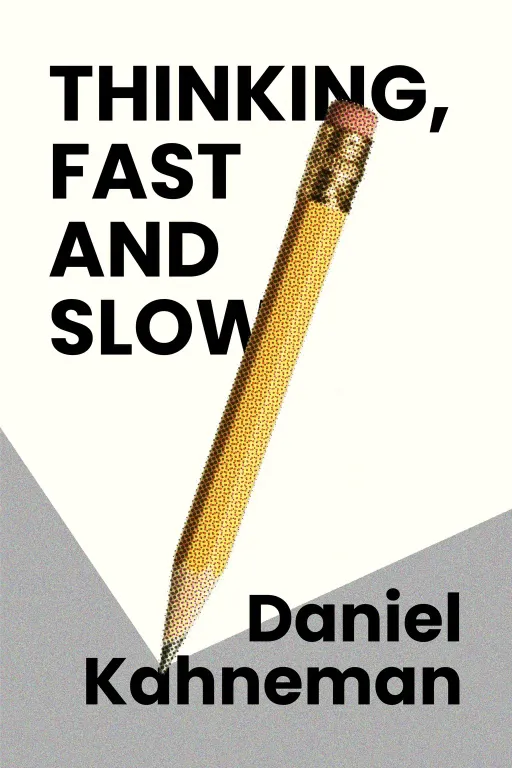
Nova: Absolutely. Because we're diving into two absolute titans of behavioral science that completely reshape how we understand decision-making. We're talking about Daniel Kahneman's "Thinking, Fast and Slow" and Robert Cialdini's "Influence."
Atlas: Two books that, frankly, should be mandatory reading for anyone trying to build in the world today.
Nova: Exactly. And what's fascinating is their origins. Kahneman, a Nobel laureate in Economics despite being a psychologist, completely reshaped our understanding of decision-making, showing how beautifully irrational we often are. And Cialdini? He spent years undercover, immersing himself in sales training programs and cults to understand the real-world mechanics of persuasion. He wasn't just theorizing; he was in the trenches.
Atlas: Wow. So, one's looking at the brain, the other's looking at the street. That's a powerful combination. It makes me wonder, Nova, why do so many creative entrepreneurs, the really talented ones, often hit this invisible wall? Is it truly a blind spot?
The Blind Spot: Overlooking Human Psychology in Business
SECTION
Nova: It absolutely is, Atlas. It's a huge blind spot. Think of it this way: many entrepreneurs, especially in creative fields, pour their heart and soul into creating an incredible product, a stunning piece of art, or a groundbreaking service. They focus on the.
Atlas: The craft, the output, the pure creation. Makes sense.
Nova: Right. But they often overlook the profound impact of human psychology on decision-making. They forget to ask people choose what they choose. Why do some brilliant albums never get heard? Why do some incredible paintings never sell? It's not always about the inherent quality of the art itself.
Atlas: Okay, but isn't it to be about the art? Isn't that the purest form of success—creating something beautiful, regardless of its reception? I imagine a lot of our listeners, especially aspiring artists, feel that deeply.
Nova: I get that. And the art paramount. But even profound art needs a bridge to the human mind, a way to cut through the noise. Kahneman helps us build that bridge with his two systems. He calls them System 1 and System 2.
Atlas: System 1 and System 2. Sounds like something out of a sci-fi movie. What do they?
Nova: System 1 is our fast, intuitive, emotional brain. It's what makes snap judgments, recognizes faces, and reacts instantly. It's the part of us that decides if something feels good or bad in milliseconds. System 2 is our slower, more deliberate, logical brain. It's what we use for complex calculations, deep analysis, and conscious decision-making.
Atlas: So, System 1 is gut feeling, System 2 is spreadsheets.
Nova: Exactly! Now, imagine a talented musician launches an album. They've poured years into perfecting every note. If they only focus on the musical brilliance, they're only speaking to System 2—the part of the brain that appreciates complexity and nuance. But if the album cover is unappealing, the song titles are confusing, or the marketing is non-existent, System 1—that fast, intuitive part—might just scroll past. It's not about being "less artistic," it's about being strategically smart about how your art is.
Atlas: I see. So for an actor trying to get cast, it’s not just about nailing the audition. It’s about making it easy for the casting director's System 1 to say 'yes' quickly, and giving their System 2 compelling reasons for a deeper look. Like a professional headshot, a well-organized reel, showing up on time, being prepared. All those little things that create a positive first impression.
Nova: Precisely. Those aren't just details; they're psychological cues that prime the decision-maker. It's about designing for human reception, not just for creative expression. And that naturally leads us to how we actually that behavior and ethically influence it.
Decoding Behavior: Kahneman's Systems & Cialdini's Principles
SECTION
Nova: This is where Cialdini's work in "Influence" becomes incredibly powerful. He outlines six universal principles of persuasion, and they are not about manipulation, but about understanding the levers of human decision-making. Let's focus on two that are particularly potent for creative professionals: Social Proof and Scarcity.
Atlas: Social proof, I get that. Like, if everyone's watching a show, I'm more likely to check it out. But how does an actor, say, social proof when they're just starting and don't have a crowd of fans yet? That's the real challenge for our listeners.
Nova: That’s a fantastic question. It’s not about faking it, but about amplifying what's or strategically creating genuine signals. For an emerging actor, social proof could be testimonials from respected acting coaches or directors, or a few early, genuine endorsements from peers. It could even be showcasing a small but enthusiastic audience at a local theater performance, even if it's not a sold-out stadium.
Atlas: So, it's about curating and highlighting the genuine positive reception, no matter how small, to signal value.
Nova: Exactly. Now, let's take a digital artist who creates stunning NFTs. They might struggle initially, despite incredible talent. But if they apply 'Scarcity'—say, by releasing limited editions of their art, or doing timed drops—they tap into a powerful psychological driver. People value things more when they perceive them as rare or hard to get.
Atlas: That’s interesting. So, it's not just about the art, it’s about the of the art’s availability. And if they combine that with social proof, like showing early buyers proudly displaying their pieces, it creates a powerful pull.
Nova: Absolutely. It's a one-two punch. Now, let's stretch this a bit. How do you use these principles, like social proof, to explain a complex concept like cybersecurity more effectively? Because that's a field where understanding human behavior is paramount.
Atlas: That’s a great challenge. Cybersecurity is often abstract, technical, and frankly, a bit scary for people. How do you make someone about multi-factor authentication or phishing scams?
Nova: You leverage social proof. Instead of just saying "you should use multi-factor authentication," you could say: "90% of businesses like yours that implemented multi-factor authentication experienced a data breach in the last year." You're showing that their peers, people they identify with, are taking action and getting results. Or, you share a testimonial from a respected industry leader who vouches for a new security protocol. It makes the abstract threat feel concrete, and the solution feel validated by trusted sources.
Atlas: That's brilliant. It makes the intangible tangible. It’s about making the solution feel like a collective, wise decision, not just a technical chore.
Synthesis & Takeaways
SECTION
Nova: Ultimately, whether you're building a creative empire, promoting your acting work, or securing digital assets, it's about understanding the human operating system. It's recognizing that we're all driven by these fundamental psychological principles, whether we're aware of them or not.
Atlas: It feels like these aren't just 'marketing tricks,' but tools for genuine connection, for understanding the audience you want to serve, whether that's with art or with critical information. It’s about empathy for how the human mind works.
Nova: Exactly. It's about building bridges, not manipulating. It's about respect for how human minds actually work and using that knowledge to ethically make your valuable creations or crucial information resonate. It empowers you to speak your truth, to connect, and to build the kind of freedom you're truly seeking, rather than just hoping your brilliance will magically find its audience.
Atlas: So, for our listeners, especially those juggling artistic ambition with a need for strategic planning, the takeaway is: your art is powerful, but knowing the human mind is the amplifier. Learn the language of human decision-making, and your impact will be undeniable.
Nova: That's a perfect encapsulation. Understand the human, and your creative business will thrive.
Nova: This is Aibrary. Congratulations on your growth!









