Beyond Right & Wrong: Why You Need Nuanced Thinking.
Golden Hook & Introduction
SECTION
Nova: Atlas, quick game! I’ll throw out a word, you give me the first thing that comes to mind, no overthinking. Ready?
Atlas: Oh, I love these! My brain is prepped for rapid-fire. Hit me.
Nova: Alright. "Decision."
Atlas: Regret.
Nova: Intense! Okay, "Logic."
Atlas: Uh… illusion.
Nova: Whoa, an illusion? You’re going deep already! Last one: "Instinct."
Atlas: Survival.
Nova: Survival! See, your brain just went on this fascinating journey from regret to illusion to survival, all tied to how we think. And that, my friend, is exactly what we’re diving into today—the incredible, often surprising, machinery behind our own judgments and why we need to move "Beyond Right & Wrong: Why You Need Nuanced Thinking."
Atlas: That makes me wonder, if my gut reaction to 'logic' is 'illusion,' what does that say about me? Or about our brains in general?
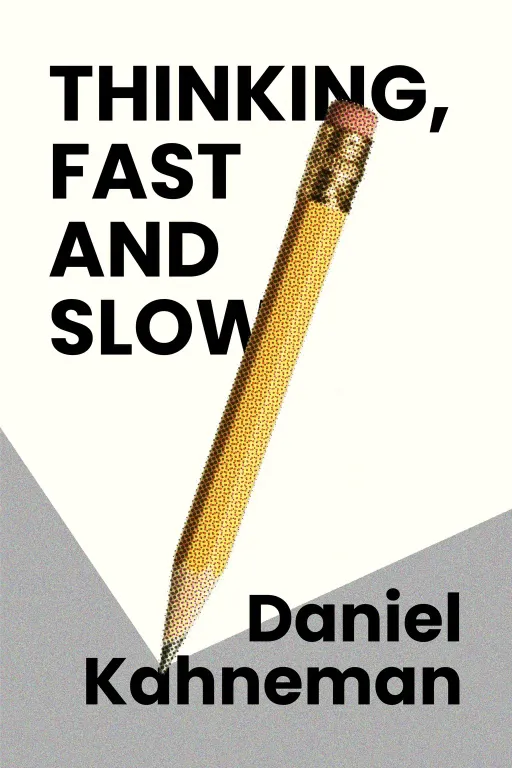
Nova: It says you’re already perfectly primed for today’s exploration! We’re going to unpack some truly revolutionary ideas from two foundational works in behavioral science: Daniel Kahneman’s Nobel Prize-winning "Thinking, Fast and Slow" and "Nudge" by Richard Thaler and Cass Sunstein.
Atlas: Kahneman won a Nobel in Economics, right? But he’s a psychologist. That always struck me as fascinating. What makes his work so pivotal that it crossed those academic boundaries?
Nova: Absolutely! That’s one of the most remarkable things about him. Daniel Kahneman, alongside his late collaborator Amos Tversky, fundamentally challenged the long-held belief that human beings are purely rational economic actors. They showed, with incredibly elegant experiments, that our minds often take shortcuts, leading to predictable biases. This wasn't just interesting psychology; it completely reshaped how economists understood decision-making, which is why he earned that Nobel. It’s about recognizing the complex machinery behind human judgment, not just assuming perfect rationality.
The Cognitive Blind Spot: System 1 vs. System 2 Thinking
SECTION
Nova: And that brings us to our first core idea: "The Cognitive Blind Spot." Kahneman introduced the world to two distinct systems of thinking. There’s System 1, which is fast, intuitive, emotional, and largely unconscious. It’s what you use to recognize a friend's face or slam on the brakes.
Atlas: Okay, so like my "regret" and "survival" answers—those were definitely System 1. Quick, automatic.
Nova: Exactly! Then there’s System 2: that’s your slow, deliberate, logical, effortful thinking. It’s what you use to solve a complex math problem or carefully plan your retirement.
Atlas: Hold on, are you saying our brains are secretly working against us sometimes, even when we think we're being totally rational? Because that sounds like a massive blind spot, mistaking one for the other.
Nova: It absolutely can be. System 1 is brilliant for efficiency, but it’s prone to biases. Let me give you a classic example. I’ll ask you a simple problem, Atlas. Don't overthink it, just tell me the first answer that comes to mind.
Atlas: Okay, I'm ready. My System 1 is on high alert.
Nova: A bat and a ball cost $1.10 in total. The bat costs $1.00 more than the ball. How much does the ball cost?
Atlas: Oh! Ten cents! Definitely ten cents.
Nova: That’s your System 1 talking. It’s fast, it’s intuitive, and it's… wrong. The correct answer is five cents. If the ball costs five cents, and the bat costs a dollar more, that’s $1.05 for the bat, making the total $1.10.
Atlas: Whoa. I totally just fell for that! I was so sure. My System 1 felt incredibly confident. That’s incredible how easily it can fool us. And I pride myself on being a self-reflector! How often do we make decisions like that, where our gut feeling is just confidently incorrect?
Nova: All the time! That feeling of certainty System 1 gives us is incredibly powerful, and it's why we often misinterpret our own and others' behavior. Think about first impressions. You meet someone, and within seconds, your System 1 has formed an opinion – trustworthy, not trustworthy, likable, not likable. It’s based on facial features, body language, past experiences.
Atlas: Right, like judging a book by its cover. We know we shouldn't, but it's almost impossible not to.
Nova: Precisely. And that snap judgment can then influence how you interpret everything else they say or do, even if your System 2 tries to be fair later. It creates frustration because we're reacting to these unconscious biases, not the full picture. So basically, our gut feelings are powerful, but not always reliable, and that's our blind spot. That makes me wonder, how often do we mistake that gut feeling for true rational thought?
Nudging Towards Better Decisions: Applying Cognitive Insights
SECTION
Nova: Exactly, Atlas. And once we realize that blind spot exists, the next step isn't to fight our brains, but to work them. That's where the idea of 'nudges' comes in, from Thaler and Sunstein's work in "Nudge."
Atlas: Nudges? Okay, so how do we 'nudge' ourselves or others without being manipulative? That sounds a bit out there, isn't it just mind control?
Nova: That’s a common and very valid concern. But the beauty of a nudge, as Thaler and Sunstein define it, is that it’s any aspect of the choice architecture that alters people's behavior in a predictable way. It’s about guiding, not forcing. Think about cafeteria design.
Atlas: Cafeteria design? How does that relate to my brain?
Nova: If you want people to eat healthier, you don't ban unhealthy food. You simply put the healthier options—the salads, the fruit—at eye level, at the beginning of the line. The less healthy options are still there, but they require a tiny bit more effort to reach. People are more likely to grab what’s easily accessible. That’s a nudge.
Atlas: That’s a perfect example! So, it's not about forcing people, it's about making the 'good' choice the easy choice. I’ve seen this with things like organ donation, where making it an opt-out rather than opt-in dramatically increases participation. What's even more interesting is that it preserves freedom of choice. But how does this apply to someone seeking personal growth, like our listeners who are trying to integrate new knowledge or make better personal decisions?
Nova: That’s the brilliant part! We can "self-nudge." If you want to read more, don't just to read; put the book on your pillow, or on your coffee maker. Make it the path of least resistance. If you want to eat healthier, chop up vegetables on Sunday so they're ready to grab when hunger strikes. You’re subtly influencing your future System 1 self by setting up an environment that makes the desired behavior the default.
Atlas: I totally know that feeling! It's like building guardrails for your future self. So, this isn't just about big government policies or corporate strategies; it's about tiny, intentional changes in our daily lives that leverage how our brains actually work, rather than fighting them?
Nova: Exactly! It’s about understanding that our environment and the way choices are presented have a profound impact on our decisions, often more than pure willpower. And once you grasp that, you can design your own world to support your goals, rather than constantly battling your natural inclinations. It's truly empowering.
Synthesis & Takeaways
SECTION
Nova: So, to bring it all together, understanding our cognitive blind spots – those moments when our fast, intuitive System 1 takes over – isn’t about judging ourselves. It’s about gaining awareness. And once we have that awareness, we can then apply the wisdom of nudges to design our environments and choices in a way that guides us toward better outcomes. It's about moving beyond a simplistic right and wrong to a more nuanced, empathetic, and strategic approach to decision-making.
Atlas: That’s actually really inspiring. It means we're not just victims of our biases; we can actively become architects of better decisions. It sounds like understanding these systems is a huge part of trusting your inner compass, as we often talk about, and dedicating quiet time to let new knowledge integrate.
Nova: Absolutely. True wisdom isn't just knowing the facts; it's knowing how your own mind processes those facts. It’s about that self-reflection. And that brings us back to the deep question we posed earlier: reflect on a recent decision you made. Can you identify where System 1 might have subtly influenced your 'rational' thought process?
Atlas: That's a powerful challenge for our listeners. It's not about finding fault, but finding insight. And it’s a journey that reveals that nuanced thinking isn't just an intellectual exercise, but a path to greater empathy, both for ourselves and for others.
Nova: Precisely. And that's a journey we're always happy to embark on with you.
Atlas: This is Aibrary. Congratulations on your growth!