Beyond Blueprint: Elevating Your Spatial Reasoning for Welding Mastery
Golden Hook & Introduction
SECTION
Nova: Atlas, quick, word association: 'Welding.'
Atlas: Sparks. Heat. Precision. And… a headache when the angle's off.
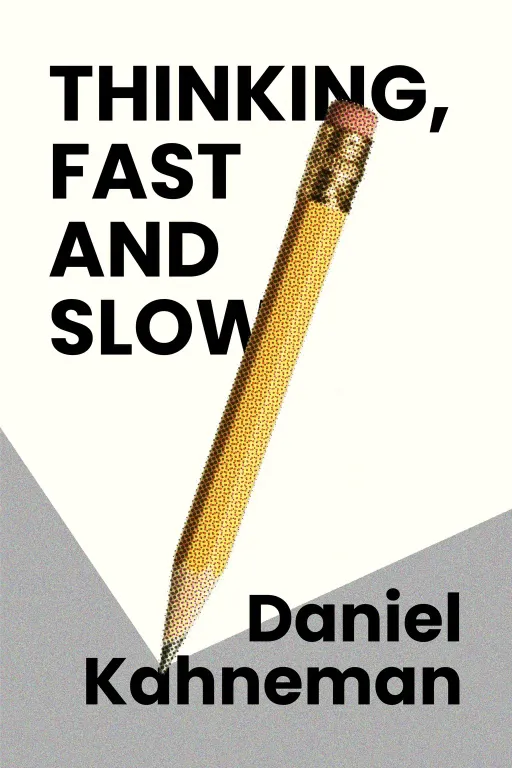
Nova: Exactly! That 'headache' is what we're tackling today, but from a surprising angle. We’re diving into a fascinating new perspective in our series, "Beyond Blueprint: Elevating Your Spatial Reasoning for Welding Mastery." And it all starts with the groundbreaking insights of Daniel Kahneman, the Nobel laureate who wrote the seminal book, 'Thinking, Fast and Slow.'
Atlas: Okay, Kahneman, a Nobel Prize winner in Economics, writing about how we think... but how does that translate to the very physical, hands-on world of welding? I mean, we're talking about metal, fire, and making things stick together, not stock market predictions.
Nova: That's the beauty of it. Kahneman completely revolutionized our understanding of how we make decisions, often irrationally. His work isn't just for economists or psychologists; it applies directly to domain where judgment and perception are critical, which absolutely includes the precise art of welding. He showed us that our brains have these incredible, almost hidden ways of processing information, and once you understand them, you can elevate your craft to an entirely new level.
The Brain's Dual Operating Systems: Instinct vs. Deliberation in Spatial Reasoning
SECTION
Nova: So, let's break down Kahneman's core idea: he describes two systems of thought, System 1 and System 2. Think of System 1 as your fast, intuitive, almost automatic thinking. It's what lets you recognize a friend's face instantly or react to a sudden noise. It’s your 'gut feeling.'
Atlas: Oh, I get that. For welders, that 'gut feeling' is often seen as experience, right? Like, "I just know this joint needs to be a little tighter" or "that angle just doesn't look right." It feels like a superpower when it's accurate.
Nova: It absolutely can be a superpower, but it also has a blind spot. System 2, on the other hand, is your slow, deliberate, and effortful thinking. This is what you use to solve a complex math problem, analyze a detailed blueprint, or consciously plan a multi-step project. It requires focus and mental energy.
Atlas: So, you're saying my 'gut feeling' about a joint isn't always my friend? For welders, that quick assessment is often prized as a sign of mastery. When is that fast thinking actually a superpower, and when does it become a liability?
Nova: That’s the million-dollar question. System 1 is fantastic for routine tasks, for recognizing patterns you've seen a thousand times. It makes you efficient. But when you encounter a novel situation, a complex joint with unusual angles, or even just subtle variations in material, System 1 can lead to overconfidence or subtle misjudgments.
Atlas: Give me an example. Like, a real-world welding scenario where System 1 might get you into trouble.
Nova: Imagine you're working on a large fabrication, and you've got a series of identical T-joints. Your System 1 is flying, making quick, accurate judgments about fit-up and tacking. You're efficient, you're in the zone. But then, you hit a section with a slightly different material thickness or a less-than-perfect cut from the shop. Your System 1 might still tell you, "Looks good, just like the others," because it's looking for familiarity.
Atlas: Huh. But if I'm not consciously engaging System 2 there, I might just trust that initial 'looks good' and proceed.
Nova: Exactly. And that's where the small misalignment happens, the tiny gap you didn't quite see, or the subtle distortion you didn't anticipate. It's often not a catastrophic error, but it's enough to require rework, grinding, re-welding, which costs time and material. That's System 1 giving you a quick answer that isn't quite right for the nuanced reality. The Nova’s Take on Kahneman's work really helps you recognize when to trust that quick 'gut' feeling and when you need to consciously slow down and apply deliberate spatial analysis.
Atlas: That makes me wonder about the aspiring crafter, someone who’s still building that intuitive System 1 database. They might be even more prone to these 'blind spots,' right? Because their gut hasn't seen enough variations yet to be truly reliable.
Nova: Absolutely. For them, consciously engaging System 2 is even more critical. It’s about building a robust mental framework that eventually a more accurate System 1. It’s about training your brain to 'see' more deeply, not just reacting to what's immediately apparent.
Conscious Cultivation of Spatial Acuity: Training Your 'Welding Eye'
SECTION
Nova: This leads us to the exciting part: how do we consciously train our System 2 to refine our System 1 for spatial reasoning? It’s about moving beyond mere instinct and actively cultivating what we call your 'welding eye.'
Atlas: Okay, so how do we actually 'train' our brain to see better? Is it just more practice, or something more strategic? For someone trying to master angles and length, this sounds like gold. What's a concrete exercise they could do to activate that System 2?
Nova: It's definitely more strategic than just mindless repetition. One powerful technique is deliberate practice with immediate feedback. Instead of just welding, you're actively setting up scenarios where you to find a spatial challenge. For instance, take two pieces of metal that you know have a slight deviation from perfectly square.
Atlas: Oh, I see. So you’re not just trying to make a perfect weld, you’re trying to the imperfection first.
Nova: Precisely. Before making a cut or a tack, spend 30 seconds visualizing the finished product in your mind. Run through the entire weld process, including how the heat might cause distortion. Then, compare that mental image to the actual blueprint and your physical setup. Where are the potential discrepancies? Where might System 1 trick you?
Atlas: That’s super interesting. So, it's like a mental dry run, forcing your brain to engage with the problem before your hands even touch the metal. It’s about anticipating the challenge, not just reacting to it.
Nova: Exactly. This forces System 2 engagement. You're not just looking at the angles; you're about the angles, the fit, the potential for pull, the tiny tolerances. Another technique is to break down complex spatial problems. If you have a large, intricate assembly, don't just look at the whole thing. Break it into smaller, manageable sub-assemblies. Focus on one joint, one plane, one set of measurements at a time.
Atlas: In other words, you’re saying don’t let the sheer complexity overwhelm your System 2. Chunk it down. That sounds like it could really help balance studies and practice for someone who feels like they have to learn everything at once.
Nova: It’s all about creating clarity for your deliberate thinking. And here’s a critical insight: after you make a weld, don't just move on. Take a moment to reflect. Did your initial 'gut feeling' about the angle or fit prove accurate, or did you need to re-evaluate? What did you learn from that re-evaluation? This feedback loop strengthens your System 2 and gradually refines your System 1. It’s how you move beyond just being good at understanding physical space to training your mind to 'see' even more deeply.
Synthesis & Takeaways
SECTION
Nova: So, what we're really talking about here is the profound power of self-awareness in mastering a physical craft. Elevating your spatial reasoning isn't just about better tools or more practice; it's about understanding how your own brain works, knowing when to trust your instinct, and when to deliberately engage your analytical mind.
Atlas: It’s truly a shift in perspective. It's about making our intuitive 'welding eye' sharper by consciously understanding its limits and how to refine it. It's not just about doing, but about about how you do, and that’s a game-changer for anyone aspiring to build a better future through their craft.
Nova: Absolutely. And for our aspiring crafters, remember, embracing small victories is key. Every lesson learned, every re-evaluation, every moment you consciously engage System 2 to refine a spatial judgment, is a step forward. Dedicate specific, short blocks of time to practice these mental fundamentals, not just the physical ones.
Atlas: That’s powerful. Think about your last welding challenge, your last struggle with an angle or a tricky fit. Could understanding your System 1 and System 2 have changed your approach? It’s not just about fixing the mistake; it's about preventing it by understanding your own cognitive process.
Nova: It's about empowering yourself from the inside out. We encourage all our listeners to start paying attention to those moments of 'gut feeling' versus 'deliberate thought' in their own work.
Atlas: We’d love to hear your insights on this. Share your experiences with us; we’re always keen to hear how these ideas resonate in your world.
Nova: This is Aibrary. Congratulations on your growth!