The Narrative Instinct: How Stories Shape Our Worldview
Golden Hook & Introduction
SECTION
Nova: Okay, Atlas, quick game. I'll give you a historical figure, you give me the title of their imaginary self-help book, based on their biggest 'narrative' contribution. Ready?
Atlas: Oh, I like this! Hit me. My brain's already churning.
Nova: Alright, first up: Julius Caesar.
Atlas: Hmm, Caesar... definitely "Conquer Your Gauls: A Guide to Empire Building and Self-Promotion."
Nova: Perfect! Okay, how about Joan of Arc?
Atlas: Joan of Arc... "Hear the Voices, Lead the Charge: Divine Guidance for the Reluctant Warrior."
Nova: Excellent! Last one: George Washington.
Atlas: Washington... "Chopping Down Lies: The Honest Path to Leadership and Nation-Building."
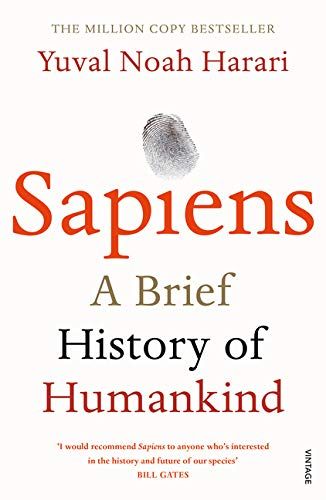
Nova: See? Even in these playful titles, we're doing it. We're crafting narratives. And that, Atlas, is precisely what we're dissecting today with a truly groundbreaking work: Yuval Noah Harari's "Sapiens: A Brief History of Humankind."
Atlas: Oh, I can see that. That book is a phenomenon. It's one of those rare reads that genuinely shifts your perspective, and it received widespread acclaim, though some of its more provocative claims certainly sparked debate among readers. Harari, a historian himself, has this incredible knack for making these vast, complex historical arcs feel incredibly personal and immediate.
Nova: Absolutely. And what Harari, along with other thinkers like Jonathan Gottschall in "The Storytelling Animal," posits, is that our ability to construct and believe in these compelling narratives taps into a fundamental human operating system. It's not just a nice-to-have; it's thing that allowed us to dominate the planet and build complex societies.
Atlas: That's fascinating, because when you say 'operating system,' you're not just talking about culture or communication, are you? You're implying something much more foundational, like the very code of human interaction. So, what exactly these 'shared fictions' that Harari talks about, and how did they become so central to our existence?
Shared Fictions as Human Operating System
SECTION
Nova: That's the perfect question. Harari argues that shared fictions are collective myths, laws, religions, currencies, nations – anything that exists solely because a large number of people believe it exists. Take money, for instance. A dollar bill has no inherent value. It's just a piece of paper. But because billions of people it has value, it allows for global trade and complex economies.
Atlas: Right, like the concept of a corporation. It's not a physical thing you can point to, but it has legal rights, it can own property, it can be sued. It's a story we all agree on.
Nova: Exactly! And this ability to create and believe in these shared fictions is what Harari calls the 'cognitive revolution.' Before that, early humans could only cooperate in small, intimate groups, maybe 150 individuals, because they needed direct, personal knowledge of each other – who to trust, who's reliable.
Atlas: So, you're saying our ancestors were limited by their social network size, essentially?
Nova: Precisely. But once we developed the capacity for shared fictions, for believing in common gods, laws, or national identities, suddenly you could get millions of strangers to cooperate towards a common goal. They don't need to know each other personally, only to believe in the same story. That's how you build cities, empires, and modern states.
Atlas: That's a profound thought. So, it's not just about language, but about the of that language – the stories we tell ourselves about who we are and what matters. It's like the ultimate trust protocol, built on shared imagination.
Nova: That's a great way to put it. It’s an invisible architecture. And the crucial part is that these fictions aren't lies in the malicious sense. They are necessary constructs that provide meaning, order, and purpose, allowing us to transcend our biological limitations of small group sizes. The American Dream, for example, is a shared fiction. It motivates millions, shapes policies, and defines a cultural identity, even if individual experiences vary wildly.
Atlas: I can definitely relate to that. For anyone who's ever tried to get a large team or organization to work together, you know that a compelling vision or a shared company culture – essentially, a shared story – is far more powerful than any top-down directive. Without that collective belief, things just fall apart.
Nova: And that's the power. Recognizing this power allows us to shape understanding at a societal level. It's how leaders, marketers, and even activists operate. They don't just present facts; they weave narratives that resonate with existing fictions or create new ones.
Atlas: So, when we look at, say, a geopolitical conflict, it's not just about resources or territory. It's about the clash of dominant narratives each side is telling themselves and the world. How do these 'fictions' drive their actions, and how do they rationalize their choices through those stories?
Nova: Absolutely. Understanding the narratives is often more critical than understanding the 'facts' as presented, because the facts are always filtered through a narrative lens. And this leads us to the deeper question: if shared fictions are the bedrock of human cooperation, what new narratives are needed to address global challenges, and how can we help craft them?
The Adaptive & Evolutionary Roots of Storytelling
SECTION
Atlas: That makes me wonder, if stories are so fundamental, is it just a cultural phenomenon we developed, or something deeper, hardwired into us? Like, are we literally 'the storytelling animal'?
Nova: Oh, we absolutely are, Atlas. That's where Jonathan Gottschall's work, "The Storytelling Animal," comes in. He explores the evolutionary roots of storytelling, suggesting that humans are not just of narrative, but are biologically to it. Our brains are narrative machines.
Atlas: Really? So it's not just something we, it's something we?
Nova: Exactly. Think about how much of our lives are spent immersed in stories – books, movies, TV, gossip, even our own internal monologues about our day or our future. Gottschall argues this isn't accidental. Stories serve crucial adaptive functions. For primitive humans, stories were a safe way to simulate dangerous situations, practice social interactions, and transmit vital information without direct, risky experience.
Atlas: So, like a virtual reality simulator for survival? Instead of encountering a saber-toothed tiger, you hear a story about someone who did, and you learn what to do.
Nova: Precisely! It's low-cost learning. And beyond survival, stories are powerful tools for social cohesion. They transmit moral codes, cultural norms, and shared values. Think about ancient myths or religious texts – they're not just histories; they're blueprints for behavior, narratives that define right and wrong, hero and villain. Robert Wright touches on this implicitly in "The Moral Animal," how narratives about morality and purpose have evolved to serve our genetic interests by fostering cooperation and group survival.
Atlas: That's actually really inspiring. It means our love for stories isn't a distraction; it's a feature, not a bug, of being human. It's how we learn empathy, how we understand consequences, how we build a sense of community.
Nova: And it goes even deeper. Stories help us make sense of a chaotic world. Our brains crave patterns, cause and effect. When something random happens, we instinctively try to weave it into a narrative to understand it, even if it means inventing connections. It's how we construct our own identities – the story of 'me' – and how we understand our place in the larger world.
Atlas: So basically you’re saying that if you're a strategic storyteller, you're tapping into something incredibly primal and powerful within the human psyche. It's not just about persuasion; it's about connecting with how people's brains are literally wired to process information and make decisions.
Nova: Absolutely. If you can craft a compelling narrative, you're speaking directly to that fundamental human operating system. You're not just communicating; you're shaping worldviews, influencing beliefs, and ultimately, driving action. This is why understanding cognitive biases, as our user profile suggests, is so crucial – because stories often exploit those biases, for better or worse.
Atlas: That makes perfect sense. For anyone who integrates complex data or tries to build compelling narratives, understanding these deep-seated instincts is the ultimate superpower. It's not about manipulation, but about effective communication that resonates at a profound level.
Synthesis & Takeaways
SECTION
Nova: So, what we've really explored today is that stories aren't just entertainment; they are the invisible architecture of human civilization and the very lens through which we perceive reality. From the grand shared fictions that allow millions of strangers to cooperate, to the evolutionary imperative that hardwired our brains for narrative, stories are everywhere.
Atlas: And it’s kind of breathtaking to realize that these 'fictions' – whether it's the concept of money, a nation, or a moral code – are what enable us to solve global challenges. It reminds us that if we want to change the world, we often need to change the story first.
Nova: Exactly. The power of narrative is immense. If you're someone who seeks deep understanding, who integrates complex data, and who builds compelling narratives, your ability to craft and influence these stories is perhaps the most potent tool you possess. It's about recognizing that your perspective matters, and dedicating time to free-form creative writing isn't just a hobby; it's sharpening a fundamental human skill.
Atlas: That's such a hopeful way to look at it. It means we all have a role to play in shaping the future by consciously choosing and crafting the narratives we live by. How we frame our challenges, our successes, and our shared humanity deeply impacts our collective trajectory.
Nova: Absolutely. And as we continue our journey into geopolitical forecasting and narrative theory, remember this: the future will be written by those who tell the most compelling stories.
Atlas: That's a powerful thought to end on. Thanks for breaking down such a profound concept, Nova.
Nova: My pleasure, Atlas.
Atlas: This is Aibrary. Congratulations on your growth!