The Art of Eloquence: Crafting Language for Maximum Impact
Golden Hook & Introduction
SECTION
Nova: You know, Atlas, there's this pervasive myth out there, especially in professional circles, that the more words you use, the smarter or more important your message sounds. As if verbosity equals gravitas.
Atlas: Oh, I know that feeling. It's like we've all been conditioned to believe that if you can't explain it in a five-paragraph email, you haven't really explained it at all. Or worse, you're not smart enough to understand it yourself.
Nova: Exactly! It's a trap. Because often, the opposite is true. The more words you stack up, the more you dilute your actual impact. It’s like trying to hit a target with a firehose instead of a laser pointer.
Atlas: That’s a great analogy. So, how do we trade in the firehose for the laser? Because for anyone trying to communicate complex ideas, whether it's in a boardroom or just explaining something intricate to a colleague, cutting through the noise without losing meaning is a superpower.
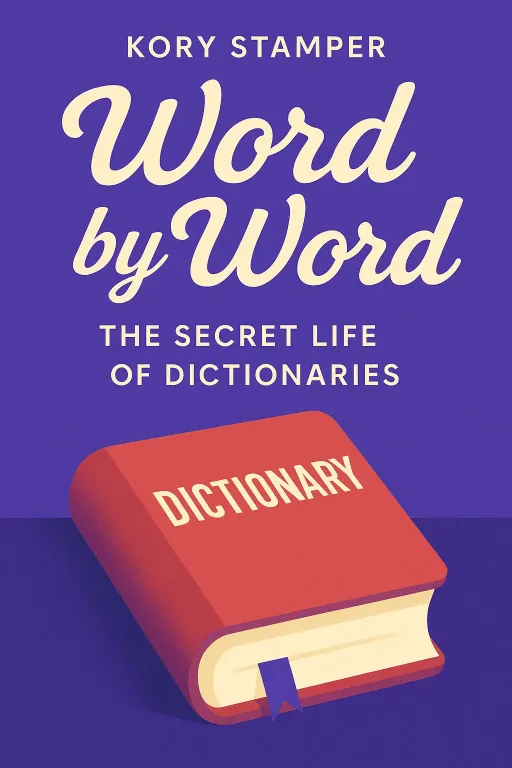
Nova: It absolutely is, and it's a skill that can be honed. Today, we're diving into two brilliant minds who dissect this very challenge: Kory Stamper, a lexicographer who literally writes dictionary definitions, and Steven Pinker, a cognitive scientist. We’re drawing insights from Stamper’s "Word by Word" and Pinker’s "The Sense of Style." Stamper's background as a dictionary writer gives her an almost surgical understanding of individual words, while Pinker, with his scientific lens, shows us how the human mind actually processes language.
Atlas: A lexicographer and a cognitive scientist—that’s a powerful duo for understanding language. So, we're talking about not just we say, but we build it, from the ground up, word by word, all the way to the full message?
Nova: Precisely. Today we'll dive deep into this from two perspectives. First, we'll explore the surgical precision of individual words and why every choice matters. Then, we'll discuss the broader architecture of constructing clear, graceful, and persuasive messages.
The Surgical Precision of Words: Why Every Word Counts
SECTION
Nova: Let's start with Kory Stamper and the idea of "surgical precision of words." Think about the work of a lexicographer. They are the ultimate guardians of meaning. They don't just define words; they trace their origins, observe their usage over time, and understand the subtle shifts in connotation.
Atlas: That makes me wonder, how does that meticulous, almost academic approach to individual words translate into something useful for someone who just needs to get their point across in a high-stakes meeting? Because I imagine a lot of our listeners feel like they don't have time to dissect every single word.
Nova: It's not about becoming a lexicographer yourself, but about understanding the mindset. Stamper reveals that words carry baggage—history, subtle implications, even emotional weight. When you choose a word, you're not just picking a label; you're invoking an entire universe of meaning. Take a word like "literally." For decades, it meant "in a literal sense; exactly as stated." But common usage has warped it to often mean "figuratively."
Atlas: Oh, that one drives me crazy! "I literally died laughing." No, you didn't. You're still here.
Nova: Exactly! And while language evolves, when you're trying to convey a complex, precise idea, using "literally" where you mean "figuratively" introduces ambiguity. It forces your listener to pause, to decode, to guess your intent. And that cognitive friction, however small, chips away at your impact.
Atlas: So, the goal is to choose words that resonate with exactness, not just for grammatical correctness, but for psychological clarity, so the listener doesn't have to do extra work?
Nova: Absolutely. It's about respecting your audience's cognitive load. Stamper's work shows us that every word has a job, and if it's not doing its job precisely, it's either creating clutter or causing confusion. Think about the common business jargon we hear: "synergy," "paradigm shift," "disruptive innovation." These words often sound impressive, but their actual meaning can be incredibly vague, making it hard to grasp the concrete action or idea behind them.
Atlas: Yeah, I can definitely relate. It's like people use those terms to sound authoritative, but what they end up doing is obscuring their actual message. It feels like a defensive mechanism sometimes, to hide a lack of clarity.
Nova: Precisely. Stamper argues that true confidence in communication comes from saying more with less. It's about cutting through that fluff. If you can't replace "synergy" with a few clear sentences describing actual collaboration and combined benefit, then perhaps you haven't fully articulated the concept yourself. The tiny step here, for instance, is to review your last email. Can you shorten three sentences by 50% without losing meaning? You'd be surprised how much fat you can trim.
Atlas: That’s a great challenge. Because for professionals who want to influence, not just inform, every word is a strategic choice. It’s like a surgeon choosing the right instrument—each one has a specific purpose, and you don’t just grab the biggest one for every cut.
Architecting Clarity: Building Persuasive and Enjoyable Communication
SECTION
Nova: That surgical precision with words naturally leads us to the second key idea, which often acts as a counterpoint to simply having a good vocabulary: how do you then those precise words into clear, graceful, and persuasive messages? This is where Steven Pinker, the cognitive scientist, steps in with "The Sense of Style."
Atlas: Okay, so beyond individual words, we're talking about the architecture of sentences and paragraphs? Because you can have all the right words, but if they're strung together poorly, it's still a mess. I imagine a lot of our listeners struggle with that balance—trying to articulate nuanced ideas without sounding like a textbook.
Nova: Exactly. Pinker introduces what he calls "classic style." His core idea is that good writing, and by extension, good communication, should present a clear window onto the world. The writer's job is not to call attention to themselves or their prose, but to allow the reader to see the ideas as directly as possible. It's about making the complex accessible, almost transparent.
Atlas: So, it's like the message should just into the listener's mind without them even realizing the effort that went into crafting it?
Nova: That’s a great way to put it. Pinker shows how to achieve this by understanding how the human mind processes information. He critiques common academic and corporate writing habits that make communication opaque. For example, he talks about the overuse of what he calls "nominalizations"—turning verbs into nouns. Instead of "We conducted an investigation of the problem," which is clunky, Pinker would advocate for "We investigated the problem." It's more direct, more active, and easier for the brain to process.
Atlas: That makes sense. It’s like, why use three words when one will do the job better? But how does this apply to someone trying to be persuasive? Because often, in professional settings, there's a perceived need to sound formal or complex to gain credibility.
Nova: That's a common misconception that Pinker dismantles. He argues that genuine clarity persuasive. When your message is easy to understand, it builds trust. It makes you seem more confident in your ideas, because you're not hiding behind convoluted language. Think about a presentation where someone rattles off a string of buzzwords and complex sentence structures. Do you feel enlightened, or just confused and a little intimidated?
Atlas: Confused, mostly. And then I start to question whether they even understand what they're saying.
Nova: Precisely. Pinker's principles encourage us to simplify sentence structure, use strong verbs, and arrange information logically so that the listener can effortlessly follow the thought process. It’s about constructing sentences that are not just grammatically correct but also psychologically engaging. It’s about guiding the listener through your ideas with grace, rather than forcing them to hack their way through a dense jungle of words.
Atlas: So, it's less about dumbing down, and more about smartening up the delivery. You're not oversimplifying the complex idea itself, but you're refining the way you present it so that its potency isn't lost in translation.
Nova: Exactly! It's about refining your thoughts to their most potent, crystalline form. It's an act of respect for your audience, allowing them to grasp your sophisticated ideas without unnecessary mental gymnastics.
Synthesis & Takeaways
SECTION
Nova: What we learn from both Stamper and Pinker is that true eloquence, the kind that commands attention and influences, isn't about how many big words you know, or how intricate your sentences are. It's about a deep respect for the power of language and the mind of your listener.
Atlas: It’s the discipline of a lexicographer meeting the clarity of a cognitive scientist. It pushes back against the idea that complexity equals intelligence. What it really says is that intelligence lies in making the complex understandable.
Nova: Absolutely. The confidence in communication that our listeners are striving for doesn't come from an endless stream of words; it comes from the discipline of thoughtful editing, of choosing each word with intention, and structuring every sentence to be a clear window onto your thought. It’s the difference between merely speaking and truly having an impact.
Atlas: That’s actually really inspiring. So, for our listeners who are looking to apply this immediately, what’s one tiny step they can take this week to start refining their language?
Nova: Here's a challenge: take the next important email or presentation you're drafting. Before you send it, go through it sentence by sentence. Identify three sentences that you can shorten by 50% without losing their core meaning. Cut the fluff, replace weak verbs, and see how much more potent your message becomes. You'll feel the difference, and your audience will too.
Atlas: That’s a powerful, actionable step. Because each word builds confidence, and each clearer sentence takes you closer to influencing your world.
Nova: This is Aibrary. Congratulations on your growth!