The 'Why' Beyond the 'What': Integrating Faith into Your Daily Purpose
Golden Hook & Introduction
SECTION
Nova: What if the biggest mistake you're making in your search for purpose isn't that you haven't found it yet, but that you're looking for it at all?
Atlas: Wait, are you saying purpose isn't something to be 'found'? That goes against everything I thought I knew! It's like, the ultimate quest, right? The holy grail of self-help books.
Nova: Exactly! And that's the radical idea at the heart of our discussion today, drawing from the profound insights of "The 'Why' Beyond the 'What': Integrating Faith into Your Daily Purpose." It's a powerful framework that challenges our conventional understanding of meaning and purpose.
Atlas: So, less about finding a pre-existing treasure map, and more about... building the treasure?
Nova: You've got it. The book immediately shines a light on what it calls "the blind spot." We're all conditioned to believe purpose is out there, a destination we need to reach, a job title, a specific achievement. But the real blind spot is forgetting that meaning isn't found, it's created. And your faith can be that deep well of creation, making every single action significant, not just successful.
'Meaning Isn't Found, It's Created': The Blind Spot of External Purpose
SECTION
Atlas: That's a huge paradigm shift for a lot of people, myself included. I imagine a lot of our listeners are thinking about their careers, their passions, their impact... all outward-facing things. But for a lot of people, their daily grind feels anything but 'meaningful.' How does faith specifically create meaning from the mundane? Like, how does it turn the ordinary into the extraordinary?
Nova: It's all about the lens through which you view your actions. Think of it this way: a bricklayer can see himself just laying bricks for a wall, earning a wage. Or, he can see himself building a cathedral, contributing to something sacred and enduring, a place of community and solace. The bricks are the same, the effort is the same, but the internal purpose, the 'why,' is entirely different. Faith provides that 'cathedral' vision.
Atlas: So, someone processing spreadsheets all day, or answering customer service calls, or even just doing chores at home… how does their faith transform that? It's still spreadsheets, or calls, or laundry. How does faith infuse significance into that without feeling like you're just putting a spiritual sticker on something you already dislike?
Nova: That's a brilliant question, Atlas. It's not about magically liking the task more, necessarily, but about the you bring to it. If your faith teaches you service, or stewardship, or excellence, then every spreadsheet becomes an act of diligent service. Every customer call becomes an opportunity to show compassion. Every chore becomes an act of caring for your domain, your family. It elevates the and the beyond the. It's about seeing your effort as a contribution to something larger than yourself, something divine.
Atlas: That's actually really powerful. It shifts the entire internal narrative from "I have to do this" to "I get to contribute to this." It's less about the external outcome and more about the internal offering.
Nova: Precisely. It turns the mundane into a form of worship, a quiet act of devotion that permeates your entire day. And that, in turn, fuels a deeper sense of inner peace.
Spiritual Growth as Practical Resilience: Reframing Challenges and Daily Tasks
SECTION
Nova: And once you shift that internal narrative, Atlas, what happens to challenges? They stop being just obstacles and become something else entirely. This is where the book dives into practical resilience, reframing everything through a spiritual lens.
Atlas: That's a fascinating next step. Because challenges are inevitable, right? And if we're constantly looking for meaning, what happens when life throws a wrench in the works?
Nova: Exactly. This is where the profound insights of Viktor Frankl, in his seminal work "Man's Search for Meaning," become incredibly relevant. Frankl, a psychiatrist, survived concentration camps during the Holocaust. His experience showed him that even in immense suffering, meaning wasn't absent. It could be found by choosing one's attitude. He observed that those who found a reason to live, who focused on what they offer life, rather than what life offered them, were far more resilient.
Atlas: That's an incredibly profound example, but it's also extreme. For listeners facing, say, a tough quarter at work, or a personal setback that isn't life-or-death, how does Frankl's wisdom translate? It's hard to compare a bad performance review to a concentration camp.
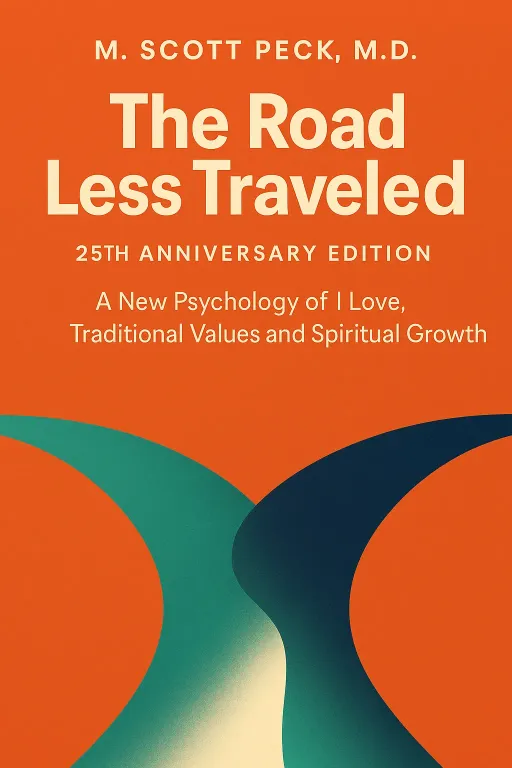
Nova: That's a crucial distinction, and it's important to acknowledge. But Frankl's core insight is universal: the final human freedom is the ability to choose your attitude in any given set of circumstances. Whether it's a concentration camp or a challenging work project, the principle holds. It's about how you to difficulty. Building on this, M. Scott Peck, in "The Road Less Traveled," takes it a step further. He argues that spiritual growth is a lifelong process of confronting and solving problems. Discipline and love, he says, are key to this journey.
Atlas: So, Peck's saying spiritual growth isn't just meditation and prayer, it's actually about doing the hard work of solving problems? That sounds like a very active, almost strategic approach to faith.
Nova: Precisely. It's like building muscle – you don't just wish for strength; you actively engage in the resistance. Faith isn't an escape from problems; it's the framework for approaching them with resilience and purpose. It's a practical tool for daily living. It empowers you to see challenges not as roadblocks to your purpose, but as integral parts of your growth, refining your character and deepening your spiritual understanding.
Atlas: That makes so much sense. It connects the spiritual directly to daily, practical living. It's not about adding another thing to your to-do list, it's about seeing your existing to-do list differently, especially the hard parts.
Nova: Exactly. It's about bringing your whole self, your spiritual self, to every aspect of your life.
Synthesis & Takeaways
SECTION
Nova: So, to bring it all together, Atlas, what we're really talking about is a profound shift. It's moving from the idea that purpose is a treasure hunt, to understanding that it's a creative act fueled by our faith. And that this faith, this internal wellspring, then transforms how we face everything – from the mundane to the monumental.
Atlas: It’s a powerful invitation, truly. The book’s core message, that integrating faith isn't about adding another task, but about seeing all tasks through a lens of deeper purpose and resilience… that’s a game-changer. It makes me think of the deep question posed in the book: how might viewing your daily tasks as spiritual contributions fundamentally alter your approach and inner peace?
Nova: It alters everything. It stops the endless striving for external validation, and replaces it with an internal wellspring of peace and significance. It means less burnout, more fulfillment, and a life lived with intentionality and profound meaning, regardless of the circumstances. It's about offering life your best, because your actions are infused with something greater.
Atlas: That’s such a hopeful way to look at it. It takes the pressure off "finding" and puts the power back into "creating." For anyone listening who's felt that deep down drive for purpose, this is a beautiful reframe. I encourage all of you to reflect on your own daily tasks. What if your work, your relationships, your hobbies – what if they're not just things you, but are actually spiritual contributions unfolding beautifully?
Nova: A powerful question, indeed. This is Aibrary. Congratulations on your growth!