The 'Compounding Advantage': Building Wealth That Lasts Generations.
Golden Hook & Introduction
SECTION
Nova: Everyone's chasing the next big stock, the hot crypto, the instant millionaire hack... but what if the real secret to lasting wealth, the kind that truly lasts generations, is actually incredibly boring?
Atlas: Whoa, boring? Nova, you just challenged every financial guru on social media with one word. I’m intrigued. You’re telling me all those flashy yachts and private jets aren't the blueprint?
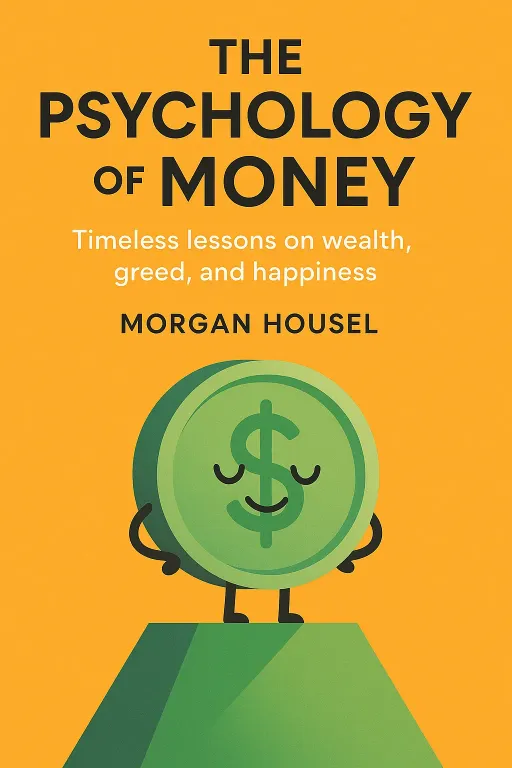
Nova: Absolutely not, Atlas. In fact, if you asked the true architects of generational wealth – not just those who got rich quick, but those whose financial principles endure across lifetimes – they’d tell you it’s far less about the flash and far more about the fundamental, often unglamorous, behaviors. Today, we’re diving into two foundational texts that shatter common misconceptions about wealth: "The Psychology of Money" by Morgan Housel and "The Millionaire Next Door" by Thomas J. Stanley and William D. Danko.
Atlas: These are classics for a reason, right? I know Housel, a former columnist for The Motley Fool and The Wall Street Journal, has a knack for making complex financial ideas feel incredibly intuitive. His insights always resonate with anyone trying to build something significant.
Nova: Exactly. He’s a master at distilling complex financial concepts into accessible, behavioral insights, which is why his work is so relatable. And Stanley and Danko’s research for "The Millionaire Next Door" was groundbreaking because it was based on extensive interviews with actual millionaires, revealing surprising truths about their everyday habits that completely challenged popular perceptions. They didn't just guess; they talked to the people doing it.
Atlas: I love that. It’s not just theory; it’s observed reality. For anyone out there thinking about not just accumulating wealth, but truly building a stable, enduring financial future for their family, these books offer a strategic roadmap. So, where do we start with this "boring" secret?
The Behavioral Edge: Mastering the Psychology of Money
SECTION
Nova: We start with behavior, Atlas, which is Housel's core premise. He argues that financial success is less about what you know—your IQ, your analytical skills, your market predictions—and vastly more about how you behave. Simple, consistent behaviors like saving and patience compound into significant wealth over time.
Atlas: That makes me wonder, how does that stand up to the volatility of markets? I mean, a lot of our listeners are strategic thinkers, they see the big picture, but markets can be anything but predictable. How does behavior trump sheer market knowledge when things get turbulent?
Nova: That's a brilliant question, and it's where Housel really shines. He tells a story, or rather illustrates a truth, about "getting rich versus staying rich." He points out that getting rich often involves taking risks, being optimistic, and sometimes even being aggressive. But staying rich? That requires the opposite: a healthy dose of paranoia, a commitment to frugality, and the humility to understand that luck plays a role. Many brilliant investors have lost everything because they couldn't rein in their greed or their need for more. They got rich, but their behavior prevented them from staying rich.
Atlas: So it's not about being the smartest person in the room, but about having the most disciplined character? That's a massive shift in perspective. I imagine a lot of our listeners, who are building for their family's future, might find that both reassuring and challenging.
Nova: Precisely. Housel emphasizes that the biggest financial returns often come from consistency and patience, not from trying to time the market or chase the next hot trend. He gives the example of Warren Buffett, whose wealth isn't just because he's a good investor, but because he's been a good investor for seventy years. That's compounding at its finest – not just of money, but of good habits, of staying invested, of resisting panic, and avoiding impulsive decisions.
Atlas: Oh, I like that. Compounding good habits. But what about the endless pursuit? The "more, more, more" mentality? For someone driven by legacy, there's always the desire to do more, earn more, leave more. How does Housel address that insatiable drive?
Nova: He talks about knowing "enough." Defining "enough" is crucial. The highest form of financial sophistication, he suggests, is the ability to stop moving the goalposts. When you understand that the goal isn't just accumulating the most, but achieving financial independence and security, your behavior shifts. It’s about not risking what you have and need for what you don’t have and don’t need. It's a strategic choice to protect your downside, which is a cornerstone of lasting wealth.
The Unseen Wealth: Frugality, Hard Work, and Living Below Your Means
SECTION
Atlas: Protecting your downside, knowing "enough"—that sounds like a perfect bridge to our next insight. Because if you’re trying to protect what you have, you’re probably not spending it all.
Nova: You've got it. This brings us to "The Millionaire Next Door," a book that completely redefined what "wealthy" actually looks like. Stanley and Danko's extensive research revealed that the vast majority of millionaires don't live in flashy mansions, drive luxury cars, or wear designer clothes. Their findings were counterintuitive to popular culture, which often equates wealth with conspicuous consumption.
Atlas: So, the image we have of a millionaire, the one plastered all over media, is largely a myth? That’s going to resonate with anyone who’s ever felt like they’re not keeping up. What did their research actually uncover about these "millionaires next door"?
Nova: They found that true wealth is often built through consistent frugality, hard work, and, critically, living below your means. Imagine a typical millionaire from their book: a small business owner, maybe a dentist or an accountant, who drives a reliable, older model car, wears practical clothes, and lives in a comfortable but not extravagant home in an average neighborhood. This person diligently saves a significant portion of their income, invests it wisely, and avoids consumer debt like the plague. They're not focused on projecting an image of wealth; they're focused on actually building it.
Atlas: That’s actually really inspiring. It means wealth isn't just for the lucky few or the high-flying entrepreneurs. It’s accessible through discipline. But, for someone who’s a nurturing provider, someone who wants to give their family the best, isn’t there a tension between frugality and providing?
Nova: That’s a thoughtful point, Atlas. This frugality isn’t about deprivation; it’s about strategic allocation of resources. It's about distinguishing between needs and wants, and prioritizing long-term financial security over short-term gratification. For a nurturing provider, it means providing security and opportunity, not just fleeting luxuries. It’s about teaching your children the value of money, the power of saving, and the importance of financial independence, rather than simply showering them with material possessions. It instills principles that allow wealth to grow and sustain across lifetimes.
Atlas: So it's not just about accumulating money for yourself, it's about building a financial ecosystem that can support future generations. It’s about discipline and foresight, ensuring the foundation is solid.
Nova: Exactly. These "millionaires next door" understood that true freedom comes from financial independence, not from being enslaved by debt or the need to impress others. They were strategic architects of their own financial futures, building stable foundations for their families.
Synthesis & Takeaways
SECTION
Nova: So, when we bring these two powerful ideas together – Housel's emphasis on behavioral mastery and Stanley and Danko's revelation of the practical habits of the truly wealthy – a clear picture emerges. Generational wealth isn't a stroke of luck or a product of complex financial wizardry.
Atlas: It sounds like it’s a deliberate, disciplined journey. For someone focused on legacy, on securing their family’s future, what’s the single most important takeaway from these insights?
Nova: The most crucial takeaway is this: focus on instilling principles and habits, not just passing down large sums of money. Teach financial literacy, delayed gratification, and the power of consistent saving and investing. A large inheritance can be squandered if the recipients lack the behavioral discipline or the practical habits to sustain it. True generational wealth is built when each generation understands and practices these core tenets.
Atlas: Wow. That's such a hopeful way to look at it. It means everyone has the power to start building that legacy, regardless of their current financial standing. So, if we had one "tiny step" for our listeners to take today, what would it be?
Nova: My tiny step for everyone listening is to review your current spending habits. Identify just one small area where you can consistently save or invest more each month. It could be cutting back on unused subscriptions, packing your lunch more often, or simply automating a small transfer to a savings account. Start small, stay consistent, and let those good behaviors compound.
Atlas: And that consistency, that strategic, long-term mindset, that's what truly builds a foundation that lasts. Not just for ourselves, but for those we care about most.
Nova: Absolutely. It’s about building a legacy of financial wisdom, not just a legacy of money.
Atlas: This is Aibrary. Congratulations on your growth!