Stop Guessing, Start Building: The Guide to Financial Clarity.
Golden Hook & Introduction
SECTION
Nova: Forget what you think you know about making smart money moves. Turns out, your bank account cares less about your IQ and a lot more about your emotional intelligence.
Atlas: Whoa, hold on. Are you saying all those spreadsheets and financial models I've meticulously built might be less important than how I felt on Tuesday morning? That sounds a bit out there for someone who prides themselves on pure logic.
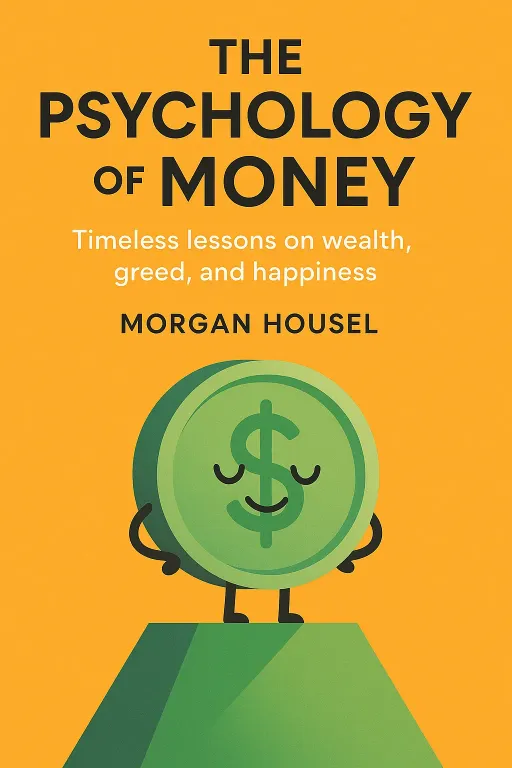
Nova: Absolutely, Atlas! And that's exactly what we're diving into today, inspired by the incredibly insightful book, "The Psychology of Money" by Morgan Housel. Now, Housel isn't just any financial guru; he's a long-time financial columnist known for his incredible ability to weave complex behavioral economics into compelling narratives. He makes you see money not just as numbers, but as a mirror reflecting our deepest human flaws and triumphs.
Atlas: Okay, so it's not about being 'smart' enough, but about understanding your own story, your own quirks, when it comes to money. That’s a fascinating angle, especially for our listeners who are always striving for mastery in every area of their lives.
Nova: Exactly. Because the cold, hard fact is, financial planning isn't just about cold, hard numbers. It's deeply tied to human behavior. Many intelligent people, brilliant strategists even, make poor financial decisions due to emotional biases. Understanding these patterns is crucial for securing your wealth and achieving long-term goals.
The Emotional Undercurrents of Financial Decisions
SECTION
Atlas: That resonates. I imagine a lot of our listeners, the disciplined achievers, often approach finance like a complex equation. They expect that if they just gather enough data and apply enough logic, the optimal outcome will appear. But you're suggesting there's a ghost in the machine.
Nova: There absolutely is. Housel reveals that personal history and unique perspectives heavily influence financial choices in ways we rarely acknowledge. Think about it: two people come into the exact same amount of money. One grew up in scarcity, seeing every dollar as precarious, prone to saving excessively even when wealthy, maybe missing out on growth opportunities due to fear. The other grew up in abundance during a boom, perhaps taking risks that seem reckless to others, purely because their lived experience taught them the market always bounces back.
Atlas: So, it's like their financial worldview is hardwired by their past, almost unconsciously. That's a powerful idea. But for someone who prides themselves on logic and strategy, how do you even begin to untangle these deep-seated emotional patterns? It sounds like trying to debate with your own subconscious.
Nova: It's precisely about recognizing that debate is often futile. Rationality in money is often less important than emotional intelligence and resilience. Housel gives a powerful example of how the stock market crash of 1929 and the subsequent Great Depression shaped an entire generation's relationship with risk. People who lived through that trauma often remained intensely conservative with their money for decades, even when economic conditions improved dramatically. Their lived experience trumped any rational analysis of market fundamentals.
Atlas: Wow, that gives me chills. It’s not just about what happened, but it happened to you. So, if your formative financial experiences were during a period of instability, you might forever view the market with suspicion, regardless of what the data says today. That’s a real challenge for a practical strategist trying to build a resilient future.
Nova: It is. It teaches us that our personal experiences are so powerful they can often override even the most compelling data. It's why two economists, looking at the exact same data, can come to wildly different conclusions about the future of the market. Their personal histories, their psychology, are always at play.
Atlas: That's incredible. So basically, you're saying mastering your money means mastering your mind first. It’s about acknowledging those emotional biases, not trying to brute-force logic over them, which is probably an exhausting and losing battle anyway.
Automating Your Way to Financial Freedom
SECTION
Nova: Precisely. And once we acknowledge those emotional undercurrents, the next step isn't to fight them head-on, it's to build a system that bypasses them entirely. This is where Ramit Sethi's "I Will Teach You To Be Rich" comes in, offering a brilliant counterpoint. Sethi is known for his direct, no-nonsense approach to personal finance, challenging conventional wisdom and focusing on actionable strategies that deliver "big wins." He really resonated with a generation seeking practical financial freedom without the guilt trips.
Atlas: I’ve heard of Sethi. He’s the guy who tells you not to worry about the latte, but to focus on the big levers, right? That sounds like music to the ears of a disciplined achiever who wants to optimize their efforts.
Nova: Exactly! Sethi emphasizes automating your finances and focusing on those big wins. It's about setting up systems that work for you, removing the need for constant, emotionally-driven decisions. Think of it this way: if you're constantly debating whether to save or spend, you're exposing yourself to all those emotional biases Housel talks about every single day.
Atlas: So, it’s about building a financial fortress that's immune to our bad moods and irrational impulses. That makes perfect sense. But for someone already juggling a demanding career and personal growth goals, isn't setting up "automated systems" just another thing on the to-do list? How do we make it truly frictionless?
Nova: The beauty of automation is that it's a one-time effort for a lifetime of benefit. Sethi gives the example of someone who spends hours clipping coupons and agonizing over every small purchase, but has never taken the time to automate their 401k contributions or negotiate a higher salary. They're fighting the small battles emotionally, while losing the war strategically.
Atlas: Ah, I see. It's not about adding more tasks, it's about front-loading the smart decisions. You set up the automatic transfer to your investment account, you automate your bill payments, and then you don't even have to think about it. It removes the emotional friction entirely. That’s a great way to put it, especially for someone who values efficiency and tangible results.
Nova: It truly is. By automating, you're essentially pre-committing your future self to smart financial behavior. You're building robust systems that act as guardrails, protecting you from your own emotional whims, impulse buys, or simply the exhaustion of decision fatigue. It frees up your mental energy to focus on what truly matters, whether that's your career, your fitness, or your relationships.
Atlas: That’s actually really inspiring. It connects directly to the idea of building a better future, which is something our listeners are deeply driven by. It’s not just about accumulating wealth, but about building a secure, resilient foundation that supports all other areas of growth.
Synthesis & Takeaways
SECTION
Nova: Absolutely, Atlas. The profound insight here is that true financial clarity and lasting wealth don't come from being a financial genius or perpetually stressed about every penny. It comes from the powerful combination of understanding our inherent human psychology, which Morgan Housel so brilliantly illuminates, and then building the smart, automated systems that Ramit Sethi champions to work that psychology, not against it. It's mastering your mind first, then building smart, automated systems.
Atlas: That’s a fantastic synthesis. So, for our listeners who are ready to stop guessing and start building, who are ready to take that analytical mind and apply it to their own financial behaviors, what’s one tangible, non-negotiable step they can take this week to bridge that gap between emotional understanding and automated action?
Nova: Here's the tiny step: identify one recurring financial decision driven by emotion—maybe it's that impulse online purchase, or the hesitation to invest more when the market dips—and devise a simple, automated rule to counter it this week. For that impulse buy, set an automated transfer of an equivalent amount directly to your savings every time you feel the urge. Build that small, automated firewall.
Atlas: That’s a very practical strategy. It’s about taking control, not by willpower, but by smart design. It really empowers the "Resilient Builder" in all of us to proactively shape our financial future.
Nova: Financial freedom isn't about how much money you have. It's about how much control you have over your decisions, and ultimately, your life. It's a mental game, played with smart systems.