Beyond Balance Sheets: The Unseen Power of Financial Freedom.
Golden Hook & Introduction
SECTION
Nova: Atlas, rapid-fire for you: "Money." What's the first thing that comes to mind?
Atlas: Oh man. Stress. Numbers. Never enough. The constant juggle.
Nova: Ah, the usual suspects! You nailed the common perception. But what if I told you the real game isn't actually in the numbers, the spreadsheets, or even the stock charts?
Atlas: Wait, really? Because it definitely like a numbers game when I'm trying to balance everything. What else could it possibly be?
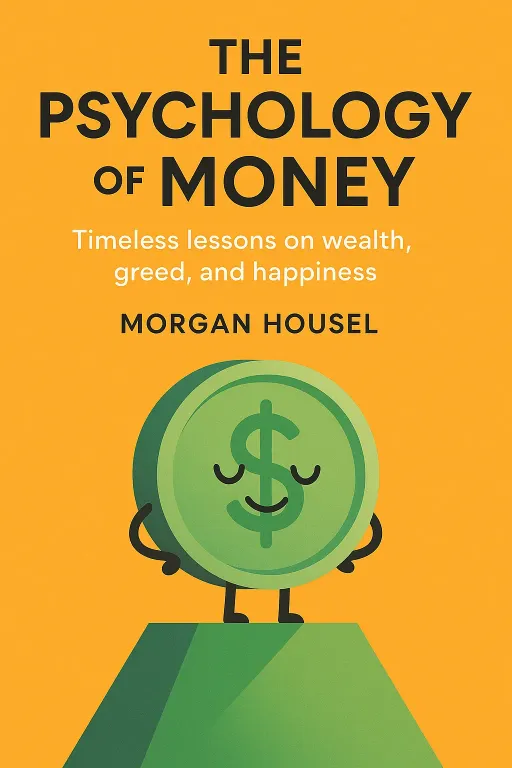
Nova: Well, that's exactly what we're diving into today. We're looking at two incredible books that flip the script entirely: Morgan Housel's and Vicki Robin and Joe Dominguez's pioneering work,.
Atlas: Oh, Housel! I love his writing. He was a financial columnist, wasn't he? Always had this knack for making complex stuff so clear.
Nova: Exactly! Housel, coming from that financial background, saw firsthand that even the smartest people made baffling money decisions because traditional finance often ignored the messy, human element. He really zeroes in on how our behavior, not our intelligence, is the biggest predictor of financial success. And Robin and Dominguez? They were way ahead of their time, practically inventing the financial independence movement decades ago by actually their philosophy of aligning spending with values.
Atlas: That makes me wonder. We often approach money like it's a giant math problem to solve, right? Like if you just follow the formula, you'll win.
Nova: And that's the cold fact we're starting with, Atlas. We treat financial management as purely logical, a game of numbers. But our deepest beliefs, our emotions, our personal histories about money profoundly shape our financial outcomes and our overall life satisfaction. Ignoring that human element is a critical oversight. It’s like trying to build a house with perfect blueprints but ignoring the foundation.
The Behavioral Imperative in Financial Success
SECTION
Atlas: Okay, so you’re saying it’s less about the formulas and more about… us? Our quirks?
Nova: Precisely. Housel argues that doing well with money has less to do with how smart you are and more to do with how you behave. Think about it: have you ever seen someone incredibly brilliant, maybe a top engineer or a doctor, make a completely baffling financial decision?
Atlas: Oh, absolutely! I’ve seen it in high-stakes environments where people are incredibly sharp in their field, but when it comes to their personal investments or spending, they can be as irrational as anyone else. It’s almost like a different part of their brain takes over.
Nova: It’s exactly that. Let's paint a picture. Imagine a brilliant software architect, let's call her Sarah. She can design complex systems, predict market trends in tech, she's objectively incredibly smart. But Sarah grew up during the dot-com bubble burst, watching her parents lose a significant chunk of their savings.
Atlas: Oh, I know that feeling. That kind of experience leaves a mark.
Nova: It absolutely does. So, fast forward. Sarah, despite her high income, is terrified of investing in anything volatile. She keeps most of her money in low-yield savings accounts, constantly worried about a crash. Then, when the market is booming, she sees everyone else getting rich and FOMOs in at the peak, only to panic-sell at the first sign of a dip.
Atlas: That’s a perfect example. Her personal history, that emotional scar from her childhood, is dictating her present financial decisions more than any logical analysis she's capable of. It’s not a lack of intelligence; it’s the ghost of past experiences.
Nova: Exactly! Her biases, her unique experiences, are driving her choices. Housel would say her financial outcomes are shaped by her personal narrative, not just the cold, hard facts of the market. It's the difference between knowing the rules of a game and actually being able to play it under pressure. A top athlete understands strategy, but if they choke under pressure, their knowledge doesn't save them.
Atlas: So, for someone like our listener, a natural integrator who juggles multiple ventures, this isn't just about optimizing a balance sheet. It's about understanding their internal operating system when it comes to money. How does one even begin to untangle that? It sounds really personal.
Nova: It is deeply personal, and that's the point. It means acknowledging that there's not a single "right" way to manage money, because everyone's history and risk tolerance are different. The goal isn't to be perfectly rational; it's to be about your irrationalities. It’s about building systems that protect you from your own worst impulses.
Money as Stored Life Energy: Aligning Wealth with Values
SECTION
Atlas: That makes total sense. We're all human, and our past definitely shapes our present. But understanding our behavior is one thing; how do we then bridge that to making choices that actually feel… good? That really serve us, beyond just accumulating more numbers in an account?
Nova: That’s a fantastic pivot, because that’s where Vicki Robin and Joe Dominguez come in with. They offer a radical reframe of what money actually is. They call it "stored life energy."
Atlas: Stored life energy? That's… a very different way to think about it. Most people see money as power, or security, or a means to buy things.
Nova: Right? But think about it. What do you exchange to earn money? You exchange your time, your focus, your effort, your skills—your actual life energy. So, every dollar you spend is a piece of your life energy. This reframes money not as an end in itself, but as a stored form of your most precious resource.
Atlas: Wow, that’s kind of heartbreaking when you put it that way. It makes me think of all the times I’ve spent money on things that, looking back, definitely weren't worth the "life energy" I traded for them.
Nova: Exactly! They encourage readers to align their spending with their deepest values. So, imagine someone stuck in a high-paying, soul-crushing job. They're making fantastic money, but they hate their commute, their boss, the lack of time with family. They use that high salary to buy things to cope—expensive dinners, retail therapy, lavish vacations to escape.
Atlas: That sounds like a lot of people I know, myself included sometimes. We chase the paycheck, then we spend it trying to recover from chasing the paycheck. It’s a vicious cycle.
Nova: It truly is. Robin and Dominguez would have this person calculate their "real hourly wage" by factoring in all the hidden costs: the commute time, the work clothes, the stress-related expenses, the therapy, the exhaustion that prevents them from pursuing hobbies. When you do that, that impressive salary often shrinks dramatically. Then, they ask: is this job, this exchange of life energy, truly aligned with your values?
Atlas: So, it's about asking, "Is this expense worth the hours of my life I traded for it?" That’s a profound shift. It directly speaks to that desire for holistic well-being, for balancing business, family, faith, and self, that so many of our listeners, the grounded growers, are striving for.
Nova: Absolutely. It encourages you to look at every purchase and ask, "Does this bring me genuine fulfillment, or am I just trading my precious life energy for something that doesn't truly matter to me?" It leads to true financial independence because you're not just accumulating money; you're accumulating. You're making intentional choices about where your life energy goes.
Atlas: That’s a powerful concept. It really hammers home that financial freedom isn’t just about having a certain net worth; it’s about the freedom to use your life energy in ways that deeply resonate with your values. It’s about being intentional.
Synthesis & Takeaways
SECTION
Nova: So, bringing these two powerful ideas together, we see that mastering money is less about complex formulas and more about understanding ourselves and our relationship with wealth.
Atlas: It's like Housel gives us the map of our own internal financial landscape, showing us where our biases and behaviors lie, and then Robin and Dominguez give us the compass, helping us navigate that landscape toward what truly matters.
Nova: Precisely. It’s realizing that the numbers on the balance sheet are just reflections of our choices, which are, in turn, reflections of our beliefs, emotions, and values. The unseen power of financial freedom, then, isn't about how much you have, but how consciously you're trading your life for it.
Atlas: That's a shocking realization for many: that they might be trading their most precious resource—their time and life energy—for things they don't truly value. It’s a call to profound self-reflection.
Nova: It is. So, here's a tiny step for our listeners, for anyone who wants to start this journey: reflect on just one recent spending decision. What emotion or belief was truly driving that choice, beyond the practical need? Was it fear? Status? A desire for comfort? Or was it deeply aligned with your values? Just notice.
Atlas: That’s a great starting point. Because it’s not about judgment; it’s about awareness. It’s about growing into a more intentional, more balanced financial life.
Nova: Exactly. It's about empowering yourself to make choices that truly serve your deepest vision for your life.
Atlas: What a powerful perspective shift.
Nova: This is Aibrary. Congratulations on your growth!