The Prince's Playbook: A Data Analyst Decodes Machiavelli's System of Power
Golden Hook & Introduction
SECTION
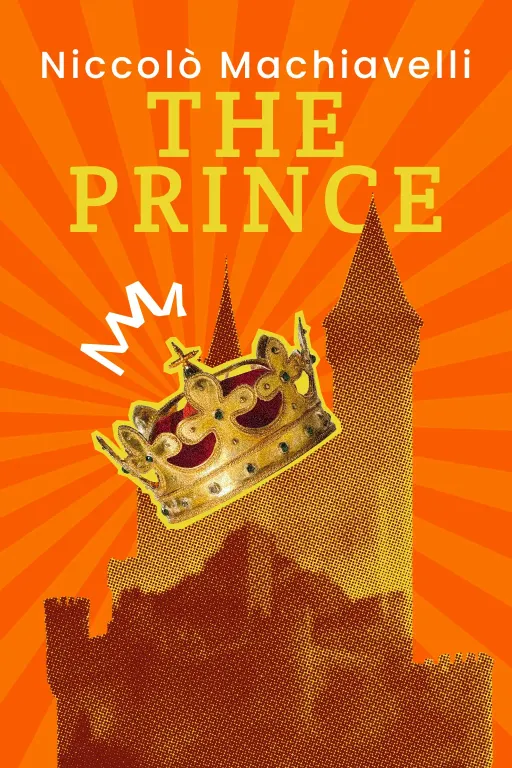
Nova: What if I told you that one of the greatest data analysts of all time lived 500 years ago, had no computer, and wrote the ultimate operating manual for power? That's the lens we're using today to look at Niccolò Machiavelli's. Forget the dusty philosophy—we're treating this as a playbook, a ruthless, pragmatic system for leadership. And I'm so thrilled to have D, a PhD and veteran data analyst, here to help us decode it. D, welcome!
D: Thanks, Nova. It's a fascinating framing. I've always seen history as a massive, messy dataset, and Machiavelli was one of the first to try and find the signal in the noise. I'm excited to dig in.
Nova: I'm so glad you're here. Because today we'll dive deep into this from two perspectives. First, we'll explore the core equation of power: the battle between a leader's skill, or, and the unpredictable nature of, or luck. Then, we'll dissect Machiavelli's most controversial algorithm: his cold calculation on whether it's better to be feared or loved. It's going to be a fascinating ride.
Deep Dive into Core Topic 1: The Power Equation: Decoding 'Virtù' and 'Fortuna'
SECTION
Nova: Exactly! Signal in the noise. So let's start with his two biggest variables: and. For our listeners, isn't 'virtue' as we know it. It's skill, competence, strategic prowess—everything a leader can control. is the opposite: it's luck, chance, the market crash you didn't see coming. Machiavelli gives us this perfect case study to compare them: Francesco Sforza and Cesare Borgia.
D: Ah, the classic A/B test. I'm listening.
Nova: You got it. First, you have Francesco Sforza. He starts as an ordinary citizen, a mercenary captain in 15th-century Italy. He has absolutely no inherited power. He has to fight for everything. Machiavelli says he 'acquired the dukedom with enormous exertion.' He builds his power base brick by brick, through his own skill—his. He's a brilliant general and a savvy politician. The result? Machiavelli notes he 'maintained it with little effort.' He built a stable, resilient system.
D: So his initial investment of high effort—high —paid off in long-term stability. The system, once built, was self-sustaining. That makes sense.
Nova: Precisely. But then, look at the other side of the coin: Cesare Borgia. He's the poster boy for. He's handsome, brilliant, ruthless... but most importantly, his dad is Pope Alexander VI. In Renaissance Italy, that's like having the ultimate venture capitalist backing you. He gets an army, money, political cover—everything handed to him. He acquires a state in central Italy almost overnight.
D: So his initial acquisition cost was low, because it was subsidized by.
Nova: Exactly! But Machiavelli, our brilliant analyst, points out the fatal flaw in his design. Borgia's entire foundation is built on his father's power. It's a house of cards resting on one single card.
D: It's a single point of failure. From a systems design or data analysis perspective, Borgia's power structure was incredibly fragile. His success was entirely dependent on one external variable he couldn't control: his father's lifespan. When the Pope died unexpectedly, and Borgia himself fell ill at the same time, the whole system collapsed.
Nova: It collapsed almost instantly. He lost everything.
D: Sforza, on the other hand, built what we might call a distributed, resilient system. It was based on his own capabilities, his reputation, his network—things he controlled. It's the difference between a tech startup that only succeeds because of a temporary market bubble versus a company that has solid fundamentals, a great product, and a loyal team. The bubble will always pop.
Nova: That's a perfect analogy! So Machiavelli is essentially saying, 'Don't just ride the wave of. Build a better surfboard with.' He even makes this bold claim that Fortune controls maybe half our actions, but we control the other half.
D: Which is a fascinating claim. You know, how do you even begin to quantify that? But it speaks directly to modern risk management. You identify the 50% you can't control—the 'fortuna' of market shifts, competitor moves, global events—and then you double down on building robust processes, skills, and culture—the —to mitigate that risk and be resilient when things go wrong. It's what every good leader or analyst tries to do every single day.
Nova: So even 500 years ago, he was telling leaders to focus on what they can control.
D: Yes, and to build systems that are antifragile, that can withstand the shocks of the unpredictable. Borgia's system was the definition of fragile.
Deep Dive into Core Topic 2: The Human Algorithm: Is It Better to Be Feared or Loved?
SECTION
Nova: Exactly, it's all about risk management. And that brings us to managing the most unpredictable variable of all: people. This leads to Machiavelli's most infamous question, the one everyone knows: is it better to be loved or feared?
D: The ultimate leadership question. What was his data-driven answer?
Nova: His answer is chillingly pragmatic. He says, a prince should wish to be both, but since that's difficult to achieve, if you have to choose, it is much safer to be feared.
D: And his reasoning?
Nova: It's based on his rather cynical analysis of human nature. He says love is a bond of obligation which men, being 'ungrateful, fickle, dissembling, hypocritical, cowardly, and greedy,' will break whenever it serves their own self-interest. But fear... fear is held by a 'dread of punishment that never fails.' To prove his point, he tells this incredible, and frankly terrifying, story about Cesare Borgia again.
D: The man was certainly a source of good data for Machiavelli.
Nova: He really was. So, Borgia had conquered a region called the Romagna, which was full of crime and disunity. To pacify it, he put a ruthless and efficient lieutenant, a man named Ramiro de Orco, in charge. De Orco does the job with brutal efficiency—executions, crackdowns, the works. The region is pacified, but the people now hate Ramiro, and that hatred is starting to splash onto Borgia himself.
D: So Borgia has a PR problem and a potential loyalty problem. The tool he used has become a liability.
Nova: A huge liability. So what does Borgia do? He needs to keep the peace that Ramiro established, but he also needs to distance himself from the hatred. His solution is... creative. One morning, the people of the town of Cesena wake up to find Ramiro de Orco's body in the public square. It's been cut in two, and next to it are a block of wood and a bloody sword.
D: Wow. Okay. That's... decisive.
Nova: In one single, brutal public spectacle, Borgia achieves two things. He satisfies the people's thirst for revenge against Ramiro, and he simultaneously terrifies them, showing them the ultimate consequence of his displeasure. Machiavelli notes that the spectacle left the people 'simultaneously gratified and terrified.'
D: That's an extreme form of accountability. But if you strip away the gore, it's a masterclass in system control and public relations. He identified a problem—growing resentment that was destabilizing his rule—and he executed a solution that achieved two goals at once. It purged the source of the resentment, which was Ramiro, and it reinforced his own absolute authority. It's a brutal but logically flawless algorithm. He's resetting the system parameters.
Nova: A system reset! I love that. And Machiavelli is so careful to distinguish this from just being hated. He says a prince must avoid being hated at all costs. And that happens, he says, when you are rapacious and 'usurp the property and the women of his subjects.' As long as you don't touch their stuff or their family, you're mostly fine. So the fear has to be strategic, not arbitrary.
D: Right. The 'algorithm' has rules. The fear comes from breaking the system's rules, not from the leader's random whims. In a modern corporate context, it's not about physical fear, of course. It's about the certainty of consequences. If performance standards aren't met, or if ethical lines are crossed, there is a clear, predictable, and unavoidable outcome.
Nova: So it's about consistency.
D: Exactly. A leader who is 'loved' but is inconsistent, who lets standards slip for some and not for others, creates a chaotic and unreliable system. People don't know where they stand. But a leader who is 'feared'—or maybe 'respected' is a better word for our times—for their consistency and their firm enforcement of the rules, creates a stable and predictable system. You know what to expect. That, in its own way, is a form of safety.
Synthesis & Takeaways
SECTION
Nova: So, looking at our two big ideas—balancing your own skill against unpredictable luck, and managing people with a clear-eyed view of their nature—it seems Machiavelli's core message is really about building resilient systems.
D: Absolutely. It's about being a realist. He's not advocating for evil for its own sake; he's advocating for seeing the world and the people in it as they, not as you wish they were. For a data analyst, that's the first principle: work with the data you have, not the data you want. His 'data' was 16th-century Italian politics, and his analysis, though stark, is incredibly insightful.
Nova: He saw the patterns in the chaos.
D: He saw the patterns. He was looking for the 'actual truth of matters,' as he put it. He used his observations of human behavior to design a system of leadership that he believed was most likely to succeed. It's a powerful, if unsettling, way to think about leadership.
Nova: A perfect summary. So, for everyone listening, especially those in leadership, here's the question to ponder from today's discussion: Are you building your success on the stable foundation of your own —your skills and your systems—or are you just riding a temporary wave of? And are your systems of accountability built on the fickle hope of 'love' or the reliable, if uncomfortable, clarity of 'fear'? D, thank you so much for decoding this with us.
D: My pleasure, Nova. It was a great conversation.