The Leader's Labyrinth: How to Navigate Power and Influence Without Losing Your Way
Golden Hook & Introduction
SECTION
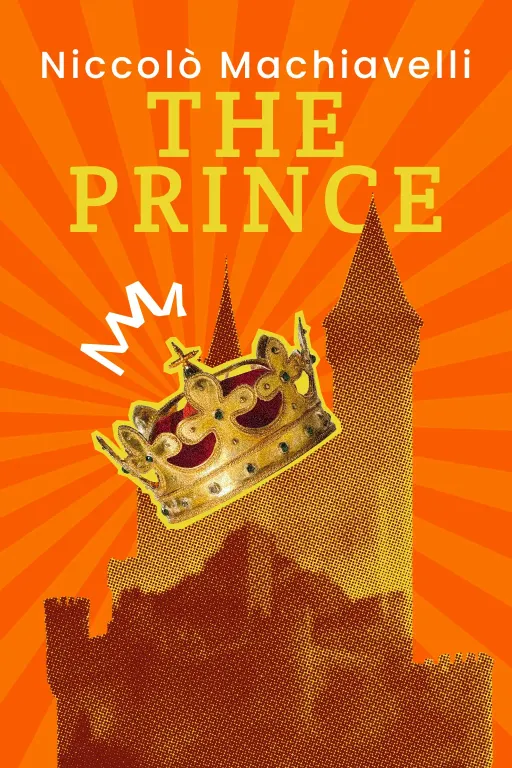
Nova: Alright Atlas, five words. "The Prince" by Niccolò Machiavelli. Go.
Atlas: Ruthless. Necessary. Uncomfortable. Still. Relevant.
Nova: Ooh, "still relevant" is a big one. And you know, we're not just stopping with Machiavelli today. We're actually diving into two incredibly influential, yet wildly different, historical guides to power and leadership.
Atlas: So, we're talking about Machiavelli's "The Prince," that infamous manual on how to seize and hold power, even if it means getting your hands a little dirty.
Nova: Exactly. And on the flip side, we're also exploring "Meditations" by the Roman Emperor Marcus Aurelius – a deeply personal, philosophical journal on how to lead with integrity and navigate chaos from within.
Atlas: Wow. So, one is a tactical playbook for external control, and the other is an internal guide for self-mastery. That’s a fascinating pairing.
Nova: It absolutely is. And what’s fascinating about Machiavelli's work is the context: he wrote "The Prince" while exiled from Florence, desperate to regain favor with the ruling Medici family. It was his stark, unvarnished plea, essentially saying, "Here's how power works, not how you wish it would." It was a brutally honest guide to acquiring and maintaining power, which has made it one of history's most controversial and influential political texts.
Atlas: And Marcus Aurelius?
Nova: He penned "Meditations" as a personal journal, never intending it for publication. It was his private moral compass, a daily practice for navigating the immense pressures of being a Roman Emperor amidst plagues, wars, and political intrigue.
Atlas: So, one is a public, provocative manual, the other a private, reflective diary. That really sets the stage for a deep dive.
Nova: It does. Because the deep question we’re exploring today is: How do leaders balance the relentless demands of power with their own sense of integrity, and what does that mean for today's complex world?
The Leader's Moral Calculus: Fear vs. Love
SECTION
Nova: Let's start with Machiavelli, because he throws the first punch, right? His core argument in "The Prince" is often boiled down to this: ideally, a leader should be both feared and loved. But if you're forced to choose, fear is far more reliable.
Atlas: That sounds incredibly cold. Isn't that just a recipe for tyranny, though? I mean, who wants to work for someone they fear?
Nova: It does sound cold, but Machiavelli wasn't writing a self-help book for inspiring leaders. He was observing the brutal realities of Renaissance Italian politics. City-states were constantly vying for power, alliances shifted daily, and betrayal was commonplace. In that environment, a leader's survival, and the stability of their state, often depended on their ability to command obedience.
Atlas: But what about loyalty? Doesn't fear erode trust and long-term commitment? I imagine a lot of our listeners, who are navigating complex organizational structures, might find that approach counterproductive.
Nova: That’s a critical point, and Machiavelli would actually agree. He famously warned against being hated, saying, "Above all else, a prince must guard himself against being hated." Fear is good, hatred is dangerous. He understood that hatred could breed resentment and rebellion. Fear, for him, was a preventative measure, a dread of punishment that never fails, whereas love is fickle and can be broken for personal gain.
Atlas: So you're saying it's not about being a cartoon villain, but about creating consequences that are so clear and consistently applied that people just... don't step out of line?
Nova: Exactly. Think of Cesare Borgia, a figure Machiavelli deeply admired. Borgia was incredibly ruthless, but he brought order to a chaotic region, stamping out banditry and establishing a powerful central authority. Machiavelli pointed to him as a master of 'virtù' – not virtue in the moral sense, but skill, drive, and effectiveness. Borgia’s actions, though brutal, were seen by Machiavelli as necessary for the greater good of the state’s stability. He was describing what, not what.
Atlas: That’s a difficult distinction to make. How do you argue that morally questionable acts are 'for the greater good' without it just being a justification for whatever a leader wants to do? I mean, where do you draw the line?
Nova: Well, Machiavelli didn't draw a line in the sand, Atlas. His perspective was deeply pragmatic. He believed that a leader sometimes has to set aside conventional morality to ensure the survival and prosperity of the state. If a leader is too "good" in a treacherous world, they'll be destroyed. It's a stark, uncomfortable truth that often challenges our idealised notions of leadership. He essentially said, "The ends justify the means," but only if the 'ends' are truly the stability and well-being of the state.
Stoicism Under Pressure: Integrity in the Imperial Labyrinth
SECTION
Nova: So, if Machiavelli was teaching us how to in a dangerous world, Marcus Aurelius, with his "Meditations," was teaching us how to in an equally dangerous, chaotic world.
Atlas: That’s a fantastic contrast. Machiavelli: external control. Marcus Aurelius: internal control. But how does that actually work when you're the Roman Emperor? That sounds like a lot of pressure to maintain inner peace when an empire is literally crumbling around you.
Nova: It’s incredibly difficult, which is why his "Meditations" are so profound. Marcus Aurelius faced immense external pressures: devastating plagues, constant wars on the borders, political intrigue, and personal tragedies. Yet, his journal is a testament to his unwavering commitment to Stoic philosophy – a daily practice of reason, duty, and self-control.
Atlas: So, it wasn't just about thinking positive thoughts, right? What was the practical application of Stoicism for an Emperor?
Nova: It was far from just positive thoughts. For Marcus Aurelius, Stoicism was an operating system for life. It taught him to distinguish between what he could control and what he couldn't. His daily reflections were a tool for maintaining moral clarity and inner peace amidst the chaos. He constantly reminded himself that his duty was to serve the common good, to act justly, and to accept what fate brought with equanimity.
Atlas: That sounds like an incredible feat of mental discipline. How do you actually that when the world is burning around you? Like, how does 'controlling your perceptions' translate to making tough business decisions or dealing with public criticism today?
Nova: It translates directly. Think of it this way: a Stoic leader, facing a crisis, wouldn't waste energy on anger or despair about the situation itself. Instead, they would focus entirely on their response. "Is this within my control? Yes, my reaction is. My effort is. My decision is." They would calmly assess the facts, apply reason, and make the best decision possible, accepting that the outcome might still be unfavorable, but their moral integrity remains intact.
Atlas: So, it's not about being emotionless, it's about being rational in the face of emotion. But what about empathy? Does Stoicism allow for genuine empathy in leadership if you're constantly trying to detach from external events?
Nova: That's a common misconception about Stoicism. It's not about detaching from humanity, but about managing your emotional responses so you can act more effectively and justly. Marcus Aurelius wrote extensively about our interconnectedness, our duty to our fellow humans. His empathy came from a place of understanding human nature, its flaws and its potential, and acting for the benefit of the whole, rather than being swayed by fleeting sentiment. His decision to appoint his flawed son Commodus as successor, despite Commodus's obvious shortcomings, can be seen as an act of duty and hope, though ultimately a tragic one – highlighting the limits of even a Stoic's influence over others.
Synthesis & Takeaways
SECTION
Nova: What we see, then, is this incredible dance between two very different, yet equally powerful, philosophies of leadership. Machiavelli gives us the harsh, external realities of power dynamics, the 'how to survive' manual.
Atlas: And Marcus Aurelius gives us the internal blueprint for integrity, the 'how to thrive as a human being' manual, even in the highest office.
Nova: Exactly. The blind spot we often have when we look at powerful figures is that we admire their success without truly grasping the tough, often agonizing choices they faced. Understanding their world helps us see the ethics of leadership more clearly today.
Atlas: It's not black and white, is it? It’s a complex spectrum. A leader who is purely Machiavellian risks tyranny and ultimately collapse from within. A leader who is purely Aurelian might be too passive in a truly cutthroat environment.
Nova: Precisely. Truly effective, sustainable leadership often requires navigating external pragmatism internal integrity. It’s a constant, challenging dance. You need to understand the brutal realities of power, but also have an unshakeable inner compass.
Atlas: So, for our listeners, whether they're leading a team, a company, or just their own lives, the takeaway is that you can't ignore either side of this coin. You need the strategic awareness of Machiavelli, but tempered with the self-mastery and ethical grounding of Marcus Aurelius.
Nova: It’s about building a strong inner fortress of virtue, as Aurelius did, while understanding the external battleground, as Machiavelli observed. The deep insight is that the most profound leadership isn't about being perfectly good or perfectly ruthless, but about skillfully integrating both, day in and day out. What kind of leader do you aspire to be when these two ancient voices whisper in your ear?
Atlas: That's a powerful question to end on. It's about how we navigate our own labyrinths, isn't it?
Nova: It absolutely is.
Nova: This is Aibrary. Congratulations on your growth!