The Leader's Hidden Compass: How Ancient Wisdom Shapes Modern Influence
Golden Hook & Introduction
SECTION
Nova: Alright Atlas, ready for a quick challenge? Give me your five-word review of what makes a truly influential leader.
Atlas: Oh, I like that! Hmm… inner strength meets outer sharp reality.
Nova: Ooh, nice! That's a good one. Mine would be: self-aware, strategic, impactful, resilient, genuine. And actually, those five words perfectly encapsulate the two ancient texts we're diving into today.
Atlas: I can see that. Because we're talking about two figures who, at first glance, seem like they couldn't be further apart, right?
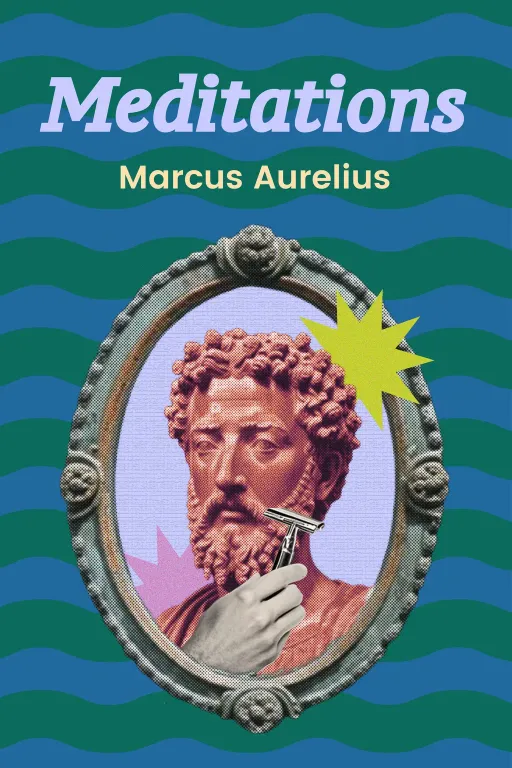
Nova: Absolutely. On one hand, we have the profoundly introspective wisdom of "Meditations" by Marcus Aurelius. This isn't some philosophical treatise he wrote for public consumption; it's his personal journal, reflections he penned to himself as one of the most powerful men in the world, the Roman Emperor, grappling with duty, mortality, and self-governance. It’s a glimpse into the mind of a leader striving for virtue amidst immense pressure.
Atlas: And then you swing to the other end of the spectrum with Niccolò Machiavelli's "The Prince." That book feels like it was ripped straight from the cutthroat political arenas of Renaissance Florence, a stark, pragmatic guide on how to acquire and maintain power. It's often misunderstood as simply advocating ruthlessness, but it's more about a clear-eyed, almost brutal, assessment of political realities.
Nova: Exactly. And the fascinating thing is, when you bring these two seemingly opposing philosophies together, you don't get a contradiction. You get a hidden compass for modern influence. Because leadership isn't just about strategy; it's about inner fortitude.
Atlas: So you're saying that true leadership requires both a strong ethical core a clear-eyed understanding of those external political realities, not just one or the other? I imagine a lot of our listeners, especially those grappling with complex teams or high-stakes decisions, are thinking: how on earth do you balance that?
The Inner Compass: Stoicism and Self-Mastery in Leadership
SECTION
Nova: That's the million-dollar question, isn't it? And Marcus Aurelius gives us the foundation. Imagine this: you're the most powerful man in the known world, constantly battling external threats, political intrigue, plagues, personal losses. Yet, Aurelius consistently turned inward. His "Meditations" are a testament to self-mastery, a belief that true power comes from within, from governing your own perceptions and reactions.
Atlas: That sounds great on paper. But for a modern leader drowning in emails, endless meetings, and constant crises, how do you actually that? Isn't it just navel-gazing when your company's future is on the line?
Nova: Not at all. Think of it this way: Stoicism, as practiced by Aurelius, is less about passive acceptance and more about active, internal control. He focused intensely on the "dichotomy of control"—distinguishing between what he could influence and what he couldn't. When faced with a barbarian invasion, he couldn't control the barbarians, but he could control his fear, his strategy, and his duty.
Atlas: Okay, so it’s about controlling your response, not the event itself. Like if a project goes sideways, a Stoic leader wouldn't rage at the team or external factors, but would instead calmly assess what can do next.
Nova: Precisely. It’s about cultivating virtue—wisdom, justice, courage, temperance—as your primary guide. It gives you an unshakeable inner core. In his writings, Aurelius constantly reminds himself to act with reason, to treat others justly, and to accept what is outside his control. This inner work, this self-governance, allowed him to rule justly and effectively, even during incredibly turbulent times. It's the ultimate example of leading from a place of deep, personal strength, not just external authority.
Atlas: I can see how that would be incredibly valuable. If your inner world is chaotic, your leadership will reflect that. But what happens when that inner peace isn't enough? What happens when your opponents aren't playing by Stoic rules?
The External Reality: Machiavellian Pragmatism and Ethical Navigation
SECTION
Nova: That's where we pivot to Machiavelli. He looked at the world not as it be, but as it. His advice in "The Prince" comes from witnessing the brutal, often treacherous, political landscape of 16th-century Italy. He wasn't necessarily advocating for evil, but rather describing the unvarnished truth of how power is gained and maintained.
Atlas: He basically said, "Look, if you want to win, you sometimes have to get your hands dirty." That’s a bit out there for a lot of people, isn't it?
Nova: It's certainly jarring, and "The Prince" has been highly controversial for centuries because of it. It’s often been seen as a handbook for tyrants. But Machiavelli's core argument was about —not virtue in the moral sense, but a leader's skill, energy, and ability to adapt to circumstances, to act decisively. He argued that a prince must learn how to be good, if the situation demands it, to ensure the stability of the state.
Atlas: So, are we saying good leaders to be ruthless sometimes? How do you reconcile being a virtuous Stoic with a Machiavellian pragmatist? Isn't that a recipe for hypocrisy, or worse, burnout from the internal conflict?
Nova: That's the tension, and it's where the "hidden compass" truly emerges. Machiavelli simply observed that relying solely on moral goodness in a world that isn't always moral can lead to your downfall. He wasn't saying evil, but evil, and be prepared to counter it. He highlighted the external pressures leaders face, the need for strategic thinking, and yes, sometimes tough, unpopular decisions for the greater good.
Atlas: Right, like a CEO having to lay off employees during a downturn to save the company, even if it feels morally terrible. Or a political leader making a difficult compromise to prevent a greater conflict.
Nova: Exactly. Machiavelli's insights reveal that leadership requires a clear-eyed understanding of political realities and human nature. He forces us to ask: what does it take to truly and others, not just internally, but in the messy, unpredictable external world? He's the ultimate realist, reminding us that ideals alone won't always cut it in the arena.
Synthesis & Takeaways
SECTION
Nova: And this is where the magic happens. The leader's hidden compass isn't a choice between Aurelius Machiavelli. It’s the profound realization that effective leadership demands both. You need the inner fortitude, the self-governance of a Stoic to remain calm, rational, and virtuous under pressure. That’s your anchor.
Atlas: And then you need the Machiavellian understanding of external realities—the political maneuvering, the pragmatic decision-making, the awareness of how power truly operates—to navigate those choppy waters successfully. It’s like having an unshakeable core, but also being able to adapt your sails to the prevailing winds.
Nova: Precisely. The "leader's hidden compass" is the ability to integrate these two, to know when to draw on your inner ethical strength and when to employ strategic, sometimes uncomfortable, pragmatism. It's about being virtuous effective. It's not about becoming a ruthless tyrant, but about understanding the world well enough to lead ethically it.
Atlas: That’s actually really inspiring. So, cultivating your inner philosophical resources isn't just about personal enlightenment; it fundamentally changes how you approach those challenging leadership dilemmas today, making you both more resilient internally and more effective externally.
Nova: It truly does. It's a nuanced worldview, demanding both deep self-awareness and sharp external perception. It’s about being true to yourself while also understanding the game you’re playing.
Atlas: So, for our listeners, how might cultivating inner philosophical resources change your approach to challenging leadership dilemmas today?
Nova: This is Aibrary. Congratulations on your growth!