The 'Power Paradox': How Leadership Can Corrupt and How to Prevent It.
Golden Hook & Introduction
SECTION
Nova: Atlas, five words. Give me five words to describe the concept of power. Go.
Atlas: Oh, that's a good one. Responsibility, influence, seductive, dangerous, essential. Your turn.
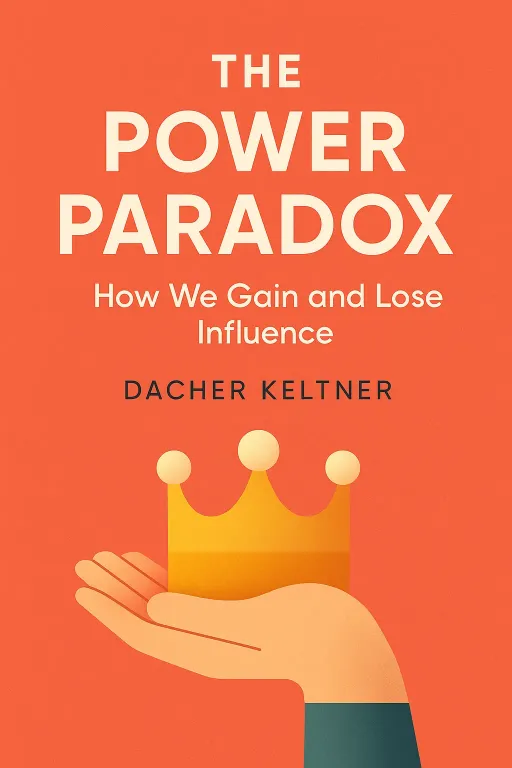
Nova: Ooh, I like that. Mine would be: intoxicating, fragile, magnetic, transformative, and... a mirror. Because it really does show you who you are, or who you might become. And that, my friend, is exactly what we're unwrapping today with "The Power Paradox: How We Gain and Lose Influence" by the brilliant Dacher Keltner.
Atlas: I'm curious about that 'paradox' part. We often think of power as this thing you acquire and then... you have it. What's Keltner's secret sauce?
Nova: Well, Keltner, a renowned professor of psychology at UC Berkeley and the founder of the Greater Good Science Center, has spent decades studying human emotions like compassion and gratitude. This gives his work on power an incredibly unique, empathy-driven lens. He's not just observing power; he's dissecting its emotional and psychological underpinnings.
Atlas: That’s a fascinating background for someone writing about power. You’d expect a political scientist or a business guru.
Nova: Exactly! And that's why his insights are so potent. Today we'll dive deep into this from two perspectives. First, we'll explore 'The Power Paradox' itself – how the very qualities that get us to the top can be eroded by the ascent. Then, we'll discuss the antidote, looking at 'Level 5 Leadership' and how humility and fierce resolve are the true pillars of enduring influence.
The Power Paradox: Empathy's Rise and Entitlement's Fall
SECTION
Nova: So, Keltner's core thesis is this: we gain power through empathy, generosity, and focusing on the needs of others. We become leaders because we're good at connecting, at understanding, at giving. We're the person who listens, who helps, who inspires. People trust us, they follow us.
Atlas: That makes perfect sense. That's the kind of leader anyone wants to be, right? Someone who builds for the future, who cares about the team.
Nova: Absolutely. But here's where the paradox bites. Once we power, something insidious starts to happen. Our empathy can diminish, our focus shifts inward, and we can become more self-focused, even entitled. It's like the very thing that propelled you upward starts to subtly chip away at your foundation.
Atlas: But how does that happen? Is it like a switch flips? Or is it a slow, creeping erosion? I imagine a lot of our listeners who are managing high-pressure teams might wonder if they're immune to this.
Nova: It’s a slow, creeping erosion, Atlas, often imperceptible to the one experiencing it. Think of a visionary tech founder. Let's call him Alex. In the early days, Alex was in the trenches with his team. He knew everyone's name, he understood their struggles, he'd stay up all night coding alongside them because he genuinely cared about their shared mission and their well-being. He was empathetic, collaborative, a true servant leader. That's how he built his empire.
Atlas: So the classic startup story, right? Everyone's bonded by the struggle.
Nova: Exactly. But as the company scaled, Alex's power grew exponentially. He moved into the corner office, surrounded by layers of management. He started flying private, dining at exclusive restaurants, his calendar filled with high-level strategizing. Slowly, the direct connection to the daily grind, to the very people who built his success, began to fray. He started relying on reports, not direct observation. The struggles of a junior developer became an abstract statistic, not a person he knew.
Atlas: I can see how that would be a blind spot for someone building a legacy. You're so focused on the big picture, you might lose sight of the small interactions. And that's dangerous when you're trying to ensure stability and connect dots.
Nova: It's incredibly dangerous. Keltner describes how power can literally change our brains. It activates reward centers, increases impulsivity, and can actually reduce activity in regions associated with empathy. It's not malice; it's a neurological shift. Alex, in his new powerful state, might start seeing dissent as disloyalty, or feedback as a challenge to his authority, rather than an opportunity for growth. He might even start making decisions that benefit his personal wealth more than the long-term health of the company, all while convincing himself it's for the 'greater good.'
Atlas: Wow, that’s kind of heartbreaking. It sounds like the system that rewards you can also subtly sabotage your best intentions. So, the very qualities that made Alex a great leader – his empathy and giving nature – are the first casualties of his success.
Level 5 Leadership: Humility as Power's Antidote
SECTION
Atlas: So if power can be so corrosive, what's the antidote? How do leaders avoid that trap, especially when they're aiming for something like generational wealth or C-suite impact? Is it just a matter of 'trying harder to be a good person'?
Nova: It’s far more strategic than just 'trying harder,' Atlas. This is where Jim Collins' work in "Good to Great" becomes incredibly illuminating. He identifies what he calls 'Level 5 Leaders' – individuals who combine two seemingly contradictory traits: fierce resolve and profound personal humility.
Atlas: Fierce resolve and personal humility? Those sound like they should cancel each other out. How do you have both?
Nova: That’s the paradox of Level 5 Leadership, and it's precisely what makes it so powerful. These aren't charismatic, ego-driven figures. They're often quiet, understated individuals who Channel their ambition not into personal gain, but into the enduring success of the organization. They are utterly relentless in their pursuit of excellence, but they never put themselves in the spotlight.
Atlas: Can you give us a picture of what that looks like in action? Someone who truly embodies that humility, not just as a facade? Because I think for many, the idea of C-suite leadership often conjures images of larger-than-life personalities.
Nova: Absolutely. Think of someone like Darwin Smith, the CEO of Kimberly-Clark. When he took over, it was a mediocre paper company. Smith, an unassuming lawyer, was diagnosed with nose and throat cancer shortly after becoming CEO. He could have retreated, but instead, he faced reality head-on. He decided Kimberly-Clark needed to shed its traditional paper mills and become a global consumer paper products company, competing directly with giants like Procter & Gamble.
Atlas: That sounds like fierce resolve. A huge, risky bet.
Nova: It was. And many thought he was crazy. But here’s where the humility comes in: when asked about his remarkable success years later, Smith famously attributed it to having "good people" and "good luck." He consistently deflected praise, pointing to the collective effort. He wasn't building a monument to Darwin Smith; he was building an enduring institution. He worked diligently, often alone in his office, focused entirely on the company's future, not his own public image or personal glory.
Atlas: That’s a profound insight. It’s like they're building a foundation for the future, not just a monument to themselves. For someone looking at C-suite leadership or generational wealth, this isn't just about 'being nice'; it's a strategic imperative. It's about 'trusting your intuition' but also making sure that intuition is grounded in humility.
Nova: Precisely. These leaders are driven by an unwavering need to build something great, but they operate with a deep sense of responsibility, not ego. They are the ultimate strategic architects, connecting the dots between fierce ambition and genuine service. They understand that lasting impact isn't about personal accolades, but about the enduring well-being of the entity they lead.
Synthesis & Takeaways
SECTION
Nova: So, bringing Keltner and Collins together, the power paradox isn't just a warning; it's a profound guide. It tells us that the very qualities we need to gain power—empathy, generosity, other-focus—are precisely the ones we must fiercely protect and cultivate once we have it.
Atlas: It's a constant vigilance, almost. Like you have to actively fight against the natural inclination of power to isolate you or make you self-centered. That really resonates with the idea of building for the future and ensuring stability.
Nova: It is. The antidote to the power paradox, as shown by Level 5 Leaders, is a conscious, deliberate choice to view power not as a right or a privilege, but as a profound responsibility. It's about stewarding that influence with care and a deep, unwavering sense of humility, even as you wield immense resolve.
Atlas: That's powerful. It suggests that if you want to build a truly lasting legacy, whether it's generational wealth or a C-suite career, it's not about how much power you accumulate, but how you channel it. It’s about making sure your power serves something bigger than your ego.
Nova: Absolutely. My actionable takeaway for anyone listening is this: actively seek out diverse feedback, especially from those below you in the hierarchy. Create feedback loops that are safe and encourage genuine critique. And cultivate active empathy—make time to connect with people at all levels, to understand their realities, not just their reports.
Atlas: That's a crucial point for anyone navigating executive transitions. It's about protecting that space, as you said, for deep work, but also for deep connection.
Nova: Remember, the ultimate measure of your power isn't how many people you control, but how many you empower. The best leaders, the ones who create true legacy, understand that power is a gift to be stewarded, not an entitlement to be enjoyed.
Atlas: That’s a fantastic way to put it. A truly insightful discussion today, Nova.
Nova: Always, Atlas.
Atlas: This is Aibrary. Congratulations on your growth!