The 'Power Paradox': How Authority Corrupts, and How to Lead with Influence.
Golden Hook & Introduction
SECTION
Nova: Most of us chase power. We think it'll make us more effective, more in control, perhaps even... better. But what if the very act of gaining power subtly erodes the qualities that made us worthy of it in the first place?
Atlas: Whoa, hold on. Are you saying that climbing the ladder could actually make us leaders? That sounds like a cruel cosmic joke. I mean, we strive for impact, for influence. Are you telling me the reward is... self-sabotage?
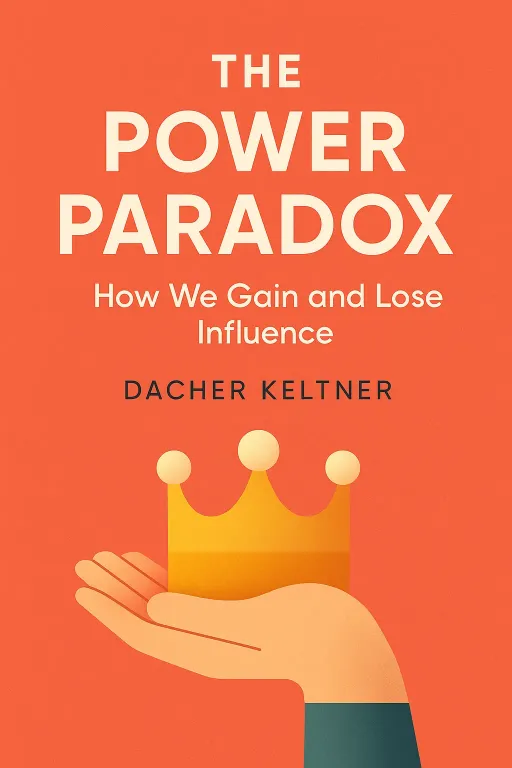
Nova: Precisely, Atlas. It's the 'Power Paradox,' a concept brilliantly explored by Dacher Keltner in his book of the same name. Keltner, a distinguished psychology professor at UC Berkeley and co-director of the Greater Good Science Center, has spent decades studying how power truly impacts us. He's not just theorizing; he's backed this up with rigorous scientific research, revealing this counter-intuitive truth. And today we’re also going to weave in the timeless principles of influence from Robert Cialdini.
Atlas: Okay, so we're talking about the subtle, almost insidious ways power can shift our internal compass. That's a fascinating, and frankly, a little terrifying, starting point for anyone who's ever aspired to lead or simply make a difference.
Nova: Absolutely. Because if we don't understand this paradox, we're essentially walking into a blind spot, risking the very empathy and collaborative spirit that often got us to a position of power. And that leads us straight into our first deep dive.
The Ironic Ascent and Perilous Fall: Keltner's Power Paradox
SECTION
Nova: Keltner's core argument is this: people typically rise to power through what he calls "prosocial" behaviors. They're empathetic, generous, good at listening, collaborative, and genuinely focused on the well-being of the group. Think about that rising star in your organization, the one everyone loves working with, who always has a moment for you, who brings people together.
Atlas: Yeah, I know that person. The one who lifts everyone up, who isn't just focused on their own wins. They're the natural leader, right? You them in charge.
Nova: Exactly. We naturally grant them influence, respect, and eventually, authority. But here's where the paradox kicks in. Once they that power, Keltner's research shows a consistent pattern: they start to exhibit behaviors that are the opposite of what got them there.
Atlas: So, the empathetic listener becomes the dismissive बॉस? The collaborative team player turns into the solitary decision-maker? That sounds incredibly frustrating for everyone involved, especially for the teams they lead.
Nova: It is. They become less empathetic, less attuned to others' needs, more self-focused, and sometimes, even more impulsive or unethical. It's not usually a conscious, malicious decision. It's a subtle, psychological shift that often goes unnoticed by the person experiencing it. Imagine a brilliant engineer, let's call her Sarah, who was promoted to lead a product development team. Initially, she was fantastic at collaborating, really listening to her junior engineers, and fostering a creative, open environment. Everyone thrived under her.
Atlas: Sounds like a dream leader.
Nova: For a while. But as she gained more authority, and the pressure mounted, she started to withdraw. She stopped asking for input, believing she knew best. She became less patient with dissenting opinions, sometimes cutting people off in meetings. Her once-open-door policy became a closed one, literally and figuratively. She'd make decisions unilaterally, then wonder why her team seemed less engaged, less innovative.
Atlas: That's a tough pill to swallow. So, the very qualities that propelled Sarah upwards, her ability to connect and collaborate, were slowly eroded by the power itself. What's the mechanism behind that? How does someone not see themselves changing?
Nova: Keltner points to several psychological shifts. One is a decreased activation of the neural networks associated with empathy. When you're in power, your brain becomes more focused on rewards and less on threats or the nuances of others' emotions. Another factor is a sense of decreased constraint. When you feel less accountable to others, you feel freer to act on your impulses, which can lead to more risky, self-serving, or even unethical behaviors. You start to believe your own hype, that your instincts are always right.
Atlas: So, it's almost like a psychological blind spot. You're so focused on the destination, or on maintaining your position, that you lose sight of the map that got you there, and the people you're navigating with. For strategic leaders, who are constantly thinking about long-term impact and sustainable growth, this is critical. How do you maintain that initial empathy and collaborative spirit when the very nature of power seems to push against it?
Nova: It requires immense self-awareness and intentionality. It's about actively countering those natural psychological tendencies. And that’s where our next discussion on influence becomes so crucial.
Beyond Position: Mastering Influence through Character and Connection
SECTION
Nova: Understanding the paradox is the first step. But the real challenge for leaders, especially those who want to build legacies and drive sustainable growth, is to master influence in a way that transcends mere positional authority. This is where Robert Cialdini's work in "Influence" becomes incredibly valuable.
Atlas: Ah, Cialdini. His six principles of persuasion are almost legendary. But sometimes, when people talk about persuasion, it can sound a little… manipulative. What's the distinction here for ethical leadership?
Nova: That's a brilliant distinction to make, Atlas. Cialdini himself emphasizes that these principles can be used for good or ill. Our take, and Nova's take, is that true leadership influence stems from character and genuine connection. It's about building trust, not just compliance. Let's look at a couple of his principles, like reciprocity. Cialdini shows that people are more likely to say yes to those they feel they owe something to. Manipulative leaders use this by offering a small favor to get a bigger one in return, with strings attached.
Atlas: Like a quid pro quo that feels less like a partnership and more like a transaction.
Nova: Exactly. But an influential leader, one who leads with character, practices genuine reciprocity. Imagine a leader, let's call him David, who truly invests in his team's development. He mentors them, connects them with opportunities, and genuinely celebrates their successes, without expecting anything immediate in return. He's not keeping a tally.
Atlas: So, when David eventually needs his team to pull an all-nighter for a critical project, they don't just do it because he's the boss. They do it because they trust him, they respect him, and they feel genuinely supported by him. There's a bank of goodwill there.
Nova: Precisely. That's influence built on character. Another principle is commitment and consistency. People like to be consistent with what they've said or done in the past. A manipulative approach might be to get someone to agree to a small request, then escalate it to a larger one.
Atlas: So, you get them to say yes to a tiny favor, then suddenly they're committed to a massive undertaking they never intended.
Nova: Right. But an ethical leader uses this by consistently living their stated values. If a leader, like our visionary catalyst user, consistently champions transparency and open communication, and acts transparently and communicates openly, their team sees that consistency. They commit to that vision themselves because the leader embodies it.
Atlas: That makes perfect sense. It’s about walking the talk, every single day. But for a strategic architect, for someone who's mapping out complex organizational evolution, how do they these principles? It's easy to say "be empathetic," but how do you it, especially in high-stakes environments?
Nova: It begins with carving out time for reflection, just like our user's growth recommendation. It's about intentionally pausing and asking: "Am I truly listening right now, or just waiting to speak?" "Am I genuinely seeking input, or just validating my own ideas?" It's about practicing active curiosity—asking open-ended questions, not just of your team, but of yourself. It's about modeling the behavior you want to see. If you want a collaborative team, you must be the most collaborative person in the room. If you want trust, you must be the most trustworthy.
Atlas: So, it's a continuous, mindful effort. It’s not a destination, but a constant calibration, ensuring your actions are always aligned with the character and connection that build true influence. It’s about building a legacy, not just a career.
Synthesis & Takeaways
SECTION
Nova: Exactly. The synergy between Keltner and Cialdini is powerful. Keltner warns us about the internal erosion power can cause, the 'blind spot' that can diminish our initial strengths. Cialdini provides the tools to build influence, but when paired with Keltner's insights, it's about using those tools ethically, grounded in genuine character and connection. True leadership is a vigilant journey of self-awareness and service, not just the accumulation of titles or achievements.
Atlas: That's a profound thought. It's about understanding that power is a double-edged sword, and true influence is forged in the crucible of your character. It’s a constant battle against our own human tendencies. It makes you wonder, how many leaders today are truly mindful of that paradox?
Nova: It's a question we should all ask ourselves regularly. Because to lead with influence, to build that sustainable growth and lasting impact our listeners crave, we must continually reconnect with the very qualities that made us leaders in the first place.
Atlas: So, for all our listeners out there, the strategic architects and visionary catalysts, take a moment this week. Reflect on a time you’ve observed power being wielded. Did it enhance, or diminish, the leader's initial strengths? The answer might surprise you, and it might just be the key to refining your own leadership influence.
Nova: This is Aibrary. Congratulations on your growth!