How To Sleep Less But Feel Better
Golden Hook & Introduction
SECTION
Jess: You ever have that morning where coffee tastes like hope—and then fails you by 10 a. m.? Sophia: Oh yeah. It’s like your bloodstream’s a Starbucks rewards account that just hit overdraft. Jess: Exactly. So you slam another cup, maybe two. Then by three in the afternoon, your soul’s vibrating but your brain’s buffering. Sophia: Which is wild, because what your body’s really asking for isn’t caffeine—it’s deep sleep. You don’t need another latte. You need a neural tune-up. Jess: So today’s episode is our intervention—for everyone who thinks exhaustion is a personality trait. Sophia: We’re diving into the five books that basically form the Avengers of sleep science: Jess: Translation: neuroscience, culture, chronobiology, timing, and hacks—everything from REM to blackout curtains. Sophia: Buckle up—or actually, lie down. Let’s talk about why your pillow is smarter than your phone.
Dive into key insights and ideas
SECTION
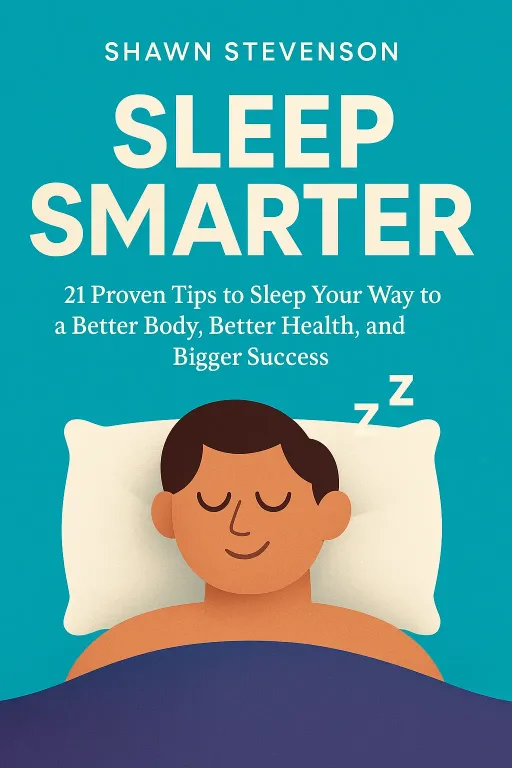
Jess: Okay, hit me. Why do we even sleep? Feels like a design flaw. You’re unconscious for a third of life—predators could eat you, emails pile up… Sophia: Walker would say that’s exactly the point. Sleep isn’t a shutdown—it’s a nightly software update. Memory gets uploaded, emotional junk files deleted, immune cells debugged. Skip it and your body runs yesterday’s code. Jess: So my Monday brain is basically Windows 95. Sophia: Pretty much. Walker’s research shows after just one night of four-to-five hours, your learning capacity drops by almost 40 percent. It’s not just fatigue—it’s neurological amnesia. Jess: Forty percent? That’s like paying for a master class and sleeping through half of it. Sophia: And the repair work’s physical too. Deep slow-wave sleep releases growth hormone, rebuilds muscle, clears amyloid plaque—the stuff linked to Alzheimer’s. REM sleep meanwhile is emotional therapy; it decouples memory from stress. Jess: So dreams are basically free trauma counseling. Sophia: Exactly—and most of us are ghosting our therapist. Jess: Okay, but if we all know sleep’s great, why are we still bragging about how little we get? Sophia: That’s where Arianna Huffington crashes the party. In The Sleep Revolution she calls it the “collective delusion of burnout”—we equate sleeplessness with dedication. Jess: Yeah, “I’ll sleep when I’m dead.” Sophia: Which, statistically, will be sooner if you keep saying that. She actually collapsed from exhaustion in her office and woke up in a pool of blood. That was her wake-up call—literally. She reframed sleep as the ultimate performance enhancer, not a weakness. Jess: I like that—it’s cultural rehab. Because coffee culture turned fatigue into fashion. Sophia: And tech made it worse. Blue light keeps our brains thinking it’s noon at midnight. Huffington argues we need a sleep revolution as big as the industrial one that broke it. Jess: So instead of “rise and grind,” it’s “rise, then nap.” Sophia: Speaking of naps—Stampi! Why We Nap takes us way back, showing that humans weren’t built for this one-block, eight-hour monopoly on sleep. Most mammals nap multiple times a day. We’re the weird ones going all-in at night. Jess: Wait, so polyphasic sleep isn’t just for Silicon Valley experiments? Sophia: Nope. Stampi studied sailors in round-the-world races. They’d sleep in twenty-minute chunks and still perform better than those forcing long wakes. The takeaway? The brain can adapt to multiple cycles—our “monophasic” sleep is more social invention than biology Jess: So maybe that 3 p. m. slump isn’t laziness; it’s ancient wiring. Sophia: Exactly. A built-in siesta gene. We just replaced it with espresso. Jess: Okay, now explain Michael Breus’s deal—the “Power of When.” Sophia: Breus is the chronotype guy. He says people fall into four animal types: Lions—early risers, Bears—daytime workers, Wolves—night owls, and Dolphins—light sleepers. Instead of forcing everyone onto a 9-to-5, he teaches you to schedule life by biology. Jess: So it’s not if I sleep, it’s when I do everything. Sophia: Bingo. He calls “when” the ultimate life hack. When to drink coffee, when to work out, when to have crucial conversations, even when to…well, get romantic. Jess: Now we’re talking circadian matchmaking. Sophia: He points out that after Edison’s light bulb in 1879, humanity basically declared war on night. Within a century, we destroyed 50,000 years of perfect bio-timekeeping. That’s why so many of us feel jet-lagged without leaving home Jess: Chrono-misalignment—sounds like my entire 20s. Sophia: Same. But when people align with their chronotype, energy skyrockets. He even had patients cure insomnia just by shifting schedules instead of adding pills. Jess: And that brings us to Shawn Stevenson—the practical one. Sophia: Sleep Smarter is like the street-smart sibling of Walker’s lab coat. He gives 21 rules that actually make it happen: sunlight early, caffeine curfew, keep it cool, black out the room, stretch, meditate, move your phone out. Jess: I remember one tip—get sunlight in the morning so your body knows it’s daytime. It’s like clock calibration. Sophia: Exactly. Stevenson calls it “owning your circadian rhythm before it owns you.” He ties it to hormones: melatonin, cortisol, leptin. Fix sleep, and weight loss, focus, mood—all follow. Jess: And he talks about temperature, right? Sophia: Yeah, optimal sleep happens around 65°F. The drop in body temperature triggers the brain to start sleep mode. Warm bath before bed actually cools you afterward—it’s sneaky science. Jess: So the ultimate bedtime routine isn’t Netflix and scrolling; it’s dark, cool, and boring. Sophia: That’s the dream. Literally. Jess: Alright, let’s stitch these five together. If we were building the ultimate sleep system—what’s the hierarchy? Sophia: Walker gives us the why—the biological non-negotiable. Huffington gives the context—our culture’s denial. Stampi expands the how—multiple rhythms. Breus adds the when—timing and personalization. Stevenson brings the how-to—daily behaviors. Jess: So it’s like: purpose, mindset, biology, rhythm, habit. Sophia: Exactly. They’re like stages of sleep literacy. Jess: That’s catchy—“sleep literacy.” We can’t fix what we don’t respect. Sophia: Right, and respect means consistency. You can’t binge-sleep on weekends like you binge Netflix. Walker calls that “social jet lag.” Your brain doesn’t have a weekend mode. Jess: Guilty. Every Monday feels like customs at the airport. Sophia: And Breus would say you’re flying against your time zone—your internal one. Shift that schedule by even an hour and you mess with insulin and cortisol. Jess: So even a small bedtime drift is like eating a donut at midnight. Sophia: Yeah, except it lasts all week. Jess: I want to dig into naps for a sec. Because every corporate wellness email says, “Power nap, 20 minutes.” But does that actually work? Sophia: Totally—Stampi’s research shows short naps restore alertness without entering deep slow-wave sleep, so you wake refreshed instead of groggy. NASA even found a 26-minute nap boosts performance by 34 percent. Jess: So the world’s most productive people are basically toddlers. Sophia: Exactly. And it’s not indulgence—it’s strategic downtime. Humans evolved in cycles: activity-rest-activity. We flattened it into one giant awake block, but the ultradian rhythm—the 90-minute focus cycle—still runs under the hood. Jess: Ultradian…sounds like a Marvel villain. Sophia: “Beware Ultradian! He strikes every 90 minutes!” But seriously, Stampi showed even in extreme conditions—solo sailors, astronauts—honoring those cycles preserves performance Jess: Let’s talk resistance. Because people hear all this and say, “I don’t have time to sleep eight hours.” Sophia: Walker’s data answers that bluntly: you lose time when you cut sleep. Reaction time, decision-making, creativity—all tank. It’s like trying to save gas by removing the tires. Jess: And Huffington would add that our sleepless hustle culture is bad business. Sleep-deprived employees cost billions in mistakes and burnout. She even convinced CEOs to put nap pods in offices. Sophia: Yeah, from Wall Street to the NBA—LeBron James sleeps 10 hours. Bezos says eight hours makes better decisions. The real flex is recovery. Jess: So maybe the new success metric isn’t how early you wake up—it’s how well you sleep when you do. Sophia: Amen. Jess: But let’s make it practical. If someone’s listening right now, half-zoned out on caffeine, what can they do tonight? Sophia: I’d start with Stevenson’s trifecta: light, temperature, and timing. Jess: I’d add Breus’s chronotype test—find out if you’re a Lion, Bear, Wolf, or Dolphin. Don’t fight your rhythm. Sophia: And Huff style: create a digital sunset. Park your phone outside the bedroom. Your mind can’t power down while it’s still on Slack. Jess: Walker would insist on a regular bedtime. Set it like an unbreakable meeting with your future self. Sophia: Stampi might sneak in: respect micro-rests. Between Zooms, close your eyes for 90 seconds. That’s your ultradian pit stop. Jess: Basically—don’t wait for vacation to recover your humanity.
Key takeaways
SECTION
Sophia: So what’s the big truth here? Jess: That sleep isn’t the absence of productivity—it’s the foundation of it. Sophia: Yes. We evolved to sleep the way we breathe: rhythmically, naturally, without guilt. Somewhere along the line, we turned it into a badge of shame. Jess: And that’s the real revolution Huffington talks about—reclaiming sleep as an act of self-respect, not self-indulgence. Sophia: Walker says “the shorter your sleep, the shorter your life.” Breus says “timing is everything.” Stevenson says “build habits that make sleep inevitable.” Stampi says “honor the rhythm.” Jess: Put together, it’s simple: Sleep isn’t downtime—it’s design time. Your brain’s literally rewiring itself for tomorrow. Sophia: So tonight, before you reach for another cup of courage, maybe reach for the light switch instead. Jess: Because you don’t need more coffee—you need real, deep sleep. Sophia: This is Aibrary, signing off.