The Operating System of Habit: A CIO's Playbook for Control and Transformation
Golden Hook & Introduction
SECTION
Atlas: Gaetan, as a CIO, you live and breathe systems. But what if I told you there's a hidden system running inside your company right now—a ghost in the machine—that dictates over 40% of what your team does every single day, without their conscious choice? It's not software. It's habit. And most leaders are completely blind to it.
Gaetan: That's a powerful and slightly terrifying thought. In my world, undocumented code is the biggest source of risk and inefficiency. The idea that 40% of human 'operations' are running on an undocumented script is... well, it's a huge opportunity for anyone willing to read the manual.
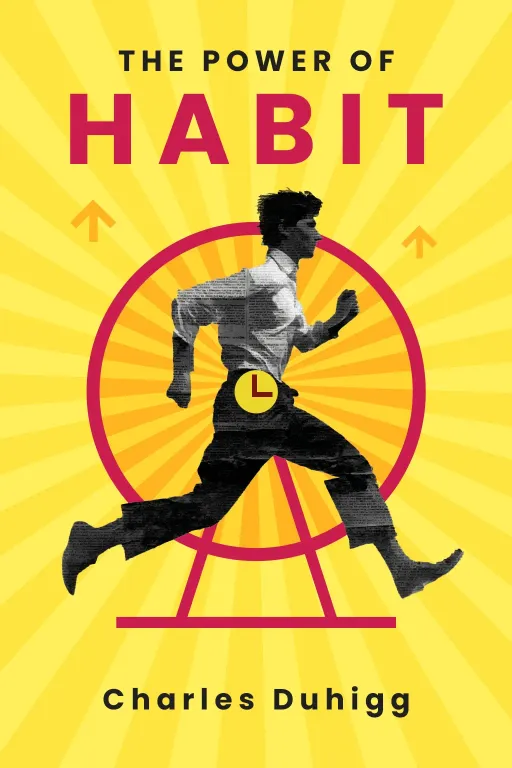
Atlas: Exactly. And that's what we're doing today. Charles Duhigg's 'The Power of Habit' isn't just a self-help book; it's a technical manual for this hidden operating system. Today we'll dive deep into this from two perspectives. First, we'll decode the fundamental 'operating system' of our habits—the simple loop that drives our actions.
Gaetan: The basic architecture. I like it.
Atlas: Then, we'll uncover the 'master key' for organizational change: the one keystone habit that can transform an entire company.
Gaetan: So, from debugging a single script to rebooting the entire server. Let's get into it.
Deep Dive into Core Topic 1: The Architecture of Habit
SECTION
Atlas: Perfect. Let's start by documenting that code. Duhigg boils it down to a simple, three-step loop that the brain runs automatically: Cue, Routine, Reward. The cue is the trigger, the routine is the action, and the reward is what your brain learns to crave.
Gaetan: A simple IF-THEN statement. IF Cue, THEN execute Routine to get Reward.
Atlas: Precisely. And the crazy part is how often we misdiagnose the 'Reward' part of that equation. Duhigg uses his own story. He developed a habit of going to the cafeteria every afternoon to buy a chocolate chip cookie. He gained eight pounds. He knew the routine was bad, but he couldn't stop.
Gaetan: So he tried to use willpower to just... not execute the routine. I can guess how that went.
Atlas: It failed completely. So he decided to become a data analyst of his own behavior. The routine was obvious: get up, walk to the cafeteria, buy a cookie, eat it. But what was the cue? And more importantly, what was the real reward he was craving?
Gaetan: He started experimenting, right? Changing the variables to isolate the function.
Atlas: Exactly. He thought the reward was the sugary rush. So one day, instead of a cookie, he bought a donut. Another day, an apple. He still felt the urge to go back to the cafeteria. So it wasn't the sugar. Then he thought, maybe it's a break from work. So he tried just walking outside for 15 minutes. Still didn't work.
Gaetan: The craving wasn't satisfied. The script was still running in the background, demanding the right reward.
Atlas: Right. Finally, he tried just walking over to a friend's desk and chatting for ten minutes, completely skipping the cafeteria. And boom. The urge was gone. He felt satisfied. He realized the reward he was craving wasn't the cookie at all. It was the moment of social connection. The cookie was just the easiest way he'd found to get it.
Gaetan: That's fascinating. So the 'bug' in his code wasn't a craving for sugar, it was an unfulfilled need for social connection. The 'fix' wasn't willpower, it was rewriting the routine to get the same reward. He changed the script from IF 3:30PM, THEN get_cookie. exe to IF 3:30PM, THEN socialize. exe. That's a logic swap. It's about debugging human behavior.
Atlas: That's the perfect way to put it. He identified the cue was the time of day, around 3:30 PM, and the reward was social interaction. Once he knew the architecture of the loop, he could consciously rewrite the routine. And that's the key for individuals. But what happens when you need to change the habits of 300 people? Or 30,000?
Deep Dive into Core Topic 2: Keystone Habits: The Master Key
SECTION
Atlas: This is where it gets really interesting for a leader. You can't debug every employee's individual cookie habit. You need a higher-level intervention. This brings us to the master key: the keystone habit. And the best story for this is about a failing aluminum company, Alcoa.
Gaetan: I'm listening. This sounds like a system-level problem.
Atlas: It was. The year is 1987. Alcoa is bleeding money, their factories are inefficient, morale is in the toilet. They bring in a new CEO, a former government bureaucrat named Paul O'Neill. He holds his first meeting with Wall Street investors. The room is tense. Everyone wants to hear about cost-cutting, synergy, the usual corporate jargon.
Gaetan: They want to hear his plan to fix the financials.
Atlas: O'Neill steps up to the microphone. And his first words are, "I want to talk to you about worker safety." The room goes silent. An investor literally runs out of the room to call his top clients and screams, "The board put a crazy hippie in charge! Sell everything!" He thought focusing on safety instead of profit was insane.
Gaetan: Okay, that's a bold opening. As a CIO, if I walked into a board meeting and said my top priority was rewriting the documentation for a legacy system instead of launching a new product, I'd get a similar reaction. So, why safety?
Atlas: That's the billion-dollar question. O'Neill understood something profound about organizational habits. He knew he couldn't just order a new culture. He had to create a condition that new habits to form. He announced a new policy: zero injuries. And any time a worker was injured, anywhere in the world, the president of that unit had to report it to O'Neill personally—within 24 hours—and include a plan to ensure it never happened again.
Gaetan: Wow. Okay, I see it now. He created a non-negotiable, high-urgency routine. The 24-hour clock is the key. That forces immediate action and bypasses all the normal bureaucratic delays.
Atlas: It did more than that! Think about the new habit loop. The is a worker injury. The is that a plant manager has to call his boss, a unit president, who then has to call a vice president in Pittsburgh, who then has to get O'Neill on the phone, even if it meant waking him up in the middle of the night. This single rule made a fast, efficient, and brutally honest communication system absolutely mandatory. You couldn't sit on bad news. You couldn't fudge the numbers. The old habit of managers hiding problems to look good was instantly broken.
Gaetan: It's a Trojan horse. The keystone habit of 'safety reporting' looked like it was about one thing, but it was really a vehicle for installing a completely new communication protocol across the entire company. He found a single API call—report_injury—that was so critical it forced the entire legacy system to be refactored around it.
Atlas: A perfect analogy. And once that new, rapid communication habit was in place for safety, it started to spread. Workers on the factory floor realized that if they could get the CEO's attention for a safety idea, maybe they could for an efficiency idea too. The new routines for communication spilled over into everything.
Gaetan: So he didn't have to launch a separate "innovation initiative" or a "culture change program." He just focused on making one critical habit work perfectly, and that habit rewired everything else as a side effect.
Atlas: And the result? Within a year of O'Neill taking over, Alcoa's profits hit a record high. By the time he retired, the company's annual net income was five times larger, and its market capitalization had risen by $27 billion. It also became one of the safest companies on the planet. All by focusing on one keystone habit.
Gaetan: It makes me think... what's the 'worker safety' equivalent for a B2B software company? It's probably not physical injury. But maybe it's a critical customer bug report. What if there was a non-negotiable habit: any bug that impacts a customer's business has to be on the CIO's desk, with a root cause analysis and a prevention plan, within 12 hours. That would force changes in our testing habits, our deployment habits, and our client communication habits almost overnight.
Synthesis & Takeaways
SECTION
Atlas: That is exactly the right question to ask. And it shows the power of this framework. So, when we look at the whole picture, we have two levels of thinking.
Gaetan: Right. There's the micro-level: understanding the Cue-Routine-Reward loop to debug your own personal habits or your team's minor inefficiencies. That's the socialize. exe fix.
Atlas: And then there's the macro-level, the leadership play. Don't try to fix a thousand small problems. Find the one keystone habit that, if you change it, creates a cascade and forces the entire system to reboot with a better operating procedure.
Gaetan: It's about finding the highest point of leverage. It reframes leadership from being about constant intervention to being about smart, initial system design. You build the right core habit, and the organization starts to manage itself.
Atlas: Which brings us to the final thought. For you, Gaetan, and for all the leaders listening: What is the one recurring frustration in your organization—the one that feels like a 'people problem' or just 'the way things are'?
Gaetan: And what if it's not a people problem, but a poorly designed habit loop? What's the real cue that triggers the mess, what's the ingrained routine that follows, and what's the hidden reward that keeps everyone locked in that cycle?
Atlas: Finding that is the first step. That's how you move from being managed by your organization's habits, to managing them. That's how you take control.