The Keystone Code: A Project Manager's Guide to Hacking Habits
Golden Hook & Introduction
SECTION
Dr. Roland Steele: Prime, have you ever been on a team, or even just noticed in your own life, where you fall into the exact same patterns, the same unproductive cycles, and you just can't figure out why? It almost feels like you're running a script you didn't write.
Prime: Absolutely, Roland. It's a classic project management problem. You see teams that consistently underestimate timelines or always end up in a last-minute scramble, despite every retrospective meeting aimed at fixing it. It's like the team itself has a habit, a default mode it reverts to under pressure.
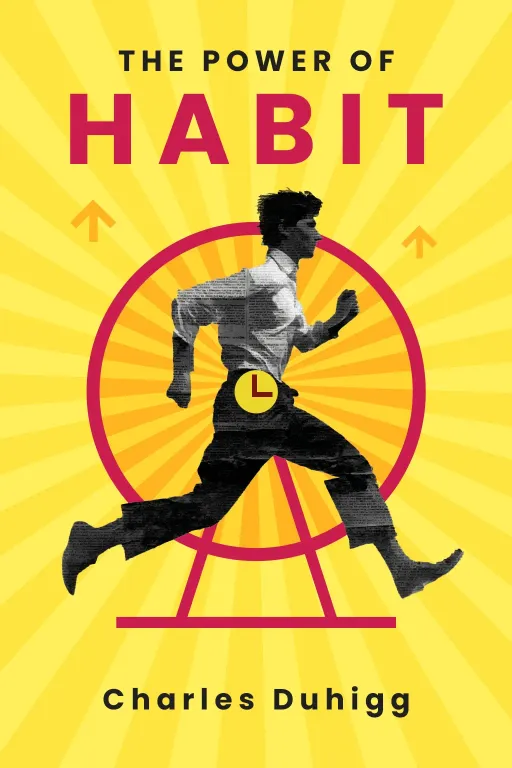
Dr. Roland Steele: That is the perfect way to frame it. And in his groundbreaking book, "The Power of Habit," Charles Duhigg argues that we can, in fact, become the architects of those scripts. We just need the blueprint.
Prime: I like the sound of that. A blueprint implies something we can analyze and re-engineer.
Dr. Roland Steele: Exactly. So today, we're going to tackle this from two perspectives. First, we'll explore the fundamental mechanics of how habits work by looking at the brain's 'habit loop.' Then, we'll discuss the strategic application of this knowledge through the concept of 'keystone habits'—the small changes that create massive impact.
Deep Dive into Core Topic 1: The Habit Loop: The Neurological Blueprint of Our Actions
SECTION
Dr. Roland Steele: So let's start with that source code. The book's first major insight is a simple, three-step model called the Habit Loop. And the most powerful way to understand it is through the incredible, and tragic, story of a man named Eugene Pauly.
Prime: I'm listening.
Dr. Roland Steele: In the early 90s, Eugene, a man in his seventies, was struck by viral encephalitis. The virus absolutely ravaged his brain, specifically the medial temporal lobe, which is critical for memory. When he recovered, he was a ghost. He couldn't remember his friends, what he'd eaten for breakfast, or even who his son was. His wife, Beverly, had to care for him constantly.
Prime: That's devastating. So he had complete amnesia?
Dr. Roland Steele: Essentially, yes. He couldn't form any new conscious memories. But then, Beverly noticed something bizarre. Every morning, she would take him for a walk around their block. One day, while she was getting ready, Eugene just walked out the front door by himself. She panicked, thinking he was lost forever. But fifteen minutes later, he walked back in. He had completed the route perfectly. When she asked him where he'd been or how he found his way, he had no idea. He couldn't even point to their own front door from the living room.
Prime: Wow. So his conscious mind was offline for memory, but this other, more primitive system was still running and learning. It's like the difference between RAM and a BIOS routine in a computer. The BIOS runs the same startup sequence every time, regardless of what's in active memory.
Dr. Roland Steele: That is a perfect analogy. Scientists studying Eugene realized he was a window into a part of the brain called the basal ganglia. This is where habits are stored. They discovered this system operates on a simple three-part loop. First, there's a —a trigger that tells your brain to go into automatic mode. For Eugene, the cue was maybe the time of day or seeing the front door.
Prime: Okay, the trigger.
Dr. Roland Steele: Second, there's the, which is the physical, mental, or emotional action you take. For Eugene, it was the physical act of walking the specific route. And finally, there's the, which is what helps your brain figure out if this particular loop is worth remembering for the future. The reward could have been the fresh air, a sense of accomplishment, or just the feeling of movement. Cue, Routine, Reward. This loop is running constantly, for all of us.
Prime: And because it's in a different part of the brain, Eugene could build that habit without ever consciously remembering doing it.
Dr. Roland Steele: Precisely. And it's not just for extreme cases. Duhigg uses his own example of developing a habit of buying a cookie every afternoon at work. He had to become a detective to figure out his loop. The routine was obvious—go to the cafeteria, buy a cookie. But what was the cue? And more importantly, what was the reward he was actually craving?
Prime: So what was it? The sugar?
Dr. Roland Steele: That's what he thought at first. But after experimenting, he realized the reward wasn't the cookie itself. It was the social interaction he got from chatting with colleagues in the cafeteria. The cookie was just part of the routine to get that reward. The cue was simply a time of day, mid-afternoon. Once he knew that, he could change the routine. At 3:30, instead of going for a cookie, he'd walk over to a friend's desk and chat for ten minutes. Same cue, same reward, different routine. The bad habit vanished.
Prime: That makes so much sense. You have to diagnose the real need the habit is serving. In a project context, a cue might be a 'critical bug' email from a client. The immediate routine is 'drop everything and firefight.' The reward is the immediate relief of 'problem solved' and a happy client. But that habit completely destroys long-term planning and creates a culture of reactivity.
Dr. Roland Steele: And the team gets addicted to that reward, that little hit of being the hero.
Prime: Exactly. To change it, you'd have to consciously design a new routine for that same cue. The new routine could be: 'log the bug, assess its true priority against the project plan, and then schedule the fix.' The reward is different—it's not immediate relief, but the longer-term, more satisfying reward of a stable, predictable workflow. You're re-engineering the team's habit loop.
Deep Dive into Core Topic 2: Keystone Habits: The 80/20 Rule of Personal and Organizational Change
SECTION
Dr. Roland Steele: And that's the perfect pivot, Prime. Because once you understand the loop, the next question is, which loop do you tackle first? You can't fix everything at once. This brings us to the book's most powerful idea for anyone in a leadership or management role: the Keystone Habit.
Prime: The 80/20 rule for habits. I like it. The one change that fixes twenty other things.
Dr. Roland Steele: You've got it. And there's no better story to illustrate this than Paul O'Neill's transformation of Alcoa, the aluminum giant. In 1987, O'Neill takes over as CEO. He's speaking to a room full of Wall Street investors. They're expecting to hear about profit margins, cost-cutting, and capital ratios.
Prime: Standard CEO playbook.
Dr. Roland Steele: Right. But O'Neill gets on stage and his first words are, "I want to talk to you about worker safety." The room goes dead silent. An investor literally runs out to call his clients and tell them to sell, thinking this new CEO is a crazy hippie who's going to tank the company. O'Neill says his goal is to bring worker injuries at Alcoa down to zero.
Prime: That's a bold, and to Wall Street, a very strange, primary goal.
Dr. Roland Steele: It was completely unheard of. But O'Neill understood something profound. He knew he couldn't just order a broken culture to change. He needed to find one habit that would force other patterns to be remade. He chose worker safety. He instituted a rule: any time there was an injury, the unit president had to report it to him personally within 24 hours and present a plan to ensure it never happened again.
Prime: Wow. That's a powerful forcing function. To meet that 24-hour deadline, a unit president in Germany can't use the normal 10-layer chain of command. He needs a direct line of communication. He needs ideas from the workers on the floor.
Dr. Roland Steele: You see it immediately! The single focus on safety completely shattered the company's rigid hierarchy. It forced vertical and horizontal communication. It gave unions and executives a shared goal, building trust. It empowered the lowest-level workers to stop a million-dollar production line if they saw something unsafe, giving them a sense of agency. It created a culture of excellence. If you're disciplined enough to have the best safety record in the world, you're probably disciplined enough to have the most efficient manufacturing processes.
Prime: That's a masterclass in project management, just on a corporate scale. O'Neill found a leading indicator, not a lagging one. Profits are a lagging indicator—they're the result of what you've already done. Worker safety was a leading indicator of operational excellence. It predicted future success.
Dr. Roland Steele: And the results were staggering. By the time O'Neill retired, Alcoa's net income was five times higher than when he started, and its market capitalization had grown by $27 billion. All by focusing on one keystone habit.
Prime: It makes me think about what a keystone habit for one of my project teams would be. It's probably not 'finish on time,' that's the goal. A keystone habit might be something like, 'every piece of work must have a clear, written specification before it's started.'
Dr. Roland Steele: Explain that. What would that change?
Prime: Well, that single habit would force better planning upfront. It would force clearer communication between the business side and the tech side. It would drastically reduce ambiguity and rework later on. It would make estimations more accurate. It's not the end goal itself, but it's the habit that makes the end goal of being on time and on budget almost inevitable. It's a keystone.
Synthesis & Takeaways
SECTION
Dr. Roland Steele: So there we have it. These two incredibly powerful ideas from the book. First, the diagnostic tool of the Habit Loop—Cue, Routine, Reward—which lets us understand the mechanics of our behavior.
Prime: And second, the strategic weapon of the Keystone Habit. Once you understand the mechanics, you apply your force at the point of maximum leverage to create a cascade of positive change. Understand the system, then find the lever.
Dr. Roland Steele: Beautifully put. And for our listeners, the book provides a simple, four-step framework to put this into practice. Step one: Identify the routine you want to change. Step two: Experiment with different rewards to figure out what you're actually craving. Step three: Isolate the cue by paying attention to your location, the time, your emotional state, and what just happened. And finally, step four: Have a plan. A specific, written-down plan for when the cue hits.
Prime: It's about moving from being a passenger in your own life to being the pilot. You're consciously making a choice to override the automatic script.
Dr. Roland Steele: Exactly. So, the question we want to leave everyone with today isn't just 'what habit do you want to change?' It's a more strategic one, a project manager's question: 'What is the keystone habit that, if you changed it, would start a chain reaction and make everything else fall into place?'
Prime: That's a powerful question. It's not about willpower; it's about strategy.
Dr. Roland Steele: That's the power of habit. Prime, this has been a fantastic discussion. Thank you.
Prime: The pleasure was all mine, Roland.