

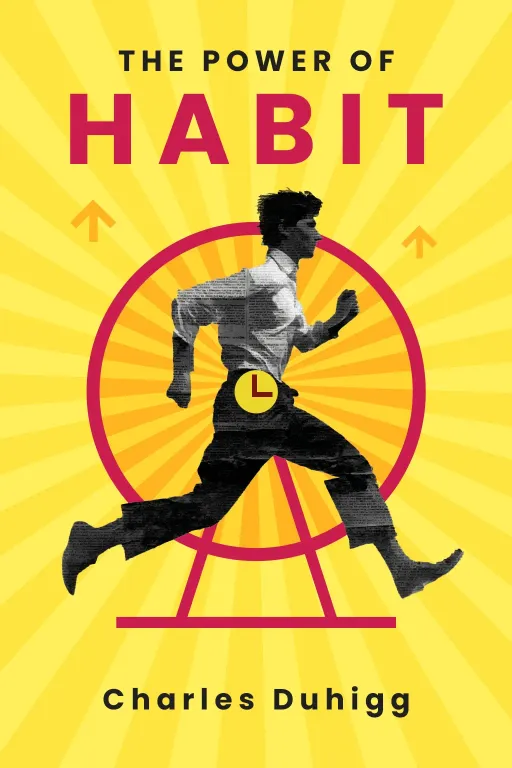
The Habit Loop: Engineering Engagement in Media & Marketing
Golden Hook & Introduction
SECTION
Orion: afhuj, as a product manager, you live and breathe user engagement. But what if I told you that the secret to why users stick with a product like TikTok, or why they open your media app every morning, isn't some complex algorithm, but a simple, three-step neurological loop that was perfected by an ad-man selling toothpaste a hundred years ago? This loop is so powerful it can build empires, but it can also get... a little creepy.
afhuj: That's the billion-dollar question, isn't it? We're always trying to figure out what makes a product 'sticky.' The idea that the answer is a century old is fascinating. And I'm definitely intrigued by the 'creepy' part. That’s where my world lives, right on that edge.
Orion: Exactly. And that's why we're diving into Charles Duhigg's "The Power of Habit" today. It's less a self-help book and more of a user manual for the human brain, especially for people like you who are in the business of building things people use every day.
afhuj: A user manual is what we need. It often feels like we're just guessing what users will do next.
Orion: Well, Duhigg argues it's not guesswork; it's science. Today we'll dive deep into this from two powerful perspectives. First, we'll decode the fundamental 'Habit Loop' and how it was used to build a national habit from scratch. Then, we'll shift to the modern day and explore the incredible, and slightly scary, power of using data to predict and shape our habits, and what that means for creators like us.
afhuj: Sounds perfect. Let's get into it.
Deep Dive into Core Topic 1: The Habit Loop as a Product Blueprint
SECTION
Orion: So let's start with that foundational blueprint. Duhigg calls it 'The Habit Loop.' It's an incredibly simple three-step process that our brains run on autopilot. Number one: The Cue. That's the trigger that tells your brain to go into automatic mode and which habit to use.
afhuj: Like your phone buzzing.
Orion: Precisely. Number two: The Routine. This is the behavior itself—the physical, mental, or emotional action you take. It's checking your phone after the buzz. And number three, the most important part: The Reward. This is what helps your brain figure out if this particular loop is worth remembering for the future. The pleasure, the distraction, the hit of information. Cue, Routine, Reward. That's it.
afhuj: It sounds so simple, but I can already see how it applies to everything.
Orion: It does. And the best story Duhigg tells to illustrate this is about a marketing genius named Claude Hopkins, and how he taught America to brush its teeth. Picture this: it's the early 1900s. Barely anyone in the United States brushes their teeth. It's just not a thing. So an old friend comes to Hopkins with a new product, a minty, foamy toothpaste called Pepsodent. How do you sell it?
afhuj: You have to create a need. Marketing 101. But a need for what? People didn't feel like their teeth were dirty.
Orion: Exactly. Hopkins needed a Cue. He scoured old dentistry textbooks and found references to the natural plaque, the mucin film, that covers everyone's teeth. It's always there. But Hopkins gave it a name and made it a villain. His ads said: "Just run your tongue across your teeth. You'll feel a film. That's what makes your teeth look 'off color' and invites decay."
afhuj: He created the Cue! He made people aware of something they'd never noticed and framed it as a problem. That's brilliant.
Orion: It's genius. Suddenly, millions of people are running their tongues over their teeth, feeling this film, and thinking, "Oh no, I have this problem!" The Routine he offered was simple: brush with Pepsodent. But the real magic was the Reward. Pepsodent contained citric acid and mint oil. These ingredients don't actually do much for teeth cleaning, but they create a cool, tingling sensation on the tongue and gums.
afhuj: Ah, so the tingle became the reward. It was the physical proof that the product was working. If you didn't feel that tingle, you wouldn't feel clean. He manufactured the craving for the reward.
Orion: You got it. Within a decade, Pepsodent was one of the best-selling products in the world, and more than half of Americans were brushing their teeth daily. Hopkins didn't just sell a product; he installed a habit loop in the nation's brain. So, in your world, in media publishing, how do you see this loop playing out?
afhuj: Oh, it's our entire playbook. The Cue is often a push notification about breaking news, or even just the feeling of boredom while waiting in line. The Routine is to unlock your phone, tap our app, and start scrolling. But the Reward... that's the million-dollar question we're always trying to answer.
Orion: What are the contenders?
afhuj: Well, is the reward the information itself? Or is it the feeling of relief from the anxiety of not knowing what's going on in the world? Is it the dopamine hit of a surprising headline or a viral video? We A/B test everything—headlines, article formats, video placement—to see what delivers that satisfying reward most effectively and keeps users coming back. That Pepsodent tingle... we're trying to create a digital version of that.
Orion: The feeling of being "in the know."
afhuj: Exactly. It's a powerful reward. And once you've delivered it enough times, the user's brain starts to crave it. The cue of boredom automatically triggers the routine of opening the app, because the brain knows that sweet, sweet reward of information is coming.
Deep Dive into Core Topic 2: Predictive Power & The Product Manager's Dilemma
SECTION
Orion: And that's the perfect transition. Because once you master creating that loop, the next logical step is predicting it. This is where Duhigg's book gets both fascinating and, as I said, a little creepy. Let's talk about Target.
afhuj: I have a feeling I know this story. It's legendary in marketing circles.
Orion: It is. In the early 2000s, Target's marketing department gave a mission to their statistician, a guy named Andrew Pole. The mission: find the pregnant shoppers. New parents are a goldmine. Once they start buying diapers at your store, they buy everything else there too. The problem is, by the time they're buying diapers, they're already on every competitor's mailing list.
afhuj: So you have to catch them earlier. But how? People don't exactly announce their first trimester to their local big-box store.
Orion: This is where the data comes in. Pole and his team analyzed the shopping histories of women who had signed up for Target's baby registry. They looked for patterns. And they found one. They identified about 25 products—like unscented lotion, large bags of cotton balls, zinc and magnesium supplements—that, when purchased together, allowed them to assign a "pregnancy prediction score" to any female shopper. They could even estimate her due date within a small window.
afhuj: That's an incredible feat of data analysis. And also, deeply unsettling.
Orion: It worked too well. The most famous anecdote is about a man who stormed into a Target outside Minneapolis, furious. He was waving a handful of coupons that had been mailed to his house, addressed to his high school-aged daughter. Coupons for baby clothes and cribs. He yelled at the manager, "Are you trying to encourage her to get pregnant?!"
afhuj: Oh, wow. I can only imagine that manager's panic.
Orion: The manager was mortified and apologized profusely. But then, a few days later, the manager called the father to apologize again. And this time, the father was the one who was embarrassed. He said, "I had a talk with my daughter. It turns out there's been some activities in my house I haven't been completely aware of. She's due in August. I owe you an apology."
afhuj: That is chilling. The algorithm knew before her own father did.
Orion: Right. Target realized they had to be more subtle. So their solution was to 'camouflage' the ads. They knew the pregnant woman would use the diaper coupons, but they'd mix them in with completely random things. A coupon for a lawnmower, a coupon for wine glasses, and then a coupon for diapers. It felt random, not like they were being watched. afhuj, as a PM, this story must hit close to home.
afhuj: It's the central ethical dilemma of our field. We have access to so much user data—what articles they read, how long they stay on a page, what they share, what time of day they're active. The pressure from the business side is always there to use that data to maximize engagement, to keep people in the app longer.
Orion: To perfect the habit loop.
afhuj: Exactly. But this story shows the backlash is real when you cross that invisible line. It stops feeling like helpful personalization and starts feeling invasive. And as someone with an ISFJ personality, the 'Protector' type, I really feel that tension. My instinct is to shield and help our users. We want to provide a valuable, informative service, not exploit a psychological weakness for the sake of a Key Performance Indicator, a KPI.
Orion: So where is the line?
afhuj: I think it comes down to intent. Are we using data to help a user discover an article they'll genuinely find valuable? Or are we using it to create a compulsive news-checking habit because we know they're anxious about a certain topic? The Target story is a warning. Just because you predict behavior, doesn't always mean you act on it in the most direct way.
Synthesis & Takeaways
SECTION
Orion: So we have these two powerful examples from the book. Pepsodent, which used the habit loop to build a positive public health habit from nothing. And Target, which showed how that same knowledge of habits can become a form of surveillance. It's the same science, but the application and intent are worlds apart.
afhuj: That's the perfect summary. The tool itself isn't good or bad. It's about the intent and, crucially, the reward. The Pepsodent reward was 'beauty and cleanliness'—a reward for the user. The Target reward, in its raw form, was for Target's bottom line, not the customer's peace of mind. They had to disguise it to make it palatable.
Orion: Which brings us to the final thought for our listeners. In the book, Duhigg talks about 'keystone habits'—small, core habits that can ripple out and change everything else. So, for everyone listening, especially those who build products or create marketing, here's the question to ponder: What is the one positive keystone habit you want to build for your users?
afhuj: And just as importantly, what is the genuine, valuable, and respectful reward you're offering them in return for their time and attention? That's the question that keeps us on the right side of that creepy line.
Orion: A perfect place to end. afhuj, thank you for connecting these ideas to your world so brilliantly.
afhuj: This was fascinating. Thanks, Orion.









