Personalized Podcast
Golden Hook & Introduction
SECTION
Orion: Imagine waking up, walking to your car, driving to the office, and suddenly realizing you do not remember a single turn you made. Your hands steered, your feet pressed the pedals, and your eyes monitored the road, yet your conscious mind was completely offline. In computer science, we would say your system was running a background script. In psychology, we call it a habit. Today, we are debugging the human algorithm. Welcome to the show. I am Orion, and joining me today is Ammar Abdullah, a software engineer who looks at the world through the clean, logical lens of system architecture. Ammar, it is great to have you here.
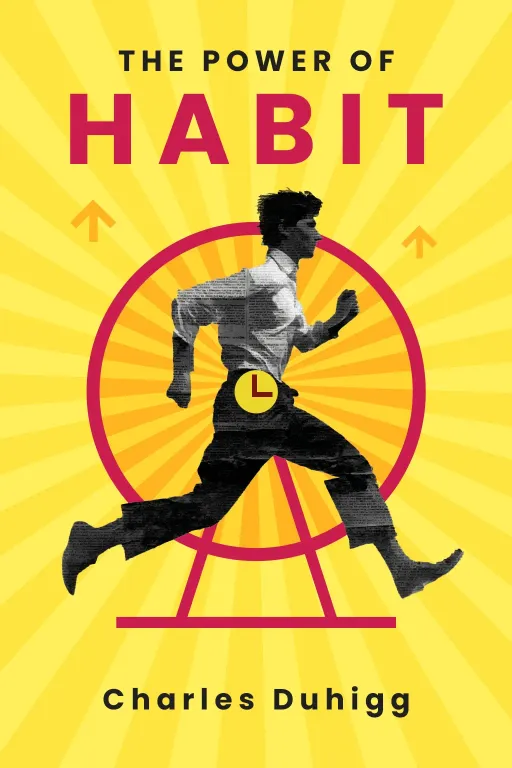
Ammar Abdullah: Thanks, Orion. It is great to be here. You know, when I first read Charles Duhigg's, I did not just see a self-help book. I saw a systems manual. As software engineers, we spend our lives trying to write efficient code, eliminate redundant loops, and optimize memory usage. It turns out, the human brain has been doing the exact same thing for millions of years. It is running highly optimized, compiled scripts to save cognitive CPU cycles.
Orion: That is a fascinating way to frame it. Today, we are going to deconstruct Duhigg's groundbreaking insights from three distinct architectural perspectives. First, we will analyze the event-driven architecture of the habit loop, looking at how the brain transitions from active processing to automated execution. Second, we will discuss the art of refactoring legacy code—how to use the Golden Rule of Habit Change and "keystone APIs" to transform personal and organizational systems. Finally, we will outline a concrete deployment plan so you can debug and optimize your own daily algorithms. Let us start with the hardware. Ammar, how does the brain actually compile a habit?
Deep Dive into Core Topic 1
SECTION
Orion: To understand the hardware of habit formation, we have to look at a series of landmark experiments conducted at MIT in the early 1990s. Researchers placed rats in a T-shaped maze with a piece of chocolate at one end. The maze was designed so that a loud click would sound, and then a partition would slide open, allowing the rat to explore. Initially, when the rats were put in the maze, their brain activity was off the charts. The sensors implanted in their brains showed that the cortex—the analytical, decision-making part of the brain—was working at maximum capacity. The rat was sniffing, scratching walls, and processing every new sensory input. But as the experiment was repeated day after day, something incredible happened. The rats learned the route, and their brain activity actually decreased.
Ammar Abdullah: This is what we call "chunking" in cognitive psychology, but in software terms, it is essentially compiling code. The first time you run a complex program, the system has to interpret every single line of code, which takes massive processing power. But once the program is compiled into a binary executable, the CPU can run it instantly with minimal overhead. The MIT researchers watched this compilation happen in real-time. As the rat learned the maze, its brain activity quieted down. The routine of hearing the click, running down the maze, and eating the chocolate became a single, consolidated "chunk" of behavior.
Orion: Exactly. And the brain structure responsible for storing these compiled chunks is the basal ganglia. It is an ancient, oval-shaped cluster of cells near the center of the skull. While the outer prefrontal cortex handles complex decisions, the basal ganglia acts like a low-level storage drive for automated routines. To make this clear, let us define the three-step loop that the basal ganglia executes. First, there is the cue: a trigger that tells your brain to go into automatic mode and which habit to use. Second, there is the routine: the physical, mental, or emotional action you perform. Third, there is the reward: a positive signal that tells your brain, "Hey, this loop worked, let us cache it for next time."
Ammar Abdullah: That is a classic event-driven architecture! The cue is the event listener, the routine is the callback function, and the reward is the success callback that reinforces the loop. If you think about it, more than forty percent of our daily actions are not conscious decisions; they are just these event-driven scripts running on the basal ganglia. And to see just how powerful this hardware-level execution is, we have to talk about one of the most famous patients in cognitive science: Eugene Pauly, or E. P.
Orion: E. P.'s story is absolutely mind-blowing. In 1993, Eugene suffered from viral encephalitis, a rare disease that destroyed his medial temporal lobe—the part of the brain responsible for memory, including the hippocampus. As a result, Eugene had virtually no short-term memory. He could not remember what he ate for breakfast, he could not retain the name of any doctor, and if you left the room for five minutes, he would completely forget you ever existed. He was living in a perpetual present. Yet, despite having a completely corrupted short-term memory system, Eugene could do things that baffled scientists.
Ammar Abdullah: Right! His wife, Beverly, noticed that Eugene could get up, walk into the kitchen, find the ingredients, and cook bacon and eggs. He would eat them, go watch TV, and then, because he forgot he had just eaten, he would go back and make bacon and eggs again! Even more shocking, he could walk around his neighborhood, navigate complex street turns, and find his way back home perfectly. But if you stopped him on the street and asked him to draw a map of where his house was, or even point in the direction of his home, he could not do it. His conscious RAM—his hippocampus—was completely offline. But his read-only memory—his basal ganglia—was running the "walk home" script perfectly.
Orion: It is a profound distinction. Larry Squire, the neuroscientist who studied Eugene, designed an experiment to test this. He took sixteen pairs of objects—like a blue plastic cup and a yellow toy—and placed them in front of Eugene. One object in each pair always had the word "correct" written on a sticker on the bottom. Eugene was asked to choose one. He had no conscious memory of doing this test from day to day. Every time he sat down, he thought he was doing it for the very first time. Yet, after weeks of practice, Eugene's accuracy rate climbed to over ninety-five percent. When Squire asked him he chose the correct object, Eugene would point to his head and say, "It is here somehow or another, and the hand just goes for it."
Ammar Abdullah: That gives me chills as an engineer. It is like a hardware interrupt. The conscious operating system has no access to the data, but the low-level firmware is executing the instruction set directly. But here is the catch, Orion: because these scripts are hardcoded into our neurological structures, they never truly disappear. Duhigg points out that once a habit is encoded, it is always lurking there, waiting for the right cue. This is why breaking a bad habit is so incredibly difficult. You cannot just hit "delete" on the file. You have to refactor it.
Deep Dive into Core Topic 2
SECTION
Orion: That brings us to our second core topic: refactoring the human codebase. In software development, refactoring means restructuring existing computer code without changing its external behavior. In the context of habit change, we call this the Golden Rule of Habit Change. To change a habit, you must keep the old cue, deliver the old reward, but insert a new routine. Ammar, how does this map to software design patterns?
Ammar Abdullah: It is the Open-Closed Principle! In software design, code should be open for extension but closed for modification. You do not want to rewrite the entire system architecture just to change one feature. You keep the interface—the inputs and the outputs—exactly the same, and you simply swap out the internal implementation. Let us look at Mandy's story from the book. Mandy was a twenty-four-year-old graduate student who had a chronic nail-biting habit. She bit her nails so severely that her fingers were constantly bleeding, which damaged her social life and self-esteem.
Orion: Yes, Mandy underwent what psychologists call Habit Reversal Training. The therapist first helped her identify the cue. Mandy realized that whenever she felt bored or tense, she would feel a physical tension in her fingertips. That tension was the cue. The reward she was seeking was physical stimulation—a quick hit of sensory feedback to relieve the tension. The routine, of course, was biting her nails. The therapist did not try to eliminate the tension in her fingers, nor did they try to eliminate her need for physical stimulation. Instead, they kept the cue and the reward, but inserted a new routine. Whenever Mandy felt that fingertip tension, she was instructed to immediately put her hands in her pockets or rub her arm.
Ammar Abdullah: And it worked! By keeping the input—fingertip tension—and the output—sensory stimulation—the same, she successfully swapped the buggy routine with a clean, harmless one. Within weeks, the nail-biting habit was completely overwritten. This is why willpower alone often fails. Willpower is like volatile RAM; it is a finite resource that gets depleted as the day goes on. If you try to force yourself to ignore a cue through sheer willpower, your system eventually runs out of memory, crashes, and falls back on the default legacy routine. You have to design a path of least resistance.
Orion: That concept of system-wide optimization brings us to "keystone habits." In any complex system, some modules are more critical than others. A change in a core API can optimize the performance of the entire application. In human systems, a keystone habit is a routine that, when altered, starts a chain reaction, dislodging and remaking other patterns throughout an organization or a life. The ultimate case study of this is Paul O'Neill and the transformation of Alcoa.
Ammar Abdullah: Oh, the Alcoa story is a masterclass in systems engineering. In 1987, Alcoa—the massive aluminum manufacturing giant—was struggling. Profits were down, workers were striking, and morale was in the gutter. The board hired Paul O'Neill, a former government bureaucrat, as the new CEO. His first meeting with Wall Street investors and stock analysts was legendary. They expected him to talk about profit margins, capital ratios, and tax strategies. Instead, O'Neill stood up and said, "I want to talk to you about worker safety. My goal is to make Alcoa the safest company in America. I want zero injuries."
Orion: The investors panicked! Some of them literally ran out of the room, called their clients, and said, "Sell the stock immediately! The new CEO is a crazy hippie who is going to ruin the company." But O'Neill understood something profound. You cannot order a massive, rigid bureaucracy to change its culture. That is not how systems work. Instead, he chose one keystone habit: workplace safety. He implemented a strict protocol: whenever a worker was injured, the unit president had to send a report to O'Neill within twenty-four hours, along with a plan to ensure it never happened again.
Ammar Abdullah: Think about the architectural dependencies required to make that twenty-four-hour reporting loop work. To get an injury report to the CEO in twenty-four hours, the floor worker had to feel safe reporting it to their foreman immediately. The foreman had to communicate it to the unit president instantly. The unit president had to analyze the engineering failure and propose a solution, which meant they had to constantly talk to the floor workers and safety engineers. Suddenly, the rigid, siloed communication channels of Alcoa had to be completely rebuilt. A new, highly efficient, real-time communication protocol was deployed across the entire global enterprise, all in the service of "safety."
Orion: And the results were staggering. By optimizing for safety, Alcoa streamlined its entire manufacturing process. They realized that the same equipment failures that caused injuries were also causing defective products and wasted materials. Within a year of O'Neill taking over, Alcoa's profits hit a record high. By the time he retired in 2000, the company's annual net income was five times larger, and its market capitalization had increased by twenty-seven billion dollars. All because they refactored one keystone habit.
Ammar Abdullah: It is beautiful. It is like refactoring a core database query and suddenly seeing the latency of the entire web application drop by eighty percent. Another great example of this system-level optimization is Starbucks and their approach to training employees in willpower.
Orion: Yes, Starbucks realized that many of their entry-level employees struggled with emotional regulation, especially when dealing with angry, screaming customers. When a system is hit with an unexpected, high-stress input, it can easily crash—meaning the employee yells back or walks out. To prevent this, Starbucks developed a training curriculum based on the "LATTE" method. Ammar, how does the LATTE method function as an exception-handling script?
Ammar Abdullah: It is literally a try-catch block for human interactions! Let us break down the LATTE protocol: L stands for Listen to the customer. A stands for Acknowledge their complaint. T stands for Take action to solve the problem. T stands for Thank them. And E stands for Explain why the problem occurred. Starbucks does not wait for the crisis to happen. They have their employees write out plans beforehand, detailing exactly what routine they will execute when a customer starts screaming. They pre-compile their exception handling. So when the "screaming customer" event is triggered, the employee does not have to make a conscious decision under stress. They just execute the pre-compiled LATTE script. It prevents cognitive memory leaks and keeps the system running smoothly.
Synthesis & Takeaways
SECTION
Orion: This has been an incredibly rich discussion, Ammar. We have looked at the brain's hardware, the event-driven nature of the habit loop, and how to refactor personal and organizational systems. Let us synthesize these insights into actionable recommendations for our listeners. If someone wants to debug their own daily routines, Duhigg provides a highly practical four-step framework in Appendix A of the book. Let us walk through these steps systematically.
Ammar Abdullah: Step one is to. This is the behavior you want to change. For Charles Duhigg, it was his daily afternoon trip to the cafeteria to buy a chocolate chip cookie, which was causing him to gain weight. In software terms, this is identifying the buggy function in your code.
Orion: Step two is to. This is where you play the role of a QA engineer. Why are you executing this routine? What is the actual return value? Duhigg experimented to find out what craving his cookie habit was satisfying. One day, when the urge hit, he went outside for a walk instead. The next day, he bought an apple. The next day, he got a cup of coffee. And another day, he went to a colleague's desk and chatted for ten minutes. By testing these different variables, he realized that the reward he actually craved was not sugar; it was social connection and a brief distraction from work. The cookie was just a proxy.
Ammar Abdullah: Step three is to. This is about identifying the event listener. Cues are incredibly sneaky because there is so much noise in our environment. To isolate the cue, Duhigg recommends writing down five pieces of system telemetry the moment the urge strikes: Location, Time, Emotional State, Other People, and the Immediately Preceding Action. When Duhigg did this for three days, he found a pattern. The location varied, the emotional state was neutral, but the time was always between 3:00 and 4:00 PM. The cue was simply a time-based cron job.
Orion: And finally, Step four is to. Once you know the cue, the routine, and the reward, you can write a new script. Duhigg's plan was simple: "At 3:30 PM, every day, I will walk to a friend's desk and talk for ten minutes." He set an alarm on his watch to act as the new trigger. Initially, it took conscious effort, but over time, the new routine became automatic. He got the social reward he craved, skipped the cookie, and optimized his daily health.
Ammar Abdullah: It is a perfect refactoring process. You do not try to delete the system; you just rewrite the internal logic of the function. For me, as a software engineer, this framework is incredibly empowering. It reminds us that we are not helpless victims of our conditioning. Our brains are highly plastic, adaptable systems.
Orion: That brings to mind a beautiful quote from the philosopher William James, which Duhigg highlights in the book. In 1890, James wrote, "All our life, so far as it has definite form, is but a mass of habits." But later, during a period of deep personal depression, James made a decision that changed his life. He wrote in his diary, "My first act of free will shall be to believe in free will." He decided to spend a year believing that he had the power to change his own habits. And that belief was the catalyst for his entire philosophical career.
Ammar Abdullah: That is the ultimate compiler flag, isn't it? Belief. For a habit to stay changed, especially during times of high stress or system overload, you have to believe that change is possible. And often, that belief is easier to maintain when you are part of a community—a team of other engineers, a support group, or a family—who are all running the same optimized code.
Orion: Well said, Ammar. To our listeners: what legacy code are you running today that is overdue for a refactor? What is the cue, what is the reward, and how can you rewrite the routine? Thank you for joining us on this deep dive into the system architecture of the human mind. Keep your code clean, keep your loops optimized, and we will see you in the next deployment.
Ammar Abdullah: Thanks everyone. Happy debugging!