Personalized Podcast
Golden Hook & Introduction
SECTION
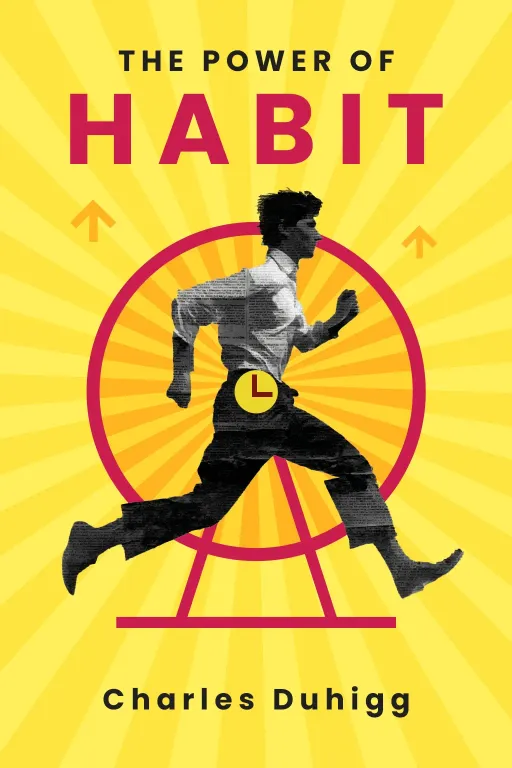
Nova: Picture this. A customer is screaming at a front desk agent or a contact center representative. The agent's heart is pounding, their palms are sweating, and their brain is screaming, fight or flight! In that split second, does the agent react with defensive anger, or do they respond with calm, empathetic grace? The secret to that choice isn't natural talent, and it's not just a good attitude. It is pure, neurological programming. Welcome to the show! I am Nova, and today we are diving into a book that completely rewrites the script on how we behave, Charles Duhigg's masterpiece, The Power of Habit: Why We Do What We Do in Life and Business. And we have a very special guest with us today, Yadeley, a brilliant sales manager, contact center trainer, and business management specialist. Yadeley, welcome!
Yadeley - Haïti 🇭🇹: Thank you, Nova! It is wonderful to be here. You know, that opening scenario you just painted is something I see almost every single day in the hospitality and contact center world. We often treat exceptional customer service as this innate, emotional trait, like you either have it or you don't. But Duhigg's work proves that excellent service is actually a collection of highly engineered habits. It's about training the brain to make empathy automatic.
Nova: Oh, I love that phrase, engineering empathy! Today, we are going to tackle Duhigg's insights from three fascinating angles. First, we'll look at how Starbucks turned willpower into an automatic routine to handle high-stress customer friction. Second, we'll explore how a single keystone habit can completely transform a team's culture. And finally, we'll reveal the Hey Ya! principle of sales, how to make new, unfamiliar offerings feel instantly comfortable to your guests. Let's start with that first one, Yadeley. Willpower. We think of it as this magical, infinite well of self-control, right? But Duhigg says it's actually more like a muscle.
Yadeley - Haïti 🇭🇹: Exactly, Nova. And just like any muscle, it gets tired. In cognitive psychology, we call this ego depletion. If a contact center agent spends their entire morning dealing with back-to-back difficult calls, by 2:00 PM, their willpower muscle is completely exhausted. That's when the slips happen. That's when they lose patience, or miss an upsell opportunity. Their prefrontal cortex, the part of the brain responsible for conscious decision-making and emotional control, is just too tired to function.
Willpower as an Automatic Routine
SECTION
Nova: Yes! And Duhigg illustrates this so beautifully through the story of a young man named Travis Leach. Travis grew up in a really tough environment. His parents were heavy drug addicts, and by the time he was a teenager, he had dropped out of high school. He had this massive problem, he couldn't control his emotions. If a customer was rude to him at a job, he would start crying, or scream back, or just walk out. He couldn't keep a job for more than a few weeks. But then, he got hired at Starbucks. And Starbucks didn't just teach him how to froth milk; they gave him a revolutionary cognitive tool. They taught him how to pre-program his reactions to stress.
Yadeley - Haïti 🇭🇹: This is where the science gets so beautiful. Starbucks realized that telling employees to just try harder wasn't working. Instead, they gave them a literal script for handling moments of crisis. They call it the LATTE method. It's an acronym: Listen to the customer, Acknowledge their complaint, Take action by solving the problem, Thank them, and then Explain why the problem occurred.
Nova: It sounds so simple, but the magic is in the timing, right?
Yadeley - Haïti 🇭🇹: Precisely. They don't practice this when the customer is already screaming. They practice it in quiet classrooms, role-playing over and over until the routine is deeply encoded into the basal ganglia, the primitive part of the brain where automatic habits are stored. So, when a real customer does start yelling, the employee doesn't have to use their exhausted prefrontal cortex to decide how to react. The cue, which is the angry customer, automatically triggers the pre-programmed routine, the LATTE method, leading to the reward, which is a resolved issue and a relieved employee.
Nova: That is brilliant! It takes the thinking out of the crisis. Travis Leach actually went from being a high school dropout who couldn't keep a entry-level job to managing multiple Starbucks stores with dozens of employees! His entire life was transformed because he learned to automate his willpower. Yadeley, how do you translate this into your training sessions for contact centers?
Yadeley - Haïti 🇭🇹: We operationalize it. When I train new agents, I tell them, we cannot rely on your good mood to carry you through a ten-hour shift. We have to design your habit loops. We identify the most common friction points, the angry guest, the system outage, the billing discrepancy. We write down the exact routine they will follow. We literally practice the physical cues, taking a deep breath, lowering the vocal pitch, using specific transition phrases. By the time they hit the floor, these aren't conscious choices anymore. They are neurological reflexes. It saves their energy, prevents burnout, and keeps the service quality incredibly consistent.
Nova: It's like giving them a shield of armor made of habits! That is so empowering. And it leads us perfectly into our second big topic, keystone habits. Duhigg introduces this idea that not all habits are created equal. Some habits have the power to start a chain reaction, changing other patterns as they move through an entire organization.
Keystone Habits in Hospitality
SECTION
Yadeley - Haïti 🇭🇹: Yes, keystone habits are the holy grail of business management. They are the leverage points. If you try to change fifty things in a company at once, you get chaos. But if you focus on transforming just one keystone habit, it dislodges and remakes other patterns naturally.
Nova: And the ultimate example of this in the book is the story of Paul O'Neill and the aluminum giant, Alcoa. In 1987, Alcoa was struggling. Profits were down, employees were striking, and the board hired Paul O'Neill, this former government bureaucrat, as the new CEO. His first meeting with Wall Street investors and stock analysts was legendary. He walks into this fancy Manhattan ballroom, and instead of talking about profit margins, capital ratios, or tax cuts, he looks at the audience and says, I want to talk to you about worker safety.
Yadeley - Haïti 🇭🇹: Can you imagine the look on those investors' faces? They thought he was crazy! Some of them literally ran out of the room to call their clients and say, sell the stock immediately, the new guy is going to ruin the company!
Nova: It was a total shock! But O'Neill understood something profound. He knew he couldn't just order people to be more productive or more profitable. That's not how the brain works. He needed a keystone habit that everyone, from the union workers on the factory floor to the top executives, could agree on. And that was zero injuries. He implemented a strict rule: whenever a worker was injured, the unit president had to report it to O'Neill within twenty-four hours, along with a plan to make sure it never happened again.
Yadeley - Haïti 🇭🇹: Think about the ripple effect of that one rule. To report an injury within twenty-four hours, the floor worker had to tell their supervisor immediately. The supervisor had to analyze the accident and communicate it to the manager. The manager had to draft a solution and send it to the executive. Suddenly, this rigid, bureaucratic, silent company had to build a lightning-fast, highly efficient communication system. And once those communication channels were open, employees started sharing other ideas, like how to improve manufacturing efficiency, reduce waste, and boost quality.
Nova: It's incredible! By the time O'Neill retired in 2000, Alcoa's annual net income was five times larger, and it was one of the safest workplaces in the entire world. All because of a single focus on safety. So, Yadeley, as a sales manager and trainer, how do we find the safety equivalent, the keystone habit, in a hospitality or contact center environment?
Yadeley - Haïti 🇭🇹: It's about finding the one habit that, when changed, makes other good behaviors easier. In hospitality, I believe the keystone habit is the immediate, blame-free reporting of guest friction. Think about it. If an agent or a front desk clerk encounters a frustrated guest, the natural human instinct is to hide it, or patch it up quickly so they don't get in trouble. But if we build a keystone habit where every single instance of guest friction is logged and discussed in a brief, daily, blame-free huddle, everything changes.
Nova: Oh, tell me more about that. What does that trigger?
Yadeley - Haïti 🇭🇹: First, it removes the fear of failure, which boosts morale. Second, it forces the team to collaborate on solutions, breaking down the silos between the front desk, housekeeping, and sales. Third, it gives us real-time data to improve our processes. Suddenly, because we are talking about friction daily, the sales team notices patterns in what guests actually want, the training department adjusts their scripts, and the service delivery becomes seamless. We didn't mandate better teamwork or higher sales; we just created a keystone habit of transparent communication around guest friction, and the rest followed naturally.
Nova: That is a masterclass in leadership! It's about creating small wins. Duhigg talks about how small wins are a steady application of a small advantage. Once you get one small win, it sets forces in motion that favor the next small win. It builds momentum.
Yadeley - Haïti 🇭🇹: Exactly. And that momentum is what carries a team through a busy season or a major organizational transition.
The "Hey Ya!" Principle of Sales
SECTION
Nova: Now, speaking of transitions and introducing new things, let's talk about our third topic, the Hey Ya! principle. This is all about how we introduce new ideas, new products, or even new sales pitches to our customers. The brain is naturally conservative, right? It craves what is familiar.
Yadeley - Haïti 🇭🇹: Yes, neurologically, our brains are wired to conserve energy. Familiar things require less cognitive processing, so they feel safe and rewarding. Unfamiliar things, even if they are objectively better, trigger a subtle sense of anxiety or resistance.
Nova: And this was proven in the most entertaining way in 2003 by Arista Records. They were getting ready to release the song Hey Ya! by OutKast. Now, they had this sophisticated computer algorithm called Hit Song Science that analyzed the structure of the song, the tempo, the melody, the chord progression. The algorithm basically went off the charts! It predicted that Hey Ya! was going to be a massive, historic hit. So, the radio stations started playing it. But then, something bizarre happened. Whenever the song came on, listeners didn't dance. They literally changed the station. The tune-out rate was massive!
Yadeley - Haïti 🇭🇹: It was too different! It was a blend of funk, rock, and hip-hop, with a super fast tempo. Even though it was a brilliant song, it sounded too exotic to the listener's ear. Their brains couldn't categorize it, so the automatic reaction was to reject it and look for something familiar, like a song they already knew they liked.
Nova: Right! So, how did they solve it? The radio programmers used a technique called sandwiching. They realized they had to make the unfamiliar seem familiar. So, they took Hey Ya! and sandwiched it between two massive, incredibly familiar hits, like songs by Celine Dion or Maroon 5. When listeners heard a song they loved, their brains went into a relaxed, happy, habitual state. Then, Hey Ya! would play. Because they were already in that comfortable groove, they listened to the new song without changing the station. Over a few weeks, their brains began to recognize the patterns of Hey Ya!. It became familiar. And once it became familiar, it became one of the biggest hits in radio history, winning Grammys and selling millions of albums!
Yadeley - Haïti 🇭🇹: I love that story so much because it is a perfect metaphor for sales and customer onboarding. In hospitality sales, we are constantly trying to introduce new packages, or upsell premium services, or transition guests to new digital platforms, like mobile check-in. And often, we face massive resistance. Not because the new service is bad, but because it's unfamiliar.
Nova: So, how do we sandwich it?
Yadeley - Haïti 🇭🇹: We anchor the unfamiliar in the familiar. If I am training a sales team to pitch a new, high-tech virtual concierge service to a traditional corporate client, we don't start by talking about the advanced AI or the app interface. That sounds complex and scary. Instead, we sandwich it. We start with what they know and love, our personalized, warm hospitality. We say, you know how much your travelers love our warm, personalized welcome at the front desk? We are keeping that exact same high-touch service, and we've simply added a digital key feature so they can bypass the line when they are in a rush, ensuring they always get that seamless, comfortable experience they expect from us.
Nova: Ah! You wrapped the new, unfamiliar technology inside the warm, familiar blanket of their existing relationship and expectations.
Yadeley - Haïti 🇭🇹: Exactly! You keep the cue, which is their desire for a comfortable stay, and the reward, which is a seamless experience, but you gently introduce a new routine, the digital key. It reduces the friction of change. In sales, if you want someone to buy something new, you must make it feel like something they've always wanted but didn't know they already had.
Synthesis & Takeaways
SECTION
Nova: That is pure gold, Yadeley! It's about reducing the cognitive load of the decision. Well, we have covered some incredible ground today. We talked about how willpower is a muscle and how the Starbucks LATTE method can automate emotional control in high-stress customer service. We explored how a single keystone habit, like transparently sharing guest friction, can transform an entire team's culture. And we looked at the Hey Ya! principle of sales, sandwiching the unfamiliar inside the familiar to drive customer adoption. Yadeley, for our listeners who are managers, trainers, or aspiring leaders, what is the first step they can take tomorrow to start applying these ideas?
Yadeley - Haïti 🇭🇹: I always recommend starting with the four-step framework outlined in the appendix of Duhigg's book. It is a simple, practical guide to reshaping any habit.
Nova: Let's walk through it!
Yadeley - Haïti 🇭🇹: Step one is to identify the routine. What is the specific behavior you want to change? For example, maybe your team is failing to offer upsells at check-in. Step two is to experiment with rewards. Why aren't they doing it? Is it because they fear rejection, or because they don't feel motivated, or because they just forget? Try different rewards, like a small team competition, or public recognition, to see what actually drives the behavior. Step three is to isolate the cue. What triggers the current behavior? Is it the rush of a long line, or the fear of making the transaction too long? And step four is to have a plan. Write down a simple, clear formula: When I see CUE, I will do ROUTINE in order to get REWARD.
Nova: That is so actionable. It takes the mystery out of behavioral change. It's not about wishing for better results; it's about designing the systems that make those results inevitable. Yadeley, thank you so much for sharing your incredible insights and expertise with us today. This has been an absolutely fascinating conversation.
Yadeley - Haïti 🇭🇹: It was my absolute pleasure, Nova! Thank you for having me. Remember, our habits shape our lives, but once we understand them, we have the power to shape our habits.
Nova: What a perfect note to end on! To everyone listening out there, thank you for joining us. Go out there, find your keystone habits, engineer your willpower, and we will see you next time!