Unlocking the Power of Habit & Self-Discipline
Golden Hook & Introduction
SECTION
Nova: Atlas, I was today years old when I realized that my morning coffee ritual, which feels like a spontaneous act of self-care, is actually a meticulously crafted sequence of cues, routines, and rewards. It's almost unsettling how predictable I am.
Atlas: Oh, I totally know that feeling! You mean like how I I'm choosing to scroll through social media for "just a minute" after opening my email, but it's actually my brain going, "Email = mild stress. Stress = dopamine hit from cat videos."
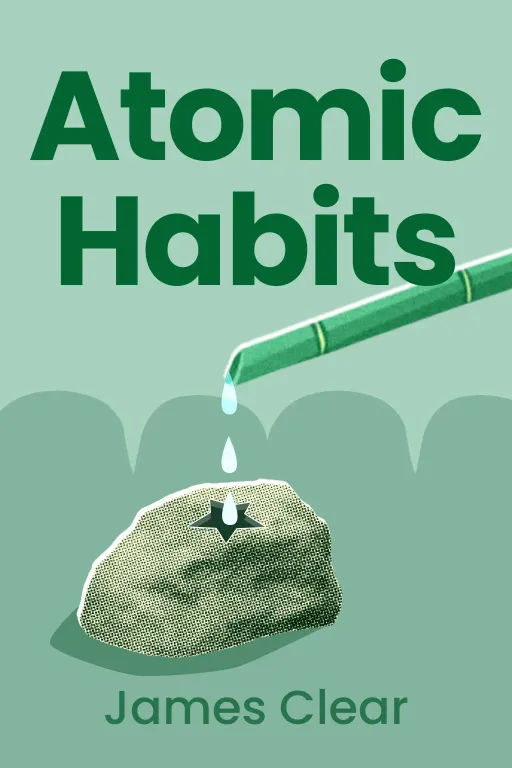
Nova: Exactly! It’s like our brains are running on autopilot, but we’re convinced we’re in the cockpit making conscious decisions. And that, my friend, is why today we're diving into the fascinating world of habits and self-discipline, guided by two seminal works: James Clear's "Atomic Habits" and Charles Duhigg's "The Power of Habit."
Atlas: Ah, the dynamic duo of habit formation! I’m curious, Nova, what’s one distinctive thing about these authors or their books that really sets the stage for our discussion?
Nova: Well, what's particularly striking about James Clear is his background. He wasn't a psychologist or a neuroscientist by training; he started as an entrepreneur and a weightlifter who applied scientific principles to his own life and then meticulously documented his findings. It’s this incredibly practical, evidence-based approach, rooted in personal experimentation, that makes "Atomic Habits" so resonant and widely acclaimed. It's less about abstract theory and more about a proven system for personal improvement.
Atlas: That makes sense. It’s that real-world, "I did this and it worked" vibe that makes his advice so digestible when you’re trying to build new routines.
Nova: Absolutely. And when you pair that with Duhigg's deep dive into the science, the synergy is incredible. Both books demystify the seemingly complex process of habit formation, offering accessible strategies to reshape your actions and, consequently, your destiny.
Atlas: So basically, we’re talking about how to hack our own operating systems for better outcomes. I love that.
The Architecture of Automatic Excellence
SECTION
Nova: Precisely. Let's start with Clear's "Atomic Habits." The core idea is deceptively simple but profoundly powerful: massive results don't come from massive actions, but from tiny, incremental changes—atomic habits—that compound over time.
Atlas: Hold on, so you’re saying my grand plan to wake up at 5 AM, run five miles, write a novel, and learn Mandarin all in one day might be… slightly ambitious?
Nova: That’s a great way to put it! Clear would argue that such a plan is almost certainly doomed because it relies on willpower, which is a finite resource. Instead, he advocates for making habits "atomic"—small, almost insignificant changes that are easy to start and maintain.
Atlas: So, like, instead of "write a novel," it's "write one sentence"?
Nova: Exactly! Or even smaller: "open the notebook." He introduces the "two-minute rule," which states that when you start a new habit, it should take less than two minutes to do. "Read before bed" becomes "read one page." "Go for a run" becomes "put on my running shoes." The idea is to make the of the habit so easy that you can't say no.
Atlas: That’s actually really inspiring. I can definitely relate to the mental hurdle of just something. It’s like the inertia of rest is so powerful.
Nova: And that's where the "identity-based habits" come in. Clear emphasizes that true behavior change isn't about you want to achieve, but you want to become. Instead of saying, "I want to run a marathon," you say, "I am a runner." Instead of "I want to write a book," you say, "I am a writer."
Atlas: Oh, I see. So it’s shifting from outcome-focused to identity-focused. That makes me wonder, how does that connect with Duhigg’s work on the 'habit loop'? Because that sounds a bit more about the mechanics, right?
Nova: That’s a perfect transition. While Clear provides the practical framework for habits, Duhigg, in "The Power of Habit," gives us the scientific blueprint of habits work at a fundamental level. He reveals the 'habit loop': cue, routine, reward.
Atlas: Okay, so cue, routine, reward. Can you give an example that really illustrates that?
Nova: Absolutely. Think about someone who comes home from work and immediately grabs a snack. The might be the feeling of arriving home, or even just the time of day. The is going to the fridge and eating the snack. The is the feeling of comfort, the taste, or the temporary distraction from stress.
Atlas: Right, like my social media scroll. The cue is opening email, the routine is picking up my phone, and the reward is that hit of novelty or distraction.
Nova: Exactly! Duhigg’s genius is in showing how this loop operates in individuals, organizations, and even societies. He shares incredible stories, like the one about Claude C. Hopkins, one of the fathers of modern advertising, and how he made Pepsodent toothpaste a household staple in the early 20th century.
Atlas: How did he do that? Because toothpaste existed before Pepsodent, but it wasn't a daily ritual for everyone.
Nova: It’s a brilliant example of manipulating the habit loop. Hopkins needed a cue and a reward. He found that a common dental problem at the time was "the film" on teeth. He advertised Pepsodent as the solution, promising to remove the film and make teeth pearly white. The became the feeling of "film" on your teeth. The was brushing with Pepsodent. But here's the kicker: the wasn't just clean teeth. Hopkins added citric acid and mint oil to the toothpaste. These ingredients, while not essential for cleaning, created a tingling sensation—a mild irritation—that people with cleanliness.
Atlas: Whoa. So the tingling became the reward, even if it was just a chemical sensation? People felt that tingle and thought, "My teeth are getting clean!"
Nova: Precisely. It was a sensory reward that solidified the routine. People it working, and that sensation became the indispensable part of the habit loop. And that’s a powerful insight: sometimes the reward isn't the logical outcome, but a sensory experience or emotional satisfaction. This is crucial for anyone trying to build a new habit – you need to engineer a reward that your brain craves.
Atlas: That’s incredible. So Clear is about making the starting small and identity-driven, and Duhigg is about understanding the underlying mechanism of the loop itself. It’s like one is the architect and the other is the engineer.
Your Daily Blueprint for Change
SECTION
Nova: That’s a fantastic analogy, Atlas. And the synergy between them is where the real power lies. Clear gives us the actionable steps, while Duhigg explains those steps work. When you combine them, you have a potent blueprint for change.
Atlas: So, for our listeners who are managing high-pressure teams or just trying to get through their own demanding days, how do these ideas translate into a practical blueprint? Because it can feel impossible to implement new habits when you’re already swamped.
Nova: That’s a completely valid point, and it’s something both Clear and Duhigg implicitly address. For someone in a high-stakes environment, the pressure isn't just about productivity; it's about decision fatigue and the sheer volume of tasks. This is where the "tiny step" approach becomes revolutionary.
Atlas: Okay, so take a tiny step. But how do you make it stick when you're already operating at 110%?
Nova: Let’s break it down using both authors. First, identify one habit you want to cultivate this week. Let's say it's "responding to emails more efficiently." Instead of "clear my inbox," which feels overwhelming, Clear would suggest applying the 2-minute rule. Perhaps it's "open the email app and respond to the first two emails." Just two.
Atlas: That sounds manageable. The barrier to entry is so low.
Nova: Exactly. Now, let’s layer in Duhigg's habit loop. What's the for email? It’s often the notification sound or seeing the unread count. The is opening the app. But what’s the? For many, it's the feeling of accomplishment or reducing the mental load of pending tasks. But you can enhance that reward.
Atlas: How do you enhance the reward for something as mundane as email?
Nova: You could consciously pair it with something you enjoy. For example, after you respond to those two emails, immediately take a 30-second stretch break, or allow yourself to listen to one song you love, or even just take a deep, satisfying breath. The key is to make the reward immediate and satisfying.
Atlas: So the cue is the notification, the routine is two quick responses, and the reward is that mini-break or positive sensation. It’s almost like you’re tricking your brain into enjoying email.
Nova: You’re not tricking it; you’re it. You’re making the "doing" of the habit more appealing by associating it with an immediate, positive outcome. Clear also talks about "habit stacking"—linking a new habit to an existing one. After I, I will.
Atlas: Ah, like, "After I pour my morning coffee, I will open my notebook and write one sentence."
Nova: Precisely. You’re leveraging existing neural pathways. And the beauty of this combined approach is that it doesn't require massive willpower. It requires smart design. By making habits tiny, easy, and rewarding, you bypass your brain's natural resistance to effort. This is how you build automatic excellence, not through brute force, but through clever architecture.
Atlas: That’s actually really empowering. It reframes self-discipline not as a battle against yourself, but as a strategic partnership with your own brain. It’s like, "Don't fight your nature, design around it."
Synthesis & Takeaways
SECTION
Nova: Exactly! The profound insight here is that our lives aren't shaped by a few grand decisions, but by the countless, almost invisible, choices we make every single day. Both Clear and Duhigg show us that these choices, these habits, are not fixed. They are malleable. They can be understood, deconstructed, and rebuilt.
Atlas: So it’s not about some innate superpower of self-control. It’s about understanding the system and then tweaking the variables.
Nova: That’s a great way to put it. It reveals that the path to massive personal and professional transformation isn't paved with heroic acts of willpower, but with tiny, consistent, almost boring adjustments. It’s about the cumulative effect of marginal gains. Think about the compounding interest of habits – a 1% improvement every day means you’re 37 times better by the end of the year. Conversely, a 1% decline makes you almost nothing. That’s the silent, relentless force of habits.
Atlas: That gives me chills. That’s such a hopeful way to look at it, because it means even small efforts really do matter. For anyone feeling overwhelmed by big goals, this is a reminder that the smallest step is still a step forward, and it compounds.
Nova: Absolutely. So, our challenge to you, dear listener, is to identify one tiny habit you want to cultivate this week. Apply Clear's 2-minute rule, find your cue, routine, and make sure there’s a satisfying reward. What small action will you take today to become the person you want to be tomorrow?
Atlas: That’s a powerful question to end on. It’s about taking that first atomic step.
Nova: This is Aibrary. Congratulations on your growth!