Understanding Your Inner World: The Power of Self-Awareness
Golden Hook & Introduction
SECTION
Nova: POV: You think you're making choices, but your brain's on autopilot. Today, we're busting the myth that you're always in control, and revealing the hidden forces shaping everything you do. Get ready to rethink your day.
Atlas: Whoa, Nova, that's a bold claim right out of the gate! "Autopilot"? Are you saying we're all just... robots with better marketing?
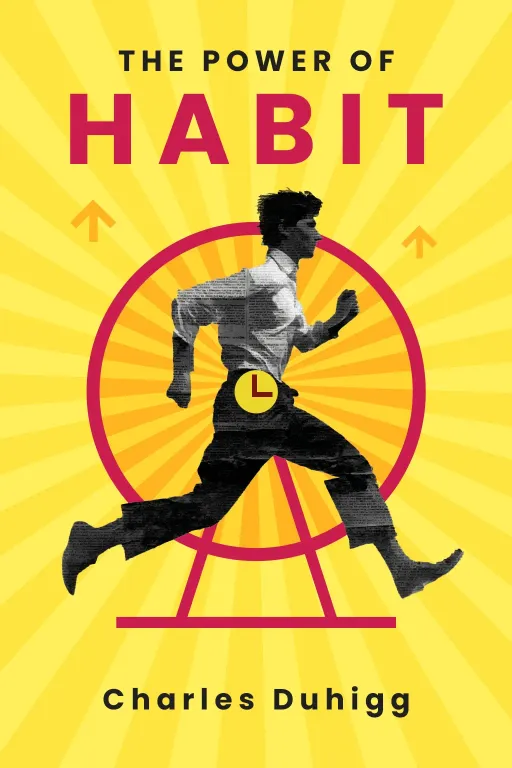
Nova: Not robots, Atlas, but definitely creatures of habit and often, unconscious motivation. We're diving deep into the inner workings of our minds today, exploring two incredible books that peel back the layers of self-awareness. We're talking about Charles Duhigg's groundbreaking "The Power of Habit" and Daniel H. Pink's incredibly insightful "Drive."
Atlas: Ah, two titans in understanding human behavior. I know Duhigg, with his background as an investigative reporter for the New York Times, really brought a journalistic rigor to "The Power of Habit," making complex science feel like a captivating story. You can feel that in the way he uncovers these hidden mechanisms.
Nova: Absolutely. And Pink, who started his career as a speechwriter for Al Gore, then completely pivoted to challenging traditional views on motivation, really opened our eyes to what truly fuels us beyond the obvious. Both authors have this incredible knack for making the invisible, visible.
Atlas: So, if these forces are "invisible," how do we even begin to understand them, let alone harness them? That sounds like a pretty big challenge for anyone trying to navigate their daily life.
Nova: Exactly, and that's our mission today. We're starting with the foundational layer: the invisible architecture of our habits.
The Invisible Architecture of Habits
SECTION
Nova: Think about it, Atlas. From brushing your teeth to checking your phone, a huge chunk of your day isn't a series of conscious decisions. It's habits. And Duhigg, in "The Power of Habit," masterfully breaks down this phenomenon into what he calls the "habit loop."
Atlas: Okay, so the "habit loop." I've heard that phrase tossed around. Can you break it down for us in a way that feels less like a psychology lecture and more like, well, understanding my own brain?
Nova: Of course. It's surprisingly simple when you see it. Every habit has three parts: first, a, which is a trigger that tells your brain to go into automatic mode and which habit to use. Then, there's the, which is the habit itself – the physical, mental, or emotional behavior. And finally, the, which helps your brain figure out if this particular loop is worth remembering for the future.
Atlas: That makes sense. So, like, my morning coffee ritual. The cue is waking up, the routine is making the coffee, and the reward is... the jolt of caffeine and the feeling of starting my day?
Nova: Precisely! And what's fascinating is how deeply ingrained these loops become. Duhigg shares so many compelling case studies, like how companies have leveraged this understanding. Consider the story of Febreze. When it first launched, it failed. People weren't buying it. It was a great odor eliminator, but consumers didn't have a to use it.
Atlas: Really? A product that literally makes things smell better failed? That sounds like a marketing nightmare. What was the missing piece?
Nova: The missing piece was the. The researchers realized people didn't notice bad smells in their own homes, so there was no cue to use Febreze. What they discovered was that people notice when something clean, and they loved the feeling of a. So, they repositioned Febreze not as an odor eliminator, but as the final, pleasant scent that completed the cleaning routine.
Atlas: Oh, I see! So the reward shifted. It went from "I smell something bad, I need to fix it" to "My house is clean, now I want it to clean and fresh as a final flourish." That’s genius! It tapped into an existing routine – cleaning – and added a new, delightful reward.
Nova: Exactly. The cue became the act of finishing a cleaning task, the routine became spraying Febreze, and the reward was that fresh, clean scent and the feeling of accomplishment. This small shift in understanding the habit loop completely transformed the product's success. It reveals how powerful these almost invisible forces can be.
Atlas: That's incredible. It really makes you think about all the seemingly small things we do that are actually powerful loops. For listeners who are curious learners, constantly trying to optimize their day, how do they start to uncover their own invisible habit architecture?
Nova: The "Tiny Step" here is to pick one routine in your day – anything from how you check emails to how you unwind in the evening – and consciously try to identify its cue, routine, and reward. Once you see the components, you can experiment. Can you swap the routine? Can you change the reward? Maybe the cue is stress, and the routine is mindless scrolling, and the reward is temporary distraction. What if you kept the cue of stress, but swapped scrolling for a two-minute stretch?
Atlas: That's a practical way to start. It’s about being an anthropologist of your own life, observing without judgment. It sounds like the first step to self-awareness is simply acknowledging how much of our lives are governed by these unseen loops.
The Intrinsic Engine of Motivation
SECTION
Nova: And that naturally leads us to the second key idea we need to talk about, which often acts as a conscious counterpoint to what we just discussed: the intrinsic engine of motivation. While habits are often unconscious, our deepest motivations are profoundly intentional, yet still often misunderstood. This is where Daniel Pink's "Drive" comes in, challenging the conventional wisdom of "carrots and sticks."
Atlas: Okay, so if I'm understanding this right, we've talked about the unconscious drivers of habits. Now we're moving into the deeper, intrinsic reasons we do things. But wait, Nova, isn't money still a huge motivator for most people? I mean, a bonus check certainly motivates me!
Nova: That's a common and very valid question, Atlas. And Pink isn't saying external rewards like money don't matter at all. They absolutely do, especially as a baseline. He calls them "Type X" motivators – they're about external rewards. But what he powerfully argues, supported by decades of research, is that once basic needs are met, these external motivators often to drive true engagement, creativity, or sustained performance, especially in knowledge-based work.
Atlas: That sounds a bit out there. We've been conditioned to believe that if you want someone to do something, you offer them a reward. If you want them to do it faster, you offer a bigger reward.
Nova: Exactly. But Pink presents compelling studies where, for tasks requiring even rudimentary cognitive skill, offering larger monetary incentives actually led to performance. People became too focused on the reward, which stifled creativity and problem-solving. What truly lights us up, he argues, are "Type I" motivators:
Atlas: Autonomy, mastery, purpose. Can you unpack those a little? Because that’s going to resonate with anyone who feels like they’re just going through the motions in their work or personal projects.
Nova: Absolutely. is our desire to direct our own lives, to be self-directed. It's about having control over what we do, when we do it, how we do it, and who we do it with. Think about Google's famous "20% time," where engineers could spend a fifth of their work week on any project they wanted. That led to Gmail and AdSense.
Atlas: Wow, that’s a powerful vote of confidence in individual freedom. And?
Nova: is our urge to get better and better at something that matters. It's the intrinsic satisfaction of pushing our skills, learning, and developing expertise. It's why people spend hours practicing a musical instrument or coding, even when there's no immediate external reward. The reward is the progress itself.
Atlas: I can see that. That feeling of genuinely improving, of tackling a new challenge and conquering it. And finally,?
Nova: is the yearning to do what we do in the service of something larger than ourselves. It's the desire to contribute, to make a difference. Many companies today are finding that attracting and retaining top talent isn't just about salary, but about offering a compelling mission, a clear "why" behind the work. It’s what makes work feel meaningful.
Atlas: So basically, you're saying that if we want to truly understand and shape our inner world, we need to look beyond the immediate gratification of habits and external rewards, and tap into these deeper wellsprings of autonomy, mastery, and purpose? That’s going to resonate with a lot of our listeners who are curious learners, constantly seeking deeper meaning.
Nova: Precisely. The "Deep Question" from our prompt challenges us: "What truly motivates you beyond external rewards? How can you create more opportunities for autonomy, mastery, and purpose in your daily life?" It’s about designing your life, not just reacting to it.
Synthesis & Takeaways
SECTION
Nova: So, bringing these two powerful ideas together, we see a complete picture of our inner world. On one hand, we have the unconscious architecture of our habits, dictating so much of what we. On the other, we have the conscious, intrinsic drive of autonomy, mastery, and purpose, shaping we do it.
Atlas: That’s actually really inspiring. It feels like understanding both of these gives us a much more powerful toolkit for self-awareness. It's like seeing the code behind the operating system of our lives.
Nova: Exactly! By unveiling these unseen influences – how habits loop and how intrinsic motivation truly fuels us – we gain the power to intentionally shape our lives and unlock greater fulfillment. It's about moving from being a passenger to becoming the architect of our own experience.
Atlas: So, for our listeners, the curious learners who enjoy deep thinking, if they want to apply this, it sounds like they should start by observing their habits, identifying those cues, routines, and rewards. And then, once they have that awareness, they can start asking those deeper questions about what truly motivates them.
Nova: Absolutely. Take that "Tiny Step" of identifying a habit loop, and then ask that "Deep Question" about your true drivers. It’s a powerful combination. It’s about recognizing that while habits can feel like chains, they're actually levers if you know how to use them. And purpose? That’s the engine that propels you forward. It’s the journey of self-discovery, not just a destination. It's about living a life that feels authentic and deeply meaningful.
Atlas: That's a fantastic way to put it, Nova. It’s not just about changing what you do, but understanding you do it, and then aligning those two.
Nova: Indeed. This is Aibrary. Congratulations on your growth!