The Unseen Strings: How Habits Shape Your World (and How to Change Them).
Golden Hook & Introduction
SECTION
Nova: Alright, Atlas, quick game. Five-word review of "habits." Go.
Atlas: Oh, I love this! Invisible, relentless, powerful, personal, potential. Your turn.
Nova: Ooh, solid. Mine are: automated, sneaky, inevitable, liberating,.
Atlas: Liberating. I like that. It immediately shifts the energy from "trapped by habits" to "empowered by them." Which, honestly, is the perfect lens for today's deep dive into "The Unseen Strings: How Habits Shape Your World."
Nova: Absolutely. And when we talk about understanding and changing habits, two names instantly spring to mind: Charles Duhigg and James Clear. Duhigg, a Pulitzer Prize-winning journalist, brought us "The Power of Habit," a masterclass in the science behind why we do what we do.
Atlas: Right, so he's really digging into the of it all.
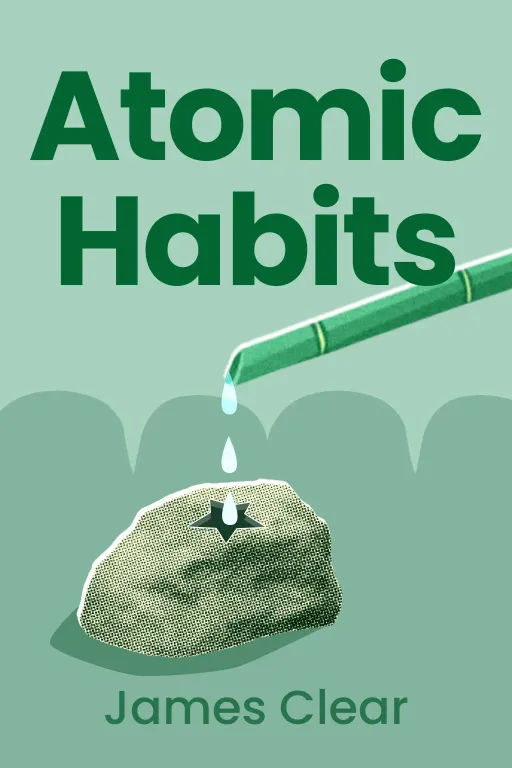
Nova: Exactly. And then James Clear, with "Atomic Habits," gave us the ultimate playbook. He’s renowned for taking complex behavioral science and distilling it into incredibly actionable, practical steps. Both books are widely acclaimed for their unique contributions to understanding something so fundamental to our existence.
Atlas: That makes me wonder, though. We all habits are important. We all to change them. But what is it we're fundamentally misunderstanding about them that makes it such a struggle? What's the hidden architecture?
The Hidden Architecture of Habit: Understanding the Habit Loop
SECTION
Nova: That’s the million-dollar question, isn't it? And Charles Duhigg, in "The Power of Habit," really pulls back the curtain on this. He introduces something called the "habit loop." It’s a deceptively simple three-part neurological process: a cue, a routine, and a reward.
Atlas: So you're saying it's not just this vague, abstract thing we do? There's an actual?
Nova: Precisely. Think of it like this: your brain is always looking for ways to save energy. When it encounters a situation—a cue—it remembers a solution that previously led to a reward. That solution becomes the routine. And the reward solidifies that loop, making it more likely to happen again next time the cue appears.
Atlas: Can you give an example? Like, how does that play out in real life? Because for someone trying to understand decision-making flaws, this sounds like a core mechanism for why we make the choices we do, even when we know they're not ideal.
Nova: It absolutely is. Let's take something almost everyone does: checking your phone. The cue might be a subtle vibration or a notification sound. Or even just a moment of boredom, a lull in conversation. That's the trigger.
Atlas: Oh, I know that feeling. The phone buzzes, and my hand is already reaching for it before I even consciously register the sound.
Nova: Exactly! That reaching and unlocking, then scrolling through social media or checking emails – that’s the routine. It’s the behavior itself. And the reward? It’s not just the information you find. It could be a hit of dopamine from a new like, the momentary distraction from boredom, the feeling of being connected, or even just satisfying the urge to know what’s happening.
Atlas: Wow. So the reward isn't always this grand, obvious thing. It could be something subtle, like a tiny hit of novelty or connection. And that reinforces the whole cycle.
Nova: That’s the crucial part. The brain isn’t discerning; it just learns to associate the cue with the routine, because it reliably delivers the reward. And the more times that loop fires, the stronger the neural pathway becomes, until it’s almost entirely automatic. We’re talking about powerful, subconscious programming here.
Atlas: So basically you're saying that if I want to break the habit of mindlessly checking my phone, I need to identify the cue, change the routine, and then find a new reward? But how do you even these cues when they're so subtle, so ingrained?
Nova: That's where the initial awareness comes in. Duhigg emphasizes that simply your loops is the first step. For example, if your phone-checking cue is boredom, the routine is scrolling, and the reward is distraction, you can start to intentionally interrupt it. When you feel that slight mental lull, instead of reaching for your phone, maybe you take a deep breath, or look out the window for thirty seconds. It's about consciously inserting a different routine to get a different, healthier reward.
Atlas: That’s a great way to put it. It’s like, instead of just reacting, you're observing yourself reacting and then inserting a new command. That makes sense.
Architecting Your Future: The Atomic Habits Framework for Change
SECTION
Nova: And once we understand these loops work, the next logical step is to ask: how do we build good habits and dismantle the bad ones? That's where James Clear's "Atomic Habits" provides such a brilliant, practical blueprint. He boils it down to four simple laws, or principles, for habit change.
Atlas: Okay, so Duhigg gives us the science, and Clear gives us the how-to. For those of us driven by self-discovery and trying to integrate new practices, what are these laws? Because sometimes, ‘actionable’ can still feel overwhelming.
Nova: That's the beauty of his approach – it’s about making it. The four laws are: Make it Obvious, Make it Attractive, Make it Easy, and Make it Satisfying. They're designed to stack the odds in your favor, not against you.
Atlas: So you're saying it's not about brute force willpower, which let's be honest, often fails.
Nova: Exactly. Let's take "Make it Obvious." If you want to start exercising, don't just about it. Lay out your workout clothes the night before. Put your running shoes by the door. If you want to read more, put a book on your pillow instead of your phone. The cue becomes unavoidable. You're leveraging the power of your environment.
Atlas: That’s actually really inspiring. It’s like setting up your future self for success, rather than relying on a burst of motivation that might not be there. But "Make it Attractive"? How do you make something like flossing attractive?
Nova: That's a fantastic question, and it speaks to the deeper layers of habit formation. "Make it Attractive" often involves what Clear calls "temptation bundling." You pair an action you to do with an action you to do. So, maybe you only let yourself listen to your favorite podcast while you're flossing. Or you only watch that guilty-pleasure show while you're on the treadmill. You're making the routine itself more appealing by attaching it to something you already enjoy.
Atlas: Okay, that makes sense. You're essentially bribing your brain, in a good way. And "Make it Easy"? I mean, we all know we should do things that are easy, but how do we apply that to, say, learning a new language? That's not easy.
Nova: That’s where the "atomic" part comes in. It’s about reducing the friction. Clear suggests the "two-minute rule." If you want to learn a language, don't commit to an hour a day. Commit to two minutes. Open the app, learn two words. The goal isn't to master the language in two minutes; it's to. To make the start so easy, you can't say no. Once you've started, often the momentum carries you further. The act of starting is the most critical part.
Atlas: That’s such a hopeful way to look at it. It’s not about the monumental effort, but the consistent, almost imperceptible effort. And finally, "Make it Satisfying." How do we ensure that? Because sometimes the rewards for good habits are delayed.
Nova: You hit on a key point there. The rewards for good habits are often long-term, while bad habits offer immediate gratification. So, "Make it Satisfying" means finding a way to give yourself an, small reward for completing a good habit. Maybe it’s putting a checkmark on a calendar, which gives a visual sense of progress. Or a small, non-food treat. The key is to make that immediate feeling positive, so your brain starts to associate the good habit with something pleasurable.
Atlas: So it's about closing that habit loop with a conscious, immediate pat on the back. This sounds like a complete re-engineering of how we approach personal growth. It’s less about willpower and more about environmental design and understanding our own psychology.
Synthesis & Takeaways
SECTION
Nova: Precisely. What Duhigg gives us is the profound understanding that our lives are largely a sum of these invisible habit loops, running in the background. And what Clear offers is this incredibly powerful, yet surprisingly simple, framework to consciously interrupt those loops and build new, more beneficial ones. The synergy of their work reveals that small, consistent actions, when properly structured, lead to remarkable results over time.
Atlas: That gives me chills, honestly. It’s not about some grand, sweeping gesture to change your life, but about these tiny, intentional adjustments that compound over time. For our listeners who are cultural explorers or deep self-reflectors, it’s about understanding the deep context of our own behavior, isn’t it?
Nova: It truly is. It's about recognizing that our daily rituals, our routines, are the very fabric of who we are becoming. And by understanding the "cue-routine-reward" loop and applying the principles of making habits obvious, attractive, easy, and satisfying, we gain profound agency over that process.
Atlas: So for anyone listening right now, wanting to take that "tiny step" tomorrow, what's the one thing you'd recommend they focus on?
Nova: Identify one small habit you want to cultivate. Just one. And then, tomorrow, make it visible and easy to start. Don't worry about perfection, just focus on the start. Put the book by your bed, lay out your running shoes, set out your vitamins. Just make that first step unavoidable. The momentum will follow.
Atlas: I love that. It’s all about setting the stage for your future self.
Nova: This is Aibrary. Congratulations on your growth!