The Power of Habit: Building Unstoppable Routines for Financial Success.
Golden Hook & Introduction
SECTION
Nova: We've all been told to "just try harder" or "have more willpower" when it comes to our money or career goals. We’re told to hustle more, sacrifice more, push harder.
Atlas: Oh, I know that feeling. The constant self-talk, the guilt when you inevitably fall off the wagon. It’s exhausting, frankly. For anyone managing high-stakes projects or trying to build serious wealth, the idea of just 'trying harder' can feel completely unsustainable.
Nova: Exactly! But what if that advice is actually sabotaging your success? What if relying solely on willpower is the biggest trap of all when you're aiming for financial independence or significant professional growth?
Atlas: Hold on, are you saying willpower is… overrated? That's a pretty bold claim, especially when so much of our culture celebrates grit and sheer determination. How could that possibly be true?
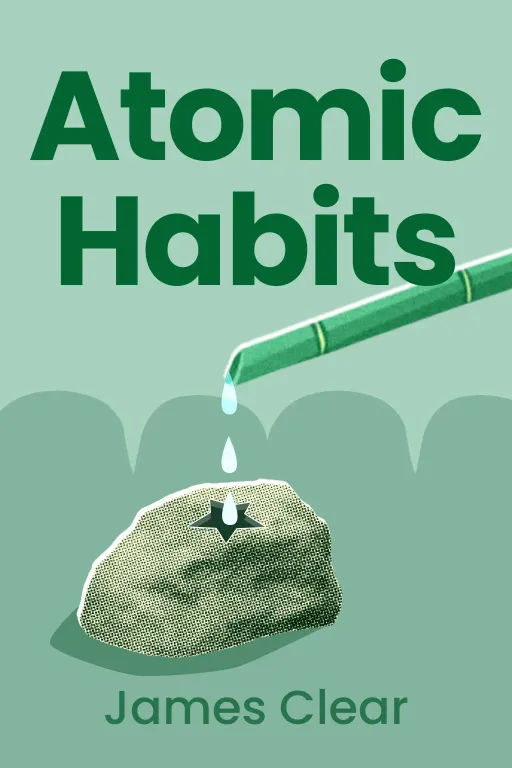
Nova: Well, that's exactly what we're diving into today, with two books that have radically reshaped our understanding of consistent progress: Charles Duhigg's seminal work, "The Power of Habit," and James Clear's globally acclaimed practical guide, "Atomic Habits."
Atlas: Ah, "The Power of Habit." I remember that one. Duhigg, as an award-winning investigative reporter for The New York Times, really brought that rigorous, evidence-based journalistic approach to unpacking the science of habit, which makes his work incredibly credible.
Nova: Absolutely. And then Clear, building on that foundation, distilled years of research into "Atomic Habits," which became a phenomenon by providing a remarkably practical, actionable system for anyone to implement. Together, these books offer a complete roadmap.
Atlas: So, we're not just talking about theory, but how to actually it. For our listeners who are strategic builders and insightful analysts, this sounds like a guide to not just understanding, but their own success.
Nova: Precisely. Today we're really exploring how our unconscious daily routines shape our entire financial and professional trajectory, and crucially, how we can consciously re-engineer them. First, we'll unravel the hidden science behind how habits actually form and control us, then we'll pivot to the practical, actionable strategies for transforming those habits into tools for unprecedented financial and professional success. It’s about mastering your trajectory.
The Hidden Architecture of Our Lives: Understanding the Habit Loop
SECTION
Nova: So, let's start with Duhigg's core insight, the foundational concept of the habit loop. It’s a three-step neurological feedback loop that governs every single habit, whether good or bad. It's the 'cue, routine, and reward.'
Atlas: Okay, 'cue, routine, and reward.' Sounds simple enough, but I imagine there's a lot more going on beneath the surface. For someone who's constantly trying to optimize their financial strategy or professional output, how does this invisible loop play out in their daily grind?
Nova: It's everywhere, Atlas. Think about this classic example from Duhigg's book: Febreze. When Procter & Gamble first launched Febreze, it was a flop. They marketed it as an odor eliminator, something people would use to get rid of bad smells. But people with the worst smelling homes had become "nose blind" to the odors. They didn't have a to use it.
Atlas: Fascinating. So, the product was effective, but the marketing completely missed the underlying habit mechanism. It’s like trying to sell a solution to a problem people don't consciously recognize they have.
Nova: Exactly. P&G then shifted their strategy. They found that people notice bad smells when they were cleaning. So they rebranded Febreze as a final touch, a reward for cleanliness. The cue became the act of finishing cleaning, the routine was spraying Febreze, and the reward was the fresh, clean scent and the feeling of accomplishment. Sales skyrocketed.
Atlas: Wow. That's incredible. So, you're saying we're essentially on autopilot for most of our day, guided by these unconscious cues and chasing often subtle rewards? That’s going to resonate with anyone who struggles with consistent financial planning or daily task management.
Nova: It’s true. A significant portion of our daily actions – some studies suggest up to 40% – aren't conscious decisions, but habits. For a strategic builder, this is crucial. If your financial habits are things like 'cue: stressful day at work, routine: mindless online shopping, reward: temporary distraction,' then even the best intentions for saving or investing will falter.
Atlas: That makes me wonder, how does this 'unconscious' loop impact someone trying to, say, consistently invest a portion of their income or avoid impulse purchases? It sounds almost deterministic, like we're just puppets of our own habits.
Nova: It's not deterministic in a hopeless way; it's empowering. Once you understand the loop, you can decode your own behavior. For instance, if you want to invest regularly, identify the cue – maybe it's payday. The routine is transferring funds. The reward? Seeing your investment portfolio grow, or even just the peace of mind knowing you're building financial security. The key is to consciously identify and then manipulate these loops.
Atlas: So, the first step to mastering our trajectory, as Nova puts it, isn't about brute-forcing change, but about becoming an insightful analyst of our own daily rhythms. It's about recognizing those hidden triggers and the payoffs we're subconsciously seeking. That's a profound shift in perspective.
Architecting Your Destiny: Practical Strategies for Habit Transformation
SECTION
Nova: Absolutely. And that naturally leads us to the second key idea, which often acts as the practical manual for applying Duhigg's science: James Clear's "Atomic Habits." Once we see the wires of the habit loop, how do we actually rewire them? Clear offers a brilliant, four-step framework: Make it Obvious, Make it Attractive, Make it Easy, and Make it Satisfying.
Atlas: Okay, so this is the 'how-to' part. For our results-oriented listeners, this is where the rubber meets the road. What does "Make it Obvious" mean in terms of, say, building a habit for strategic financial review or professional development?
Nova: "Make it Obvious" is all about environment design and clarity. If you want to start a financial habit, like reviewing your budget, put your financial statements or budgeting app icon front and center. Place your investment account login details where you see them daily. For professional development, if you want to learn a new skill, keep the relevant book or online course tab open on your browser, or schedule a dedicated, visible block in your calendar. The cue needs to be unavoidable.
Atlas: Right, like if I want to read more, I shouldn't bury the book under a pile of papers. It needs to be on my nightstand. But what about "Make it Attractive"? How do you make something like budget reconciliation or a tedious report attractive? It sounds a bit out there.
Nova: That's where habit stacking comes in. You pair the habit you to do with a habit you do and enjoy. For example, "After I brew my morning coffee, I will spend five minutes reviewing my investment portfolio." The coffee is the attractive, established habit that cues the new one. Or, "After I finish my most challenging work task, I will listen to one chapter of an audiobook on a topic I enjoy." You leverage existing desires.
Atlas: That's a great way to put it. It’s like creating a positive chain reaction instead of relying on pure discipline. So, then "Make it Easy" – this one feels intuitive, but how does it apply to something complex like financial modeling or strategic planning?
Nova: "Make it Easy" is about reducing friction. For financial habits, it’s automating savings transfers, setting up recurring investments, or using expense tracking apps that require minimal input. The fewer steps, the better. For professional impact, if you want to start a new strategic planning habit, don't aim for a three-hour deep dive initially. Start with a 15-minute weekly review. Make the first step so small, it feels ridiculous to do it. The goal is to build momentum, not to achieve perfection on day one.
Atlas: I can see how that would be critical. For our listeners who are aiming for financial independence, reducing friction in savings and investment is key. But how does someone in a high-pressure role use 'make it easy' to avoid burnout, not just build a new habit?
Nova: That's a brilliant question, Atlas. For avoiding burnout, 'make it easy' means designing your environment and schedule to. For example, pre-pack a healthy lunch the night before so you don't default to unhealthy takeout during a stressful day. Or, make your evening wind-down routine so effortless—dim the lights, put your phone away—that you naturally transition out of work mode. It's about making the choice the path of least resistance.
Atlas: Okay, and finally, "Make it Satisfying." For long-term goals like financial independence, where the rewards can feel distant, how do we make the immediate action satisfying?
Nova: This is crucial because our brains love immediate gratification. For financial goals, it could be a visual tracker that shows your savings growing. Or, when you hit a small investment milestone, treat yourself to something small and non-detrimental to your goal – a nice coffee, a new book. For professional tasks, it could be a simple checklist that gives you a hit of dopamine every time you check off a completed item. The immediate satisfaction reinforces the behavior, making you want to repeat it.
Atlas: So, it's about engineering those little bursts of positive feedback, even when the big payoff is years away. This isn't just about discipline; it's about understanding human psychology and designing systems that work our nature, not against it. That’s a profound insight that goes beyond mere productivity hacks.
Synthesis & Takeaways
SECTION
Nova: Exactly, Atlas. What these books ultimately reveal is that our lives aren't defined by grand, heroic gestures, but by the relentless accumulation of small, atomic actions. By understanding the habit loop from Duhigg and applying Clear's four laws, we liberate ourselves from the exhausting cycle of relying on willpower.
Atlas: So, it's not about being a superhuman; it's about being a strategic builder of your own systems. It means you can proactively design your environment, your routines, and even your internal reward mechanisms to consistently move towards financial independence and professional mastery, almost on autopilot in the best possible way.
Nova: That’s the real power. It’s about creating systems where success is the default, not an uphill battle. Think about it: Consistent small actions, not heroic efforts, build empires—whether that's a financial empire, a career legacy, or simply a life of greater peace and purpose.
Atlas: That gives me chills. It transforms the daunting task of achieving big goals into a series of manageable, even enjoyable, steps. For anyone listening who feels stuck or overwhelmed, this framework is a true game-changer.
Nova: It absolutely is. And for our listeners, here's your tiny step: Identify just one small habit, related to your finances or work, that you want to start or stop. Then pick one of James Clear's laws – Make it Obvious, Attractive, Easy, or Satisfying – and apply it this week.
Atlas: That's a fantastic challenge. And we'd love to hear about it! Share your chosen tiny habit and how you plan to implement it on social media. Let's build this community of empowered achievers together.
Nova: This is Aibrary. Congratulations on your growth!