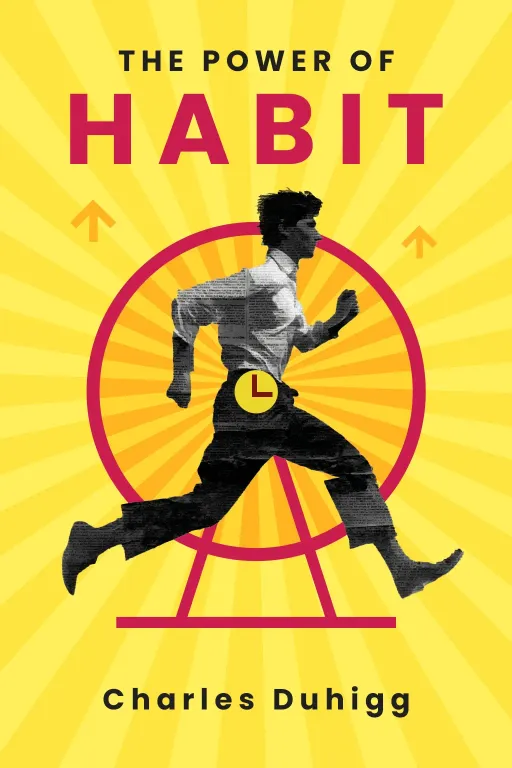
The Power of Habit: Building Systems for Consistent Success.
Golden Hook & Introduction: The Willpower Myth
SECTION
Nova: Here's a thought that might blow your mind: your daily success, your personal growth, even your business's trajectory, has far less to do with how much willpower you possess, and far more to do with invisible, automatic forces.
Atlas: Oh, I like that! So, it's not about grinding harder or "just doing it," but something else entirely? Because honestly, willpower feels like a finite resource, and mine often runs out by lunchtime.
Nova: Exactly! And that's precisely what we're unraveling today. We’re diving into a book that fundamentally reshaped how we understand human behavior and organizational dynamics: by Charles Duhigg.
Atlas: Duhigg! I know the name, but what's his secret sauce?
Nova: What's fascinating is that Duhigg isn't a neuroscientist or a psychologist by training; he's an investigative journalist. He brought this incredible knack for storytelling and rigorous reporting to the complex science of habits, making it incredibly accessible. The book became a massive bestseller, not just because it explains habits are, but they work, and most importantly,. It truly earned its widespread acclaim by demystifying an abstract area of research and making it personal and actionable.
Atlas: That’s a great way to put it. So, he's basically giving us the cheat codes to our own brains, then? Because if it's not willpower, then what is this 'invisible force' you mentioned?
Deep Dive into Core Topic 1: Deconstructing the Habit Loop with P&G's Febreze Case Study
SECTION
Nova: Precisely. Duhigg introduces us to the 'habit loop,' the fundamental neurological pattern that governs all habits, good or bad. It has three parts: a cue, a routine, and a reward. Think of it as the invisible architecture behind almost everything you do, from brushing your teeth to checking your phone.
Atlas: Okay, a cue, a routine, and a reward. That sounds simple enough, but where does the 'invisible' part come in? Does this apply to, say, a company trying to sell a new product, or just my morning coffee?
Nova: Oh, it applies everywhere! And the Febreze story from the book is a classic example of its power. Procter & Gamble launched Febreze as an odor eliminator. They had this amazing chemical that literally scrubbed bad smells from the air. They spent millions, and it flopped. People just weren't buying it.
Atlas: Hold on, a product that eliminates bad smells, and it? That sounds like a no-brainer winner to me. What went wrong?
Nova: That's the genius of the habit loop. P&G realized they were marketing it to the wrong part of the loop. They were trying to get people to spray Febreze when something —the problem was, people often become "nose blind" to their own bad odors. So, there was no strong.
Atlas: I see. So, if you can’t smell the problem, you don’t feel the need for the solution. What did they do then?
Nova: They sent researchers into homes, observing people's cleaning routines. And they noticed something fascinating. People would clean their homes, scrub the floors, wipe the counters. And they finished, they'd often do one more thing: a spritz of something to make the room smell fresh. Not because it, but as a finishing touch.
Atlas: Ah, I’m starting to get it. That’s the! The feeling of a clean room, the completion of a task.
Nova: Exactly! The became the act of finishing a cleaning routine. The was spraying Febreze. But here’s the kicker, the crucial part: what was the? It wasn't just the absence of a bad smell anymore. It was the psychological satisfaction of a job well done, the feeling of a "fresh and clean" home, the ritualistic completion that signaled peace and order. That fresh scent became the symbolic reward for their hard work.
Atlas: That's incredible! So, they shifted from "eliminate bad smells" to "celebrate clean." The reward isn't just a good feeling, but a deep psychological satisfaction that reinforces the routine. It’s like the brain saying, "Yes! You did it! Here's your little olfactory trophy!"
Nova: Precisely. They started marketing Febreze not as an odor killer, but as the final, delightful flourish in a cleaning ritual. "Spray Febreze for a fresh scent that says 'clean'!" And boom, it became a billion-dollar product. It's a perfect illustration of how understanding that cue-routine-reward loop allows you to engineer behavior, whether it's buying a product or building a personal habit.
Atlas: That makes me wonder, how does this apply to habits? Like, my morning coffee routine, what's its hidden reward? Is it just the caffeine, or something deeper?
Nova: It's often deeper. The caffeine is part of it, the routine of making it, the warmth of the cup – but the reward might be the quiet moment of reflection, the signal that your workday is starting, or even just the comfort of a familiar ritual. Identifying that true reward is often the most elusive but critical step in either changing or building a habit.
Application: Engineering Positive Routines & The Tiny Step
SECTION
Atlas: Okay, so if we know all this, how do we actually use it? How do we go from understanding Febreze to engineering positive routines in our own lives, especially for someone trying to learn new things or be more consistent?
Nova: That's the powerful next step. The insights from aren't just for marketers; they're for anyone trying to achieve consistent success. The key is to intentionally design your habits by hijacking existing cues and linking them to new, desired routines, followed by a meaningful reward.
Atlas: So, for someone trying to, say, learn a new skill, how do they find the right 'cue' and 'reward' without it feeling like a chore? What's the secret to making it stick?
Nova: Well, it starts with identifying an existing cue, something you do without thinking. Maybe it's opening your laptop in the morning, or finishing dinner, or sitting down on the couch. That's your anchor. Then, you attach the of the new routine.
Atlas: That 'tiny step' idea from the book, is that about making the routine so small it's impossible to fail?
Nova: Absolutely. If you want to start exercising, don't aim for an hour at the gym. Maybe the routine is just putting on your running shoes after your morning coffee. The cue is the finished coffee; the routine is the shoes. And the reward? It could be the sense of accomplishment, or even just allowing yourself to watch a favorite show the shoes are on.
Atlas: That’s brilliant. It feels less like a monumental effort and more like a small, natural extension of what you're already doing. I imagine a lot of our listeners are also wondering how to break habits using this. Is it just reversing the loop?
Nova: Not exactly reversing, but the routine. The cue and the reward often remain the same, especially for deeply ingrained habits. The trick is to identify the cue and the reward, then consciously insert a that still delivers that same reward. For example, if your craving for a cigarette is cued by stress and rewarded by a temporary sense of relief, you need to find a different routine—like a quick walk or deep breathing—that also delivers that stress relief.
Atlas: That makes sense! It’s not about fighting the urge, but redirecting it. So, the goal is to make good habits almost automatic, like breathing, so we don't have to rely on that elusive willpower.
Nova: Exactly. It's about leveraging the brain's natural programming for efficiency, rather than constantly battling against it. You're engineering your environment and your internal systems to work you, creating predictable outcomes.
Synthesis & Takeaways: Beyond Willpower to Intentional Design
SECTION
Nova: So, what we've really been talking about today is this profound insight: consistent success, whether it's in a massive corporation or your personal life, isn't some mystical outcome of extraordinary willpower. It's the intelligent design of invisible systems—the habit loops that govern our every action.
Atlas: It’s empowering, honestly. The idea that we can consciously identify cues, engineer routines, and define rewards to create the life we want, without constantly feeling like we're wrestling with ourselves. It's about being more strategic with our psychology.
Nova: Absolutely. And the "tiny step" from the book is the perfect starting point. Don't try to overhaul everything at once. Just identify one small, repeatable action you can take daily that contributes to a major goal, and link it to an existing cue in your routine.
Atlas: Like putting on your running shoes after that morning coffee, or taking five minutes to learn something new before checking your email.
Nova: Precisely. Those small, consistent actions, engineered into your existing patterns, are the true building blocks of monumental success. It's about making progress inevitable, one habit loop at a time.
Atlas: That’s actually really inspiring. It shifts the focus from a daunting mountain to climb to a series of manageable, satisfying steps.
Nova: The power isn't in the size of the step, but in its consistency, and the intelligent design behind it.
Atlas: This is Aibrary. Congratulations on your growth!