The Invisible Forces Shaping Your Habits: How to Build Lasting Change.
Golden Hook & Introduction
SECTION
Nova: What if I told you that most of your day isn't really 'you' making choices, but a ghost in the machine, quietly running the show?
Atlas: Whoa, a ghost? Sounds a bit spooky, but honestly, it resonates. Some days it feels like I'm just watching myself go through the motions.
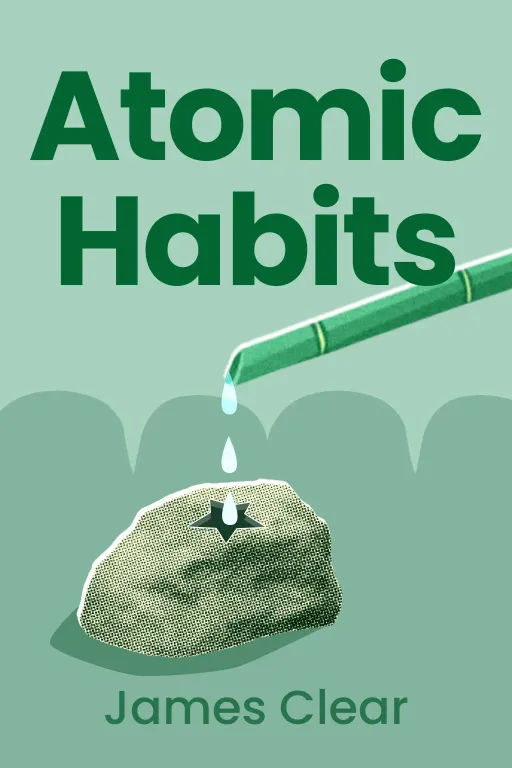
Nova: Exactly! Today, we're pulling back the curtain on that ghost, diving into the brilliant insights from James Clear's 'Atomic Habits' and Charles Duhigg's foundational work, 'The Power of Habit.'
Atlas: Oh, those are two absolute giants in the field. Duhigg's work really popularized the scientific understanding of habits, and Clear's book then gave us the practical playbook, becoming a massive bestseller for a reason. So, we're talking about taking back control from this 'ghost,' then?
Nova: Precisely. And to truly take control, we first have to understand how this ghost operates. We're starting with the hidden architecture of our behavior: the habit loop.
Unveiling the Habit Loop: The Science of Automatic Behavior
SECTION
Nova: Duhigg, in 'The Power of Habit,' breaks it down into a simple, three-part loop: the cue, the routine, and the reward. Think of it like this: a cue is the trigger – that craving for a cookie, the notification ping on your phone, the stress of a deadline. The routine is the behavior itself – eating the cookie, checking social media, procrastinating. And the reward? That's the satisfaction, the momentary relief, the sugary rush.
Atlas: That makes sense. Like, the cue is seeing the cookie jar, the routine is eating five cookies, and the reward is... well, the taste. But what about the unconscious part? I feel like I choose to eat the cookie.
Nova: That's the insidious brilliance of it. Over time, as we repeat this loop, our brain carves out neural pathways, making the routine almost automatic. The conscious decision fades, and the behavior becomes a deeply ingrained response to the cue, all in pursuit of that predictable reward. Duhigg gives a fascinating example of how this applies to a company like Febreze.
Atlas: Febreze? The air freshener? How does that relate to habit loops?
Nova: Initially, Febreze was a flop. People didn't use it because they were nose-blind to their own bad smells. They didn't have a 'cue' for it. But then, Procter & Gamble researchers noticed people spraying Febreze after they had cleaned a room, as a final celebratory spritz. The 'cue' became a clean room, the 'routine' was spraying Febreze, and the 'reward' was the fresh smell and the feeling of accomplishment. They tapped into an existing routine and added a new reward.
Atlas: Wow, that's actually really inspiring! So it's not about inventing a new behavior from scratch, but about finding an existing cue and attaching a new reward, or modifying an existing routine. That's a profound insight.
Nova: Exactly. Once you understand that loop, you can start to deconstruct your own habits. Identify the cue, pinpoint the routine, and then, most importantly, understand the true underlying reward you're seeking. Often, the reward isn't what we think it is. It might be stress relief, social connection, or a sense of accomplishment, not just the cookie itself.
Atlas: So basically you're saying, if I want to stop mindlessly scrolling, I need to figure out what real reward my brain is actually chasing when I pick up my phone. Is it distraction? Connection? Escape?
Engineering Change: Atomic Habits and Environment Design
SECTION
Nova: Precisely, Atlas. And once you've identified that reward, you can then strategically re-engineer the routine. This brings us beautifully to James Clear's 'Atomic Habits,' which is all about making those intentional changes incredibly small, almost atomic, so they're easy to start and stick with.
Atlas: Atomic, as in tiny? That feels counterintuitive. We're always told to go big or go home, set audacious goals.
Nova: That's exactly the conventional wisdom Clear challenges. He argues that monumental goals often lead to burnout because the initial effort is too high. Instead, he proposes four laws of behavior change: make it obvious, make it attractive, make it easy, and make it satisfying. The 'tiny step' isn't about lack of ambition; it's about leveraging consistency and compounding.
Atlas: Okay, so how does making it 'obvious' work? Like, if I want to read more, do I just put a book on my pillow?
Nova: That's a perfect example! If your goal is to read for 10 minutes every night, you make the cue obvious by placing the book right where you'll see it – on your pillow, next to your coffee maker, on your desk. You're designing your environment to trigger the desired behavior, rather than relying on willpower. It's about making good habits unavoidable and bad habits invisible.
Atlas: That's a great way to put it. So, if I want to eat healthier, I shouldn't have junk food in the house at all, because seeing it is the cue, right?
Nova: Exactly! You're making the unhealthy option invisible and the healthy option obvious and easy. Clear also talks about 'habit stacking,' where you link a new desired habit to an existing one. 'After I brush my teeth, I will do one push-up.' It's about leveraging those existing neural pathways.
Atlas: I love that. It's like you're not fighting against your nature anymore, you're designing your world to work with how your brain naturally forms connections. That gives me chills, honestly.
Nova: It's truly transformative. By making habits obvious, attractive, easy, and satisfying, you're essentially programming your environment for automatic success. The effort isn't in resisting temptation; it's in the initial design.
Synthesis & Takeaways
SECTION
Nova: So, what we've really explored today is this powerful synergy: understanding Duhigg's habit loop reveals why we do what we do, exposing the invisible strings that pull us. And then, Clear's atomic habits provide the practical, almost surgical tools to snip those old strings and weave new ones, one tiny, intentional step at a time.
Atlas: That's a great summary. It's not just about willpower, which often feels like a finite resource. It's about intelligence and design. It's about becoming the architect of your own unconscious, rather than being its passive inhabitant. For anyone feeling stuck, this offers a genuinely hopeful path.
Nova: Absolutely. The profound insight here is that lasting change isn't about grand declarations or sudden overhauls. It's about recognizing that our lives are a cumulative product of countless tiny, often unconscious, decisions. By focusing on the 'atomic' level of habit formation and consciously designing our environments, we gain an almost unfair advantage over our old patterns. It's literally reshaping your future, one small, satisfying action at a time.
Atlas: And the best part is, you can start today. Just pick one tiny habit you want to build, make it obvious, attractive, easy, and satisfying. What's one small thing you can do today that will make your desired future self just a little bit more inevitable?
Nova: A perfect challenge. It's about progress, not perfection.
Nova: This is Aibrary. Congratulations on your growth!