

The Invisible Architect: How Habits Shape Your Success
Golden Hook & Introduction
SECTION
Nova: Alright, Atlas, quick game for you. If you had to review the entire concept of human habits in exactly five words, what would they be? Go!
Atlas: Oh, man, that’s tough! Okay… "Invisible Architects of Everything We Do."
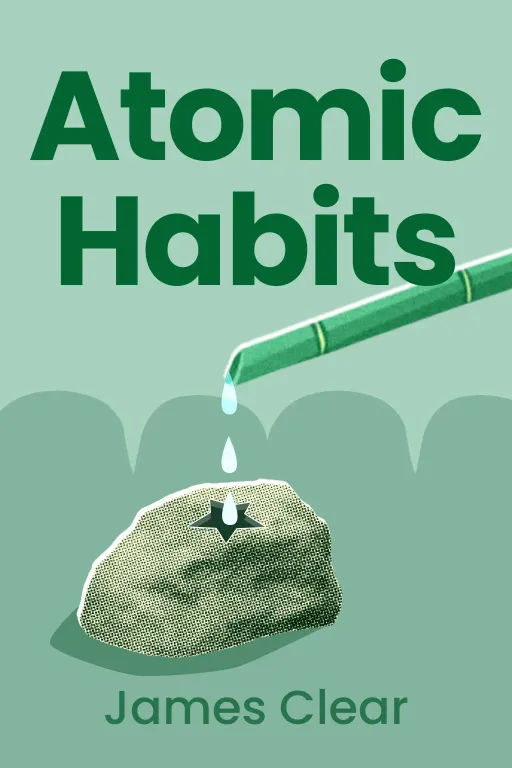
Nova: "Invisible Architects of Everything We Do." Wow, that’s actually incredibly profound for five words. And it perfectly sets the stage for today’s deep dive into two books that are, in many ways, the foundational texts for understanding that exact phenomenon. We are talking about James Clear’s phenomenal "Atomic Habits" and Charles Duhigg’s equally insightful "The Power of Habit."
Atlas: Absolutely. These aren't just self-help books; they're like user manuals for our own operating systems. I mean, "Atomic Habits" in particular has just exploded, becoming an absolute touchstone for anyone serious about personal growth. It’s widely acclaimed for its practical, actionable frameworks, making it a go-to guide for millions seeking real change.
Nova: Exactly. They demystify something that often feels like magic or sheer willpower, revealing the underlying mechanics of how we become who we are, one small, consistent action at a time. It’s about understanding that our lives are largely a sum of our habits, and we often try to change too much too fast.
Atlas: Right, like that's the big mistake, isn't it? We get this grand vision, we make a huge resolution, and then… crickets.
Nova: Precisely. And that brings us to our first core idea today: the almost magical, compounding power of tiny habits.
The Compounding Power of Tiny Habits
SECTION
Nova: James Clear really hammers this home. He argues that trying to change too much too fast is often the downfall. Instead, he introduces this concept of "atomic habits," meaning tiny changes, small improvements that, when compounded over time, lead to remarkable results. Think about it: a 1% improvement every day for a year. It doesn’t sound like much, right?
Atlas: Honestly, it sounds a bit… underwhelming. Like, if I improve 1% at the gym today, I'm barely noticing that. For our listeners who are constantly seeking deep insights and profound transformations, doesn't that feel like it’s too slow, too insignificant to really make a difference? Especially when you have big goals?
Nova: That’s a great question, and it’s where the counter-intuitive magic happens. Imagine an airplane taking off from Los Angeles, headed for New York City. If the pilot adjusts the nose by just three and a half degrees south, an almost imperceptible change at takeoff, they won't end up in New York. They’ll land in Washington, D. C. A tiny, 1% shift, compounded over thousands of miles, leads to a completely different destination.
Atlas: Wow. That's a perfect example. Three and a half degrees, that's nothing, but over a long enough timeline, it’s everything. So, these tiny habits, they’re not just small actions; they’re these invisible architects, slowly but surely rerouting our entire life trajectory.
Nova: Exactly! They’re building blocks. And Clear gives us a blueprint for making these small changes stick, what he calls the Four Laws of Behavior Change: make it obvious, make it attractive, make it easy, and make it satisfying. These laws are all about designing an environment that supports your desired future self, rather than relying purely on willpower.
Atlas: So, for someone who wants to, say, read more, instead of saying "I'm going to read a book a week," which feels like a huge leap, making it "obvious" might be leaving a book on your pillow. "Attractive" could be associating reading with a cozy blanket and a cup of tea. "Easy" could be reading for just five minutes. And "satisfying" is the feeling of accomplishment, or maybe even highlighting a profound sentence. Is that the kind of tactical insight we're talking about?
Nova: You’ve nailed it. It’s about creating systems where the good habits are almost inevitable, and the bad ones are nearly impossible. It’s a subtle but powerful shift from focusing on the outcome to focusing on the system that produces the outcome. But how do these systems actually work inside our brains? How do these tiny actions become automatic?
Deconstructing the Habit Loop: Cue, Routine, Reward
SECTION
Nova: This is where Charles Duhigg’s "The Power of Habit" steps in and provides the scientific underpinning. Duhigg reveals the 'habit loop'—a fascinating neurological process that explains how all habits, good or bad, are formed and reinforced. It consists of three parts: the cue, the routine, and the reward.
Atlas: Okay, so a cue, a routine, and a reward. Could you walk us through a common one, maybe something many of us struggle with, like endlessly scrolling social media? Because that feels like such an automatic, almost unconscious behavior for me sometimes.
Nova: Absolutely. Let's break down that social media scrolling habit. The could be something as simple as a moment of boredom, a notification popping up on your phone, or even just a feeling of mild anxiety. That's the trigger that tells your brain, "Hey, let's do something."
Atlas: Right, the phone buzzes, or I just pick it up without even thinking.
Nova: Exactly. Then comes the. That’s the behavior itself: unlocking your phone, opening the social media app, and starting to scroll through your feed. It’s the physical or mental action you perform.
Atlas: And the? Is it just seeing something interesting? Or getting a like?
Nova: The reward is the satisfaction your brain gets from the routine. It could be the novelty of new information, the dopamine hit from a like or comment, the feeling of connection, or even just a temporary distraction from that initial boredom or anxiety. This reward tells your brain, "That was good! Let's remember to do that again next time we get that cue." And crucially, underneath that reward is often a —the underlying psychological need that the habit is trying to satisfy.
Atlas: So, if we understand the cue, the routine, and the reward, does that mean we can just swap out the routine? Is it really that simple? Like, if I feel bored, instead of scrolling, I just… pick up a book?
Nova: That’s the essence of it, but it’s not always "simple," though it is straightforward. Duhigg shows that you can't really eliminate a craving; you have to satisfy it with a different routine. The key is to identify the craving, then experiment with new routines that deliver a similar reward. For example, if your craving when bored is for novelty and stimulation, maybe instead of social media, your new routine is a five-minute burst of an online puzzle game, or calling a friend, or even just stepping outside for a moment.
Atlas: I love that. It’s not about fighting the craving, it’s about redirecting it. It’s like tricking your brain, but for your own good. So, "Atomic Habits" gives us the laws to build good habits, and "The Power of Habit" shows us the underlying neurological framework that makes those laws effective. They really do complement each other beautifully.
Nova: They do. Together, they provide a powerful understanding that demystifies habit creation and gives us a blueprint for designing environments that support our desired future selves. It’s about being the architect of your own behaviors.
Synthesis & Takeaways
SECTION
Nova: So, what we’ve really unpacked today is that lasting transformation isn't born from monumental efforts, but from the relentless accumulation of tiny, almost imperceptible decisions. It's the 1% changes, consistently applied, that compound into exponential results.
Atlas: And it’s not just about willpower. It’s about understanding the hidden logic of our own brains, the cue-routine-reward loop that drives so much of what we do. For our listeners who love to learn and grow, what’s the single most powerful "tiny step" they can take this week to apply these profound insights?
Nova: My challenge, echoing the core advice from these incredible books, is simple: Identify just one small habit you want to build. This week, make it obvious, make it attractive, make it easy, and make it satisfying. Even for just five minutes a day. Don't aim for perfection, aim for consistency. Because every single successful person you know, every profound achievement, is just a mountain of tiny, daily wins.
Atlas: That’s actually really inspiring. It feels incredibly doable, which is probably the point. No more trying to conquer Everest in a single leap. Just one step, then another.
Nova: Exactly. And that’s the beautiful, profound truth about habits.
Atlas: Fantastic. Thank you, Nova, for shedding light on these invisible architects of our lives.
Nova: My pleasure, Atlas.
Nova: This is Aibrary. Congratulations on your growth!









