The Intention-Action Gap: Bridging the Divide in Learning Design
Golden Hook & Introduction
SECTION
Nova: There’s a silent saboteur lurking in our learning journeys, a sneaky little disconnect that trips up even the most well-meaning students and professionals. It’s not a lack of intelligence, or even a lack of desire. It’s something far more subtle, yet profoundly impactful.
Atlas: Oh, I love that framing, Nova. A silent saboteur. It immediately makes me think of all those times I've started something with the best intentions, full of enthusiasm, only for it to fizzle out. Like that ambitious online course I signed up for last spring.
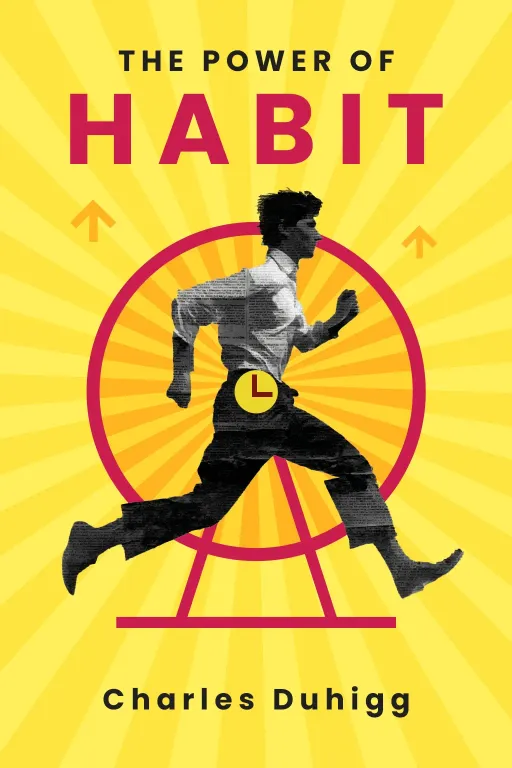
Nova: Exactly! And that leads us perfectly into a concept that’s been gaining significant traction in the world of educational design and personal development: the Intention-Action Gap. It’s a fundamental challenge that two seminal books, 'The Power of Habit' by Charles Duhigg and 'Atomic Habits' by James Clear, have brilliantly illuminated.
Atlas: So, we're talking about the chasm between knowing what to do and actually doing it. Duhigg and Clear are absolute titans in this space. I remember when 'The Power of Habit' first came out, it felt like a Rosetta Stone for human behavior.
Nova: It truly was. Duhigg, a Pulitzer Prize-winning investigative reporter, brought this incredible journalistic rigor to understanding the science behind why we do what we do. He wasn't just theorizing; he was dissecting the neurological loops that govern everything from our morning coffee to major corporate decisions.
Atlas: Yeah, and Clear, with 'Atomic Habits,' then took that science and built this incredibly practical, almost architectural framework for everyday application. It’s like Duhigg gave us the blueprint of the engine, and Clear handed us the user manual for how to drive it.
Nova: A perfect analogy, Atlas. Because the cold, hard fact is, even with the clearest vision and the strongest intentions, learners struggle to turn knowledge into consistent action. This gap is a major barrier, especially for those who, like many of our listeners, are driven by impact and seeking advanced strategies to foster continuous improvement.
The Intention-Action Gap: Why Intentions Fail
SECTION
Atlas: That makes me wonder, though. For someone who is, say, trying to cultivate a new skill or implement a complex new strategy in their team – someone who genuinely to improve – why is this gap so persistent? Is it just willpower, or is there something deeper at play?
Nova: That’s the million-dollar question, isn't it? And it’s far more nuanced than simple willpower. The intention-action gap isn’t just about a lack of motivation; it's often about a lack of. We might genuinely intend to read for an hour every day, or practice a new coding language, but then life happens. Distractions, inertia, decision fatigue – they all conspire against our best-laid plans.
Atlas: So you're saying that the problem isn't necessarily the 'intention' itself, but everything that comes it? The environment, the setup, the path to action?
Nova: Precisely. Think about it from the perspective of a leader trying to implement new, more equitable learning outcomes. They have the vision, the strategic plan – the intention. But if the daily activities, the routines, the very structure of how learning happens isn't engineered to support that, then that vision remains just that: a vision. It’s a huge challenge for anyone seeking holistic and impactful change.
Atlas: That resonates. I imagine a lot of our listeners, who are always looking for advanced strategies and trying to personalize learning experiences, run into this constantly. They identify a need, design a solution, but then struggle to get people to consistently engage with it. It’s like building a beautiful bridge, but forgetting to put signs to tell people where the entrance is.
Nova: And sometimes, the entrance is just too hard to find, or too far away. The genius of Duhigg and Clear is that they show us how to build a bridge that people want to walk across, almost without thinking. They reveal that understanding habit formation isn’t just a nice-to-have; it’s key to making learning truly transformative.
Habit Formation Science: Bridging the Gap
SECTION
Atlas: So, how do we build that bridge? Where do we even start to make these positive actions become second nature? Because for someone who's already juggling a lot, the idea of adding 'more' effort to form habits can feel daunting.
Nova: That's where the science becomes our ally. Duhigg, in 'The Power of Habit,' unveils the neurological loop that underpins all habits: the cue, the routine, and the reward. A cue triggers the routine, which then delivers a reward, reinforcing the loop. For instance, the cue of a notification could lead to the routine of checking social media, providing the reward of a hit of dopamine. That's a habit, for better or worse.
Atlas: Right, like Pavlov's dogs, but for our daily lives. So, if we want to cultivate a positive learning behavior, we need to intentionally design that loop.
Nova: Exactly. For AI in literacy, for example, this means designing learning activities that don't just teach content, but also trigger positive habits and reward consistent engagement. Imagine an AI tutor that, instead of just correcting errors, offers a micro-reward for sustained focus or for actively summarizing a paragraph. It’s about making the learning itself part of a desirable loop.
Atlas: And then Clear comes in with 'Atomic Habits,' providing the practical framework to actually those loops. He gives us the four laws: make it obvious, attractive, easy, and satisfying. Can you break those down for us in a learning context? Because that sounds like the ultimate toolkit for closing the intention-action gap.
Nova: Absolutely. Take 'make it obvious.' If you want to read more, don't just intend to read. Put the book on your pillow, or open to the page on your desk. Make the cue inescapable. For learning, this means setting up clear, visual prompts for study, or making sure the learning platform is always open and accessible.
Atlas: So, remove friction and make the desired action impossible to ignore. Got it. What about 'attractive'?
Nova: 'Attractive' means associating the desired behavior with something positive. If learning feels like a chore, it won't stick. Maybe it's joining a study group with friends, or using gamified learning apps that offer badges and progress bars. It’s about making the of learning inherently enjoyable, or at least less unpleasant, by linking it to something we already desire.
Atlas: That's a huge shift from traditional learning, which often feels like a solo, arduous task. And 'easy'? That seems pretty straightforward, but how does it apply to challenging subjects?
Nova: 'Easy' is critical. Clear talks about the 'two-minute rule': when starting a new habit, it should take less than two minutes to do. Want to write a book? Start by writing one sentence. Want to learn a new language? Start with one flashcard. In learning design, it means breaking down complex tasks into tiny, manageable steps. If a new concept requires a 30-minute video, maybe the 'easy' step is just watching the first 5 minutes. Lower the barrier to entry so much that you can't do it.
Atlas: That’s a powerful idea. It’s about getting over that initial hump of inertia. And finally, 'satisfying.' How do we make learning satisfying, especially when the real rewards, like mastery or a new job, are often far down the line?
Nova: 'Satisfying' is the reward part of Duhigg's loop. Clear emphasizes that a habit is more likely to stick if the reward is immediate. While long-term mastery is the ultimate goal, we need to engineer short-term satisfactions. This could be checking off a task, seeing a progress bar fill up, or getting immediate, positive feedback from a peer or a system. It's about celebrating small wins, making the brain feel good for doing the thing that will benefit it later.
Atlas: That's Nova's take, right? By understanding this science, you can engineer learning environments where positive actions become second nature. It's not just about content delivery anymore; it's about behavioral architecture.
Synthesis & Takeaways
SECTION
Nova: Precisely, Atlas. When we combine Duhigg’s understanding of the neurological habit loop with Clear’s practical framework, we unlock a profound insight: we don't have to rely solely on willpower. We can consciously design our learning environments and our personal routines so that positive actions are triggered, made desirable, simplified, and rewarded.
Atlas: It’s empowering. For our listeners who are always thinking about educational philosophy and deepening curriculum design, this isn't just about teaching to learn, but to learn more effectively and consistently. It’s about creating systems that support continuous improvement and, ultimately, more equitable outcomes by making effective learning accessible to everyone.
Nova: Absolutely. It's about moving beyond the 'hooray, I learned something new!' moment to 'hooray, I consistently what I learned!' That's where true transformation lies.
Atlas: So, for our listeners today, let's bring it back to a tiny step. If you're a strategic cultivator or an empathic innovator, identify one specific learning behavior you want to cultivate in your audience, or even in yourself.
Nova: And then, ask yourself: How can you make it 'obvious' and 'easy' for them to perform that action? How can you remove the friction, make the cue undeniable, and shrink the initial step to something so small it feels almost ridiculous not to do?
Atlas: Because it's in those tiny, consistent actions, engineered by intention and habit science, that the biggest transformations begin.
Nova: What one small habit could you build today that would bridge your intention to action?
Atlas: This is Aibrary. Congratulations on your growth!