The Hidden Engine of Success: Why Habits, Not Willpower, Drive Growth
Golden Hook & Introduction
SECTION
Nova: Most entrepreneurs believe success demands relentless willpower, pushing through exhaustion, right? It's that "hustle culture" mantra. But what if I told you that very belief is actually sabotaging your growth, and the true engine of progress is far more subtle, even... lazy?
Atlas: Whoa, lazy? That sounds like heresy in the startup world, Nova. I imagine a lot of our listeners, especially founders grinding it out, are thinking, "Lazy? My entire existence is about not being lazy!" What are you getting at?
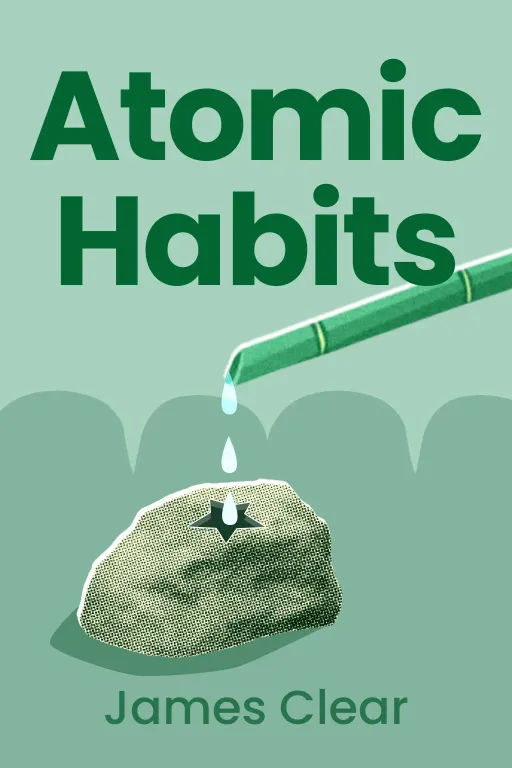
Nova: Exactly! It flies in the face of conventional wisdom, doesn't it? But today, we're diving into two groundbreaking books that fundamentally shift our understanding of success: "Atomic Habits" by James Clear and "The Power of Habit" by Charles Duhigg. These aren't just self-help books; they're blueprints for building resilient, high-growth systems—whether that's your personal life or your entire startup. They’ve both received widespread acclaim for demystifying how real, sustainable change actually happens, moving us beyond wishful thinking to practical strategies. And the core idea? It’s that tiny, consistent actions, not heroic bursts of motivation, are the hidden engine.
Atlas: Okay, I'm intrigued. Because for anyone trying to build something from scratch, the feeling of being overwhelmed and inconsistent is a daily battle. So, let’s peel back the layers on this "willpower trap" you mentioned.
The Willpower Trap & Atomic Actions
SECTION
Nova: Absolutely. The cold, hard fact is, many of us rely on motivation to achieve our goals. We get a burst of inspiration, we work 16 hours straight, we feel amazing... for a day. But willpower, as powerful as it feels in the moment, is incredibly fleeting. It’s a finite resource. Think of it like a muscle you can only flex for so long before it gives out. And for a founder, who's constantly making high-stakes decisions and battling uncertainty, that willpower muscle is constantly being drained.
Atlas: I know that feeling. It's like you wake up ready to conquer the world, and by 3 PM, you're just trying to remember what you had for breakfast, let alone tackle the next big problem. So, what's the alternative to this exhausting cycle?
Nova: The alternative, as James Clear brilliantly articulates in "Atomic Habits," is focusing on "atomic habits"—tiny, incremental changes that, when compounded over time, lead to remarkable results. He presents four laws of behavior change that are incredibly powerful: Make it obvious, make it attractive, make it easy, and make it satisfying.
Atlas: Make it obvious, make it attractive... I get the concept, but for a founder, tasks aren't always 'attractive.' How do you make something like, say, customer outreach, which often feels like cold calling or getting rejected, something you actually to do?
Nova: That's a fantastic question, and it gets to the heart of the "make it attractive" law. It's not about suddenly loving the task itself, but about associating it with something you already enjoy or find rewarding. For example, a founder struggling with customer outreach could pair it with their favorite morning coffee or a specific playlist they love. Make the environment around the task more appealing. Or, even more powerfully, associate it with the positive outcome. Instead of 'I have to make cold calls,' reframe it as 'I get to connect with potential users who might love our product.'
Atlas: Oh, I like that. It's a mental shift, but also a physical one if you're pairing it with something. So, if I'm trying to make a habit of, say, writing daily code, making it obvious might mean having my coding environment open first thing in the morning when I sit down.
Nova: Exactly! And making it attractive might be telling yourself, "I get to create something new today that could change how people interact with our product." It’s about leveraging our brain's reward system instead of fighting against it. It's about designing your environment so that the desired behavior is the path of least resistance.
Engineering Success & The Habit Loop
SECTION
Atlas: That makes me wonder, how do we make these tiny actions stick, even when we're completely exhausted? Because that's when willpower truly vanishes.
Nova: This leads us perfectly into the – and that's where Charles Duhigg's "The Power of Habit" comes in, with his groundbreaking work on the habit loop: Cue, Routine, Reward. Duhigg reveals that every habit, good or bad, follows this neurological loop. The 'cue' is the trigger that tells your brain to go into automatic mode and which habit to use. The 'routine' is the behavior itself. And the 'reward' is what your brain gets from the routine, reinforcing the loop.
Atlas: So, for a bad habit, like checking social media when I’m stressed, the stress is the cue, scrolling is the routine, and a momentary distraction is the reward.
Nova: Precisely. Now, imagine if you could intentionally design habits by understanding this loop. Let's take that "Tiny Step" from our core content: spending 5 minutes on customer outreach. How do we make that stick using the habit loop and Clear's other laws: Make it easy, make it satisfying?
Nova: First, the 'Cue': Make it obvious. Schedule it. Put it on your calendar for 9:05 AM every day. Or, make it a pre-game ritual right after you finish your first coffee. Second, the 'Routine': Make it easy. Five minutes is almost impossible to say no to. It’s not an hour-long, daunting task. Just open your CRM, find one person, and send a quick, personalized message. Third, the 'Reward': Make it satisfying. This is crucial. It’s not just about the potential customer response. It’s about the immediate feeling of accomplishment. Track it. Check off a box. Give yourself a mental high-five. Or even pair it with a small, guilt-free reward, like listening to a favorite song afterward.
Atlas: So, it's about designing the path of least resistance the good habit, and making the reward immediate, even if it's just the satisfaction of completion. That sounds far more sustainable than just 'trying harder.' But what about building a? As a founder, how do I apply this beyond my personal habits? Can I 'engineer' team habits?
Nova: Absolutely, and this is where it gets really powerful. Our internal insight, Nova's Take, is that "building systems that automatically guide behavior is far more effective than constantly fighting against human nature." This applies just as much to teams as it does to individuals. Think about it: if your team struggles with consistent customer feedback, what's the 'cue' for collecting it? Is there an easy 'routine' for logging it? And what's the 'reward' for the team when they do? Maybe it's a dedicated 'customer win' Slack channel, or a quick, visible dashboard that shows how many feedback points were collected weekly.
Atlas: That’s a huge shift. We're not just telling people to 'be better,' we're designing the environment and the process so that 'being better' is the natural, easy thing to do. It’s about making the desired behavior almost inevitable.
Nova: Exactly! You design systems – whether it's a shared document that automatically pops up for team updates, or a structured meeting format that ensures everyone contributes feedback – that make the desired behavior the default. You reduce the friction for good habits and increase the friction for bad ones. It’s about being an architect of behavior, not just a taskmaster.
Synthesis & Takeaways
SECTION
Nova: So, what we've really uncovered today is that the path to sustainable growth, both personally and for your startup, isn't paved with sheer willpower. It's built brick by atomic brick, through intelligently designed habits and systems. It’s about making your desired future the natural outcome of your daily environment.
Atlas: That’s actually really inspiring. Because as a founder, the feeling of being overwhelmed and inconsistent can be crushing. This offers a way to regain control not by fighting harder, but by designing smarter. If there's one single, most impactful takeaway for a founder listening right now, what would it be?
Nova: Identify one tiny, daily action that moves your startup forward. Make it so easy you can't say no. Just 5 minutes. And then, intentionally design the cue, routine, and reward for that single action. Don't aim for perfection, aim for consistency. That small, daily win will compound into unstoppable momentum.
Atlas: It’s not about finding more willpower; it’s about making willpower irrelevant by building a system that runs itself. That’s a profound thought for anyone trying to build something from the ground up, whether it’s a product, a team, or a new version of themselves.
Nova: Absolutely. It transforms the struggle into a strategic game of design.
Atlas: This is Aibrary. Congratulations on your growth!