The Hidden Cost of Busyness: Why You Need Mindful Productivity.
Golden Hook & Introduction
SECTION
Nova: If this episode found you, you probably feel perpetually busy, yet that nagging feeling of true accomplishment often seems just out of reach.
Atlas: Oh, tell me about it. It’s like, the more I do, the less I feel like I’ve actually anything significant. It’s a paradox. But wait, aren’t we supposed to be working harder? Isn't that the path to success?
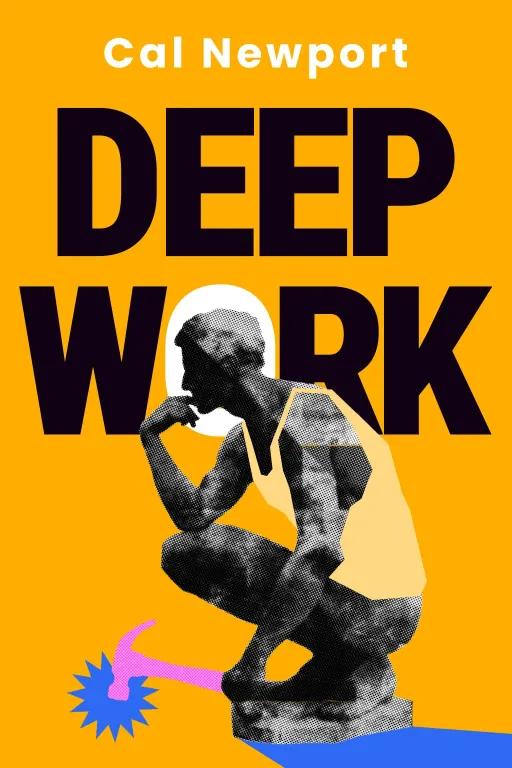
Nova: That's the counterintuitive challenge we're diving into today, Atlas. The idea that working harder might actually be making us poorer – poorer in focus, poorer in impact, and poorer in genuine fulfillment. We’re synthesizing profound insights from modern productivity giants like Cal Newport, author of "Deep Work," and Charles Duhigg, who unveiled the mechanics of habit in "The Power of Habit." Their combined wisdom offers a blueprint for navigating this very modern dilemma.
Atlas: So, we're talking about escaping the hamster wheel, then? Because honestly, I imagine a lot of our listeners feel like they're just running faster, but staying in the same place.
Nova: Exactly. We’re going to explore why that happens and, more importantly, how to break free.
The Busy Trap: Why We Confuse Activity with Achievement
SECTION
Nova: Our first major idea today unpacks what we call 'The Busy Trap.' It’s that pervasive blind spot where we mistakenly equate constant activity with actual impact. Think about it: how often do we fill our calendars to the brim, respond to every notification, and jump from one task to another, only to end the day feeling utterly drained but not genuinely accomplished?
Atlas: Oh, I’ve been there. I totally know that feeling. It's like, I can list ten things I did, but if you ask me what moved the needle, I’d probably struggle to name one. But, why do we do it? Why do we fall into this trap? Is it just societal pressure to busy?
Nova: There's definitely a societal component, but it's deeper than that. Newport argues that many of us are engaged in what he calls 'shallow work.' These are non-cognitively demanding tasks, often performed while distracted, that don't create much new value. It's the endless email checking, the social media scrolling, the constant meetings that could have been an email.
Atlas: So you’re saying that checking emails all day, which feels productive, is actually shallow work? That sounds a bit out there, but I can see how that would be... less impactful than, say, writing a complex report. But, isn't some of that necessary? Like, you have to answer emails, right?
Nova: Absolutely, some shallow work is unavoidable. The issue isn't eliminating it entirely, but rather recognizing its true nature and not letting it consume our most valuable resource: our focused attention. The key is to distinguish between activity that productive and activity that truly productive. Deep work, on the other hand, is the ability to focus without distraction on a cognitively demanding task. It’s the kind of work that creates new value, improves your skills, and is difficult for others to replicate.
Atlas: Okay, so if I'm spending my entire day bouncing between Slack messages, quick calls, and those "just checking in" emails, I'm basically just treading water, even if it feels like I'm swimming a marathon. That's a great way to put it. So, how do we shift from this constant treading water to actually moving forward?
Nova: That naturally leads us to the second key idea, which is all about intentional design. Because once we understand the problem, the next step is to engineer a solution.
Unlocking Deep Work: Architecting Focus Through Habits and Environment
SECTION
Atlas: So, how do we actually deep work? It sounds great in theory, but in a world of constant pings and demands, how do you actually create that protected block of time, free from distractions?
Nova: This is where the insights from Charles Duhigg on habit formation become incredibly powerful, combined with the intentional design of our environment. Duhigg reveals that habits operate on a 'cue-routine-reward' loop. If we can understand this loop, we can consciously design routines that support deep work, rather than letting our existing habits pull us towards distraction.
Atlas: So basically you’re saying, instead of just I'll focus, I need to set up cues that trigger focused work, make the routine easy, and then reward myself? Can you give an example? Like how would that look in practice for someone trying to write a complex strategy document?
Nova: Definitely. Let's take that strategy document. Your cue could be a specific time, say, 8 AM every morning, or even a physical action like putting on noise-canceling headphones. The routine is the deep work itself – perhaps 90 minutes of uninterrupted writing. The reward isn't just the satisfaction of completing the work, but could also be a short, guilt-free break afterwards, or a specific treat you allow yourself. By making this intentional, you're building a habit that supports deep work.
Atlas: That makes sense, but what about the environment part? I’ve been thinking about this. It's like, my phone is right there, my email tab is always open. It feels like I'm fighting an uphill battle against my own workspace.
Nova: You absolutely are, and that's where intentional environmental design comes in. It's about making your deep work space as conducive to focus as possible, and your shallow work space designed for quick transitions. Think of it as creating a "deep work sanctuary." This could mean having a specific corner of your office or home dedicated solely to focused tasks, free from clutter and visual distractions. It also means actively removing the triggers for shallow work – putting your phone in another room, closing unnecessary tabs, even using website blockers during your deep work blocks.
Atlas: So it's like, if my brain sees my phone, it immediately thinks "scroll social media." But if the phone isn't there, that cue is gone, and my brain has to find something else to do, hopefully the deep work. That's actually really inspiring. It means we're not just victims of our environment, we can actually be the architects of it.
Nova: Precisely. It’s about building a fortress around your focus. And it’s not just about physical space. It’s also about mental boundaries. Communicating to colleagues or family that you have a "deep work block" and will be unreachable for a certain period. This intentional design, both physical and social, is crucial for unlocking sustained periods of high-value creation.
Synthesis & Takeaways
SECTION
Nova: So, what we've really been discussing today is the profound shift from a reactive, always-on mentality to an intentional, high-impact approach to our work and lives. The busy trap, where we confuse activity with achievement, is a pervasive challenge. But the solution lies in understanding the power of deep work and then deliberately engineering our habits and environments to support it.
Atlas: That gives me chills. It’s not about working, but working and. It's about being present and focused on what truly matters. It's a huge shift from just reacting to every notification to proactively creating value. So, for our listeners who feel caught in that busy trap, what's one small, concrete step they can take today to start reclaiming their focus?
Nova: Start incredibly small. Dedicate just 15 minutes tomorrow morning to a single, deep task, free from all distractions. Put your phone away, close all unnecessary tabs, and just focus on that one thing. Build that momentum. Your memory is a muscle, and so is your focus. Strengthen it with intention, 15 minutes at a time. It’s about trusting the process and designing your way to true impact.
Atlas: Love that. It’s practical, actionable, and feels entirely achievable. It's not about an overnight transformation, but building those small, consistent habits.
Nova: Exactly. It's about choosing impact over mere activity.
Atlas: This is Aibrary. Congratulations on your growth!