The Daily Ritual: Small Habits for Big Well-being.
Golden Hook & Introduction
SECTION
Nova: You know, Atlas, we often talk about big goals, big changes, big transformations. But what if I told you that most of what we we know about making lasting change is actually getting in our way?
Atlas: Oh, I love this. So you’re saying all those New Year's resolutions and grand plans are just… elaborate self-sabotage? Because honestly, that sounds like my Monday mornings.
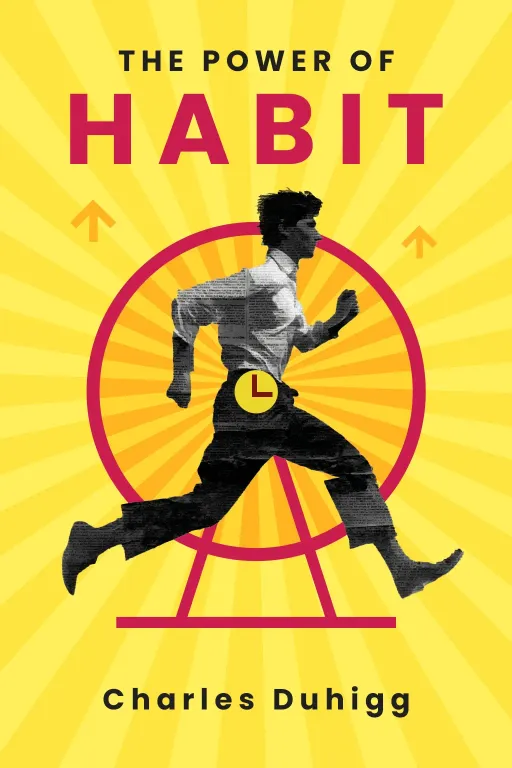
Nova: Not self-sabotage, exactly, but maybe misdirected effort. Today, we're diving into two brilliant books that completely reframe how we build well-being, energy, and focus, not with monumental willpower, but with surprising subtlety. We're talking about Charles Duhigg's "The Power of Habit: Why We Do What We Do in Life and Business" and B. J. Fogg's "Tiny Habits: The Small Changes That Change Everything."
Atlas: Ah, the titans of habit formation! Duhigg, the investigative reporter, digging into the science, and Fogg, the Stanford behavior scientist who has made "tiny" a massive concept. It’s like the perfect tag team for anyone who’s ever felt overwhelmed by the idea of transforming their life.
Nova: Exactly! Duhigg, with his journalist's eye, unraveled the mechanics, and Fogg, from his lab at Stanford, gave us the practical, almost absurdly simple application. The truth is, our days are really shaped by these invisible forces – unconscious routines. And understanding how they work gives us incredible power.
Atlas: So, where do we even begin to un-ghost these invisible forces? How do habits actually work, at a fundamental level?
Deconstructing the Habit Loop: Cue, Routine, Reward
SECTION
Nova: That's the perfect question, Atlas, and it's where Duhigg really shines. He introduced us to the "habit loop": a three-part neurological phenomenon that governs every single habit, good or bad. It starts with a "cue," then there's a "routine," and finally, a "reward."
Atlas: Okay, cue, routine, reward. That sounds almost too simple. Can you give us an example where we might not even realize this loop is playing out?
Nova: Absolutely. Think about something mundane, like brushing your teeth. For decades, people barely brushed. Then, a company called Pepsodent started advertising. They didn't just sell toothpaste; they sold a. The cue became that film on your teeth, the routine was brushing, and the reward was that tingly, fresh feeling. It created a craving. Duhigg showed how this simple loop, once understood, can be reverse-engineered.
Atlas: Wait, so the tingle was the? Not just clean teeth? That's fascinating. So, for our listeners who are trying to break a less helpful habit, like, say, that afternoon slump leading to a cookie, how do they identify their cue, routine, and especially, that often-hidden reward?
Nova: That’s the critical part. The cue is often obvious – the clock hits 3 PM, you feel a dip in energy. The routine is the cookie. But the reward? It's rarely about the cookie itself. It could be a momentary escape from a stressful task, a burst of energy, or even just a brief distraction. The key, as Duhigg explains, is to experiment with different routines when the cue hits, to see which ones deliver the same reward.
Atlas: So if my craving is really for a mental break from a demanding client conversation, the cookie is just a placeholder. I could try a five-minute stretch, or a walk around the block, and see if that delivers the emotional or mental reward?
Nova: Precisely! You're getting to the heart of it. The power isn't in fighting the cue or the craving; it's in intelligently replacing the routine. It's about becoming a detective of your own inner workings. This framework empowers you to replace draining routines with energizing ones, consciously choosing behaviors that support your well-being.
Atlas: That makes so much sense. It feels less like a battle of wills and more like a strategic redirection.
Tiny Habits for Big Well-being: The Fogg Method
SECTION
Nova: And this is where B. J. Fogg steps in with a brilliant, almost ridiculously simple solution that complements Duhigg perfectly. Fogg’s core insight is that if you want to create a new habit, make it. Like, unbelievably tiny.
Atlas: Tiny? Like, tiny? I'm picturing brushing one tooth, or doing half a push-up. How is that supposed to change anything in a meaningful way? That sounds a bit out there. We're told to push ourselves, right?
Nova: It's counter-intuitive, isn't it? But Fogg’s method focuses on making changes so small they are impossible to resist. He argues that motivation is unreliable. Instead, you need to make the behavior so easy that it requires almost no motivation. His formula is B=MAP: Behavior happens when Motivation, Ability, and a Prompt converge. If ability is high, even low motivation can lead to action.
Atlas: Okay, so it's about minimizing the friction, especially when motivation is low. That sounds incredibly useful for someone trying to reduce stress or maintain focus in a demanding role. Like, when you're already drained from a challenging day, the idea of a 'big' new habit just adds to the stress.
Nova: Exactly! Fogg teaches us how to anchor new behaviors to existing routines. For example, after I brush my teeth, I will drink a glass of water. The "after brushing teeth" is the anchor. The "drink a glass of water" is the tiny new habit. It’s so small, so easy, that you just do it without thinking.
Atlas: Right, like linking it to something you do without fail. So, for our listeners who want to build a mindfulness practice but find 10 minutes of meditation daunting, could it be as simple as, "After I pour my coffee, I will take one deep breath"?
Nova: Precisely! One deep breath. Or even just thinking "I am grateful" for five seconds. The magic happens not in the size of the action, but in the consistency. These tiny wins build momentum, they build self-efficacy, and they change your identity over time. You start seeing yourself as someone who these things.
Atlas: That’s actually really inspiring. So how do you pick the tiny habit, and how do you make sure you actually it, as Fogg suggests, without feeling silly?
Nova: Fogg emphasizes picking a habit that you to do, that brings you a little joy or feels beneficial. And the celebration? It can be as simple as a silent "Yes!" or a fist pump. It's about creating a positive emotional response, a mini-reward, that reinforces the new behavior. It closes the loop, just like Duhigg's reward, but consciously designed. It's about making the choice to feel good about your small win.
Synthesis & Takeaways
SECTION
Nova: So, bringing Duhigg and Fogg together, we see this powerful synergy. Duhigg gives us the blueprint of how habits are built and maintained, showing us the unconscious forces at play. Fogg then provides the practical, almost effortless way to insert new, positive routines into that existing structure.
Atlas: It’s not just about changing habits, it's about consciously designing a life that supports your well-being, energy, and focus. Whether you’re navigating difficult conversations or just trying to protect your energy in a demanding environment, these insights are gold. It’s about being intentional with the small things to achieve big impact.
Nova: Absolutely. It’s about realizing that you're not a victim of your routines; you're the architect. And the beauty is, you don't need a sledgehammer to rebuild; you can use a tiny, precise tool.
Atlas: So, the tiny step for this week is clear: identify just one small habit you'd like to build, like drinking a glass of water after waking, and link it to an existing routine.
Nova: And observe that small reward, that feeling of a win. Because those small, consistent actions, when aligned with your well-being, accumulate into something profound. It's the silent revolution of personal growth.
Atlas: It all adds up. What a powerful way to approach intentional living. This is Aibrary. Congratulations on your growth!