The Art of Integration: Weaving AI, Mindfulness, and Strategic Action
Golden Hook & Introduction
SECTION
Nova: What if chasing personal success, that relentless climb up the first mountain, is actually derailing your deepest fulfillment? We're not talking about outright failure, but about a profound misdirection that even the most driven high-performers often fall into.
Atlas: Hold on, Nova. For a lot of our listeners, results are the name of the game. Strategic advantage, optimized outcomes—that's the focus. Are you saying that all that drive could actually be... counterproductive? That sounds a bit out there.
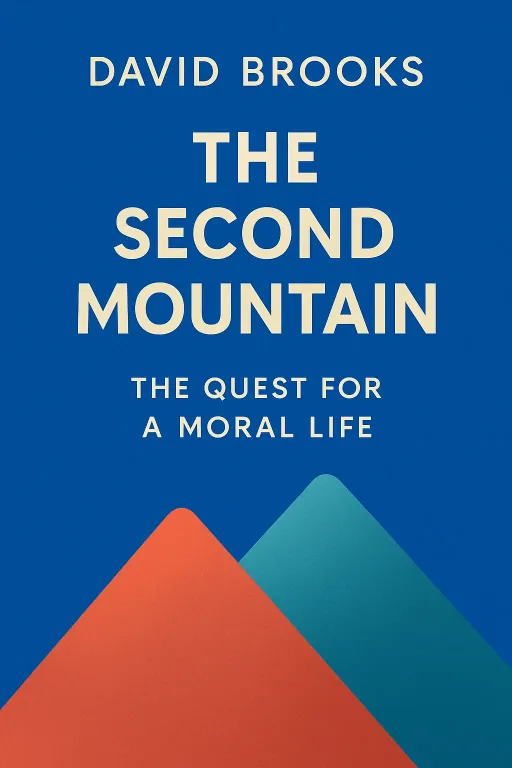
Nova: Not counterproductive in the sense of achieving external markers, Atlas. More like, fulfilling in a hollow way. Today, we’re diving into a concept that challenges this very notion, found in David Brooks’ profound book, "The Second Mountain: The Quest for a Moral Life." Brooks wrote this after a period of intense personal reflection and public scrutiny, shifting his focus from purely commentary on societal trends to a more personal, philosophical exploration of meaning and commitment after experiencing a profound personal reckoning. He really lays bare the idea that there's a different, deeper kind of success waiting for us.
Atlas: Ah, so it’s less about the external metrics and more about the internal compass. I can see how that would resonate with anyone trying to navigate high-stakes environments, like AI development, where the 'why' behind the 'what' is becoming increasingly critical.
The Second Mountain: Meaning Beyond Success
SECTION
Nova: Exactly. Brooks introduces this powerful metaphor of two mountains. The first mountain is what most of us are taught to climb: individualistic success, career achievements, accumulating wealth, status, awards. It's about the ego. And many of us, especially those driven by mastery and analytical acumen, reach that summit only to find it… surprisingly empty.
Atlas: I know that feeling. You hit a goal you’ve been chasing for years, and for a moment there’s a rush, but then it’s just… what’s next? The treadmill speeds up. But wait, for a strategic integrator, results are paramount. How does this 'second mountain' philosophy translate into tangible advantages, especially when we're talking about something as impactful as AI development, where the stakes are incredibly high? It can’t just be about feeling warm and fuzzy.
Nova: That’s a brilliant question, Atlas, and it gets to the core of why this isn't just a philosophical luxury. The second mountain is about shifting from self-centered success to a life dedicated to community, meaning, and purpose. It's about making commitments to something bigger than yourself—to a vocation, a spouse, a philosophy, a community. For an AI developer, for example, the first mountain might be building the most efficient algorithm or the most powerful model. The second mountain is about integrating ethical considerations from the ground up, ensuring that AI serves humanity, not just shareholders. It's about building AI, and that leads to more robust, trusted, and ultimately more impactful systems. It's a strategic advantage because it builds resilience and trust.
Atlas: So, it's not just about feeling good, it's about building better, more sustainable systems. I can see how that would reduce cognitive load in the long run, by aligning internal values with external output. It’s like, if your purpose is clear, your actions become more coherent. You’re not fighting internal battles about what’s right or wrong, because your framework is already aligned.
Nova: Precisely. It’s about building a foundation of purpose that makes your professional pursuits more resilient, more innovative, and ultimately, far more fulfilling. It moves you from merely optimizing tasks to optimizing impact.
The Power of Habit: Engineering Integration Through Practice
SECTION
Nova: And once you have that clarity of purpose, that 'second mountain' vision, the next question is: how do you actually climb it? This is where Charles Duhigg’s "The Power of Habit" becomes indispensable. Duhigg, an investigative reporter, meticulously unravelled the science behind habit formation, showing us the hidden architecture of daily life. He reveals that our lives aren't just a series of conscious decisions, but a tapestry woven from countless habit loops.
Atlas: Okay, so this isn't just about breaking bad habits, but actively good ones? For someone who processes vast amounts of information and seeks optimized outcomes, this sounds like a cheat code for integration. But how do you apply this to something as abstract as 'integrating AI ethics' or 'personal growth in Buddhist studies' into your daily routine? It’s not simply about remembering to brush your teeth.
Nova: Exactly! Duhigg introduces the habit loop: cue, routine, reward. The cue triggers the routine, and the reward reinforces it. Take a simple morning meditation. The cue might be your alarm going off. The routine is 10 minutes of sitting meditation. The reward isn't just a feeling of calm; it's enhanced clarity and focus that spills into your entire day. This clarity, in turn, directly improves decision-making in complex AI projects, allowing for more thoughtful ethical considerations and reducing costly oversights.
Atlas: That makes sense. It's like finding the leverage point. It's not about adding more to your plate, but strategically placing one habit that creates ripple effects across your diverse interests. So, a single, well-chosen daily practice can bridge professional AI pursuits with personal growth? Give me an example of a 'keystone habit' that could really transform this.
Nova: Absolutely. Duhigg highlights 'keystone habits' – small changes or habits that have the power to start a chain reaction, creating other good habits as they spread through your life. Think of a CEO who starts running every morning. Suddenly, they're eating healthier, sleeping better, feeling more disciplined at work, and even making sharper strategic decisions. For integrating AI ethics and mindfulness, a keystone habit could be a 'mindful review' practice. Before launching any new AI feature, a team dedicates 15 minutes to a focused, quiet review, not just of code, but of potential societal impact, prompted by a shared ethical framework. Initially, it might seem to slow things down, but the reward is avoiding public relations disasters, building user trust, and ultimately, creating more resilient and ethical technology. That's a massive strategic advantage.
Atlas: Wow, that’s actually really powerful. It’s about creating a system where the default is ethical, mindful action, rather than an afterthought. It shifts the burden from constant willpower to automatic, beneficial routines. That would definitely help with managing cognitive load and enhancing clarity under pressure.
The Art of Integration: Weaving AI, Mindfulness, and Strategic Action
SECTION
Nova: Precisely, Atlas. And that brings us to Nova's Take – the true art isn't just about accumulating knowledge from different domains; it's about seamlessly integrating them into a coherent, impactful life philosophy and practice. This isn't about compartmentalization, where you're an AI expert here, a meditator there, and a sports enthusiast somewhere else. It’s about a synergistic alchemy, like a master chef blending seemingly disparate ingredients to create a harmonious dish where each flavor enhances the others without losing its essence.
Atlas: So, it's not just about 'balancing' AI development with meditation, but having your meditation practice actually your AI development? That's a different level of integration. How does this 'synthesis' help with cognitive load management and making better decisions under pressure, which are huge for our listeners who are constantly seeking optimized outcomes?
Nova: It reduces mental friction significantly. When your ethical framework, your 'second mountain' vision, is aligned with your daily habits, and your mindfulness practice sharpens your focus, decision-making becomes less about wrestling conflicting priorities and more about intuitive, values-aligned action. Imagine a scenario where a critical decision needs to be made on an AI project that has social implications. A leader who has integrated mindfulness into their daily routine can slow down, observe their own biases, and consider the broader ethical landscape with greater clarity, rather than being rushed into a suboptimal decision. This isn't just theory; we see it in practice with leaders who build 'pauses' into their decision-making processes, leading to more robust outcomes and less regret. It's about making peace with complexity by integrating it.
Atlas: That’s actually really inspiring. It’s about building a resilient inner operating system that makes you more effective on the outside. It's not just about managing information, but mastering the of it, and your own response to it. It sounds like this holistic approach actually performance, rather than just being a nice-to-have. It makes you a better strategic integrator.
Nova: Absolutely. It’s about transcending mere efficiency to achieve profound efficacy. This kind of integration is the ultimate strategy for sustained peak performance, because it builds resilience, purpose, and a deeper connection to the impact you're creating.
Synthesis & Takeaways
SECTION
Nova: Ultimately, the art of integration means moving beyond seeing our lives as separate buckets of 'work,' 'personal growth,' and 'well-being.' It's about recognizing them as interconnected strands of a single, rich tapestry. True mastery isn't just about accumulating knowledge; it's about weaving these diverse insights into a coherent and impactful life, a life where your AI ethics inform your daily habits, and your mindfulness enhances your strategic actions.
Atlas: So, the challenge isn't just to more, but to more deeply. To intentionally design those daily practices that bridge the professional and the personal, creating a powerful feedback loop. It's about intentionality, not just activity, in climbing that 'second mountain' with the right habits.
Nova: Exactly. So, for our listeners, consider this: what's one small keystone habit you can intentionally design this week that bridges a professional goal with a personal value? How can you make your 'second mountain' climb a daily, integrated practice? It’s not about perfection, but about consistent, meaningful integration.
Atlas: That's a fantastic question to sit with. Because it's not just about what you achieve, but you achieve it, and the deeper meaning you find along the way. That's the real strategic advantage.
Nova: This is Aibrary. Congratulations on your growth!