The Architect of Your Habits: Building Systems for Lasting Change
Golden Hook & Introduction
SECTION
Nova: What if I told you that most of what you've been taught about changing your life—about making those big, meaningful shifts—is fundamentally wrong? That the struggle isn't a moral failing, but a design flaw?
Atlas: Hold on, Nova. Are you saying it's not about grinding harder or having more willpower? Because that's the narrative we've all been sold, the idea that if you just want it enough, you'll achieve it. For anyone trying to innovate or lead with purpose, that pressure can be immense.
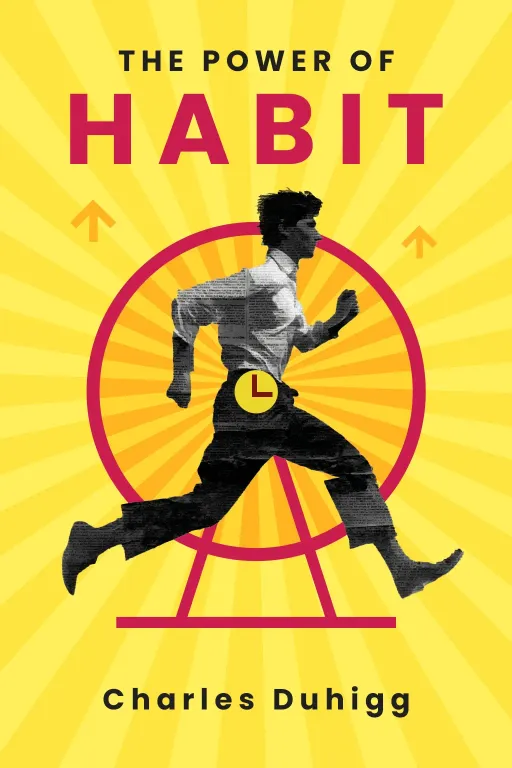
Nova: Exactly, Atlas. It's a common misconception that often leads to burnout and self-blame. Today, we're diving into the brilliant insights from Charles Duhigg's 'The Power of Habit' and B. J. Fogg’s 'Tiny Habits.' Duhigg, an investigative journalist, brought the science of habit formation to the masses, showing us the hidden architecture of our daily lives. And Fogg, with his pioneering work at Stanford's Behavior Design Lab, gave us the practical toolkit to actually our way to better behaviors. These aren't just theories; they're blueprints for lasting change.
Atlas: Okay, so if it's not just willpower, and we've got these incredible minds breaking it down, what the real blueprint for behavior? Where do we even start to understand these invisible forces?
The Hidden Blueprint: Unpacking the Habit Loop
SECTION
Nova: We start with what Duhigg calls the 'Habit Loop.' Imagine it as a three-step process: there's a Cue, which triggers your brain to go into automatic mode and decide which habit to use. Then there's the Routine, which can be physical, mental, or emotional. And finally, the Reward, which helps your brain determine if this particular loop is worth remembering for the future. It’s a powerful, often unconscious cycle.
Atlas: Oh, I see. So, the cue isn't always obvious, right? Like, it's not just seeing a cookie; it could be a feeling of stress, a time of day, or even a specific sound. For someone who's constantly trying to optimize their cognitive performance, but feels stuck in unproductive patterns, how does understanding this seemingly simple loop become a strategic advantage?
Nova: It becomes a strategic advantage because it demystifies behavior. Take the story of how advertisers learned to target pregnant women. They weren't just looking at obvious cues like buying baby clothes. They analyzed purchasing patterns for things like scent-free soap and vitamins – subtle cues that indicated a new habit loop forming. By understanding the cue, they could deliver the right routine and reward. For us, it means becoming detectives of our own lives. If you want to change a routine, you don't fight the cue or the reward; you learn to substitute the routine.
Atlas: That's fascinating. So, for our listeners who are striving to lead with more presence and purpose, how does dissecting their current 'unmindful' routines—say, mindlessly scrolling social media instead of focusing—help them build a better one? What's the hidden reward they're seeking?
Nova: Exactly! That's the crucial question. The reward for scrolling might not be the content itself, but a momentary escape, a hit of novelty, or even a sense of connection. Once you identify that underlying reward, you can consciously design a different routine that still delivers that reward. Instead of reaching for the phone when stress hits, you might try a two-minute meditation or a quick walk around the office. The reward—a sense of calm or mental break—is still achieved, but through a more purposeful routine. It's about working your brain's wiring, not against it. That's true behavioral economics in action.
Architecting Your Environment: Tiny Habits for Lasting Transformation
SECTION
Nova: And that naturally leads us to the second key idea, which is all about taking that blueprint we just discussed and building something new, brick by tiny brick. We're talking about B. J. Fogg’s brilliant approach: Tiny Habits. Fogg argues that if you want to create a new habit, make it ridiculously small, connect it to an existing behavior, and celebrate every single time you do it. His B=MAP model is simple: Behavior equals Motivation, Ability, and Prompt. You need all three.
Atlas: Okay, so the 'tiny' part makes intuitive sense; it lowers the barrier to entry. But what about the 'P' in B=MAP – the prompt? For someone trying to integrate this into a complex work-life flow, perhaps an innovator building something new or a strategist optimizing systems, how do they create prompts that don't feel like just another thing on the to-do list? And how does environmental design – which you've championed, Nova – play into that?
Nova: That's where the magic truly happens, Atlas. Prompts can be internal, like a feeling, or external, like an alarm. But the most powerful prompts are often already embedded in your existing routines, what Fogg calls "anchor habits." So, if you want to start flossing, the tiny habit isn't "floss all your teeth," it's "floss one tooth after you brush your teeth." Brushing your teeth is the anchor habit, the prompt. The environmental design aspect comes in by making that tiny behavior even easier. Put the floss right next to your toothbrush. Remove any friction.
Atlas: So, it's like making the 'right' choice the path of least resistance. This is huge for anyone looking to optimize their daily systems without constant mental effort. It's about reducing the ability barrier to almost zero. What's a common trap people fall into when trying to implement tiny habits, even with good intentions?
Nova: A huge trap is neglecting the "celebration" part. We tend to think celebrating small wins is silly or unnecessary, but it's absolutely critical for hardwiring the new behavior. When you floss that one tooth, you don't just move on. You give yourself a mental "good job," a silent fist pump, or even a little internal cheer. That positive emotion creates the reward that tells your brain, "Hey, this new behavior is good, do it again!" It reinforces the loop. Without it, even tiny habits can fizzle out because the brain doesn't get that crucial feedback. It's a foundational principle of behavioral economics: positive reinforcement.
Atlas: That's such a profound insight. It’s not just about doing the thing, but about consciously acknowledging the victory, however small. It turns out, our brains are surprisingly simple, responding to these basic reward mechanisms.
Synthesis & Takeaways
SECTION
Nova: Absolutely. What Duhigg teaches us is that understanding the habit loop — the cue, routine, and reward — gives you the ultimate map, the deep insight into you do what you do. Then, what Fogg and our own insights emphasize, is that tiny habits combined with smart environmental design give you the practical tools to actually new, more desirable behaviors. It’s not about monumental effort, but intelligent design.
Atlas: This is a game-changer for anyone who values foresight and integrated application. It’s not just about what you, but how you your doing. Thinking about cognitive optimization or mindful leadership, this approach allows you to architect your day, your focus, and your presence in a way that feels natural, not forced. It's about becoming the architect of your own habits, rather than a prisoner of them.
Nova: Precisely. Start with one tiny habit today. Make it ridiculously easy, connect it to something you already do, and celebrate that small win. You’ll be amazed at the cumulative power of those micro-actions. It’s how innovators build the future, one deliberate, tiny step at a time.
Atlas: It truly is. This is Aibrary. Congratulations on your growth!