Stop Drifting, Start Driving: How to Engineer Unstoppable Habits.
Golden Hook & Introduction
SECTION
Nova: What if I told you the reason you're not hitting your big goals isn't a lack of willpower, but a poorly designed environment?
Atlas: Oh, I like that. So, all those times I blamed my own discipline, I was just... looking in the wrong place? That’s going to resonate with anyone who feels like they’re constantly fighting an uphill battle with themselves.
Nova: Exactly! Today we're diving into the incredibly insightful work that challenges our fundamental understanding of achievement:. It's a title that really says it all, Atlas.
Atlas: Right? And it's a book that really flips the script on what we think we know about discipline. It's not just about trying harder, it’s about being smarter with how we approach our daily lives.
Nova: Absolutely. This book takes a deep dive, not just into the "what" of success, but the "how" – it's all about engineering our lives for success, rather than just hoping for it. It really unpacks the idea that our environment often dictates our choices more than our internal resolve. It pushes back on the common belief that discipline is purely an internal, grueling battle.
Atlas: That's a great way to put it. For anyone who's ever felt that exhausting willpower fatigue, that idea alone is a relief. So, let’s get into the mechanics of that.
Deep Dive into The Inevitability of System Design
SECTION
Nova: The core idea here is that big goals feel daunting, right? We all have them. But the secret to consistent progress isn't some superhuman level of willpower. It's designing systems that make good habits inevitable. It’s about making the right choice the choice.
Atlas: Okay, but wait. Isn't that just... cheating? Where's the "grit" in that? I imagine a lot of our listeners, especially those driven by self-improvement, might feel like they’re supposed to their progress through sheer force of will.
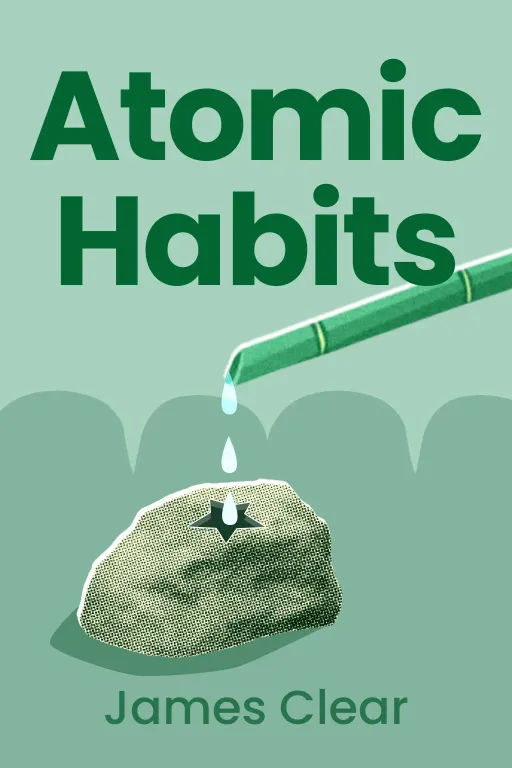
Nova: That’s a great question, Atlas, and it's a common misconception. Think of it this way: James Clear, in his widely acclaimed book, introduces this concept of tiny, incremental changes. He says true growth comes from making good habits obvious, attractive, easy, and satisfying. It’s not about avoiding effort; it’s about directing your effort strategically.
Atlas: So you're saying, for someone like an aspiring architect trying to schedule dedicated reading time—which, let's be honest, is a consistent battle for many intellectually curious people—how does "making it obvious" actually work? You can't just put the book on your pillow and expect magic.
Nova: Well, you actually start there, in a way! Making it obvious means literally putting the book on your pillow, or on your coffee maker, or on your desk where you'll trip over it. It’s about creating visual cues in your environment. If your goal is to read for 15 minutes every morning, don't leave the book on a shelf. Put it on your nightstand, open to the page you left off, next to your alarm clock. The cue becomes undeniable.
Atlas: That’s such a simple shift, yet it feels powerful. It’s like, instead of relying on my brain to to read, I’m building a physical trigger. But what about making it and? That sounds a bit more abstract.
Nova: Not at all! Making it attractive could be pairing that reading time with a fresh cup of coffee you genuinely look forward to, or a quiet, comfortable corner you've designated as your "reading sanctuary." Making it easy means reducing friction. If your book is across the room, and your phone is next to you, guess which one wins? Make it easy by having the book right there. And satisfying? That's the reward. It could be the feeling of accomplishment, the new knowledge you gained, or even a small, immediate treat after you finish.
Atlas: I see. So, for our listener who’s driven by a deep desire for understanding, the satisfaction might be the intellectual growth itself, the feeling of connecting new dots. This isn't about eliminating willpower; it's about minimizing the for it for the routine tasks, freeing up that mental energy for deeper thinking.
Nova: Precisely. And this is where the idea of "compounding" comes in. Just like compound interest, small, consistent actions compound into massive results. You don't see the gains from one day of reading 15 minutes, but over a year, that's dozens of books. Over a decade, it's a transformation. It's the silent, unstoppable force behind true growth.
Atlas: Wow, that’s actually really inspiring. It redefines what "driving" means, taking it from a sheer force of will to an intelligent design. So, we've talked about designing the system, but what's actually happening inside us when these systems make us the thing? That makes me wonder about the invisible forces at play.
Deep Dive into The Science of Habit Loops: Cue, Routine, Reward
SECTION
Nova: That’s a perfect pivot, Atlas, because that leads us directly into the fascinating science behind habit formation, beautifully explored by Charles Duhigg in. He reveals the neurological loop that governs our behaviors: cue, routine, and reward.
Atlas: So you're saying our brains are running these little algorithms for everything we do without us even realizing it? What exactly is a "cue" in a real-world scenario?
Nova: Think of a cue as the trigger. It’s the tiny piece of information that tells your brain to go into automatic mode and which habit to use. For example, the cue for checking social media might be boredom, a notification, or even a specific time of day. The routine is the action itself – picking up your phone, opening the app, scrolling. And the reward? That's the hit of dopamine, the temporary distraction, the feeling of connection.
Atlas: Oh, I’ve been there. Honestly, that sounds like my Monday mornings when I find myself mindlessly scrolling through news feeds instead of diving into my work. So, if the reward is what drives it, how do you find a reward for the same cue, or even change the routine?
Nova: That's the genius of understanding the loop. Duhigg's research shows that you often can't simply eliminate a craving. The brain still expects that reward. The trick is to identify the cue, identify the craving, and then to get that same reward in a healthier way.
Atlas: Can you give an example? Like how would that work for my morning scroll? The cue is probably the quiet of the morning, the craving is connection or information.
Nova: Exactly. So, instead of the routine of scrolling on your phone, you could replace it with a routine of reading a physical newspaper, or calling a friend, or even just sitting quietly with your thoughts for five minutes. The key is to experiment to find a new routine that delivers a similar reward to satisfy that craving, without the negative side effects. Or, even better, change the cue itself. Don't bring your phone into the bedroom. Charge it in the kitchen. Make the old routine and the new routine.
Atlas: That’s a great way to put it. It sounds a bit too deterministic, though. Don't we have agency here? Are we just slaves to our habit loops?
Nova: That’s where Nova’s Take comes in, which is the synthesis of these ideas. True growth comes from understanding the mechanics of habits and then intentionally shaping them to serve your highest intentions. It's not about being a robot; it's about being an engineer of your own behavior. You gain agency by understanding the system, not by fighting against it blindly. It’s about reclaiming your mental energy for higher-level thinking and creativity by automating the basics.
Atlas: That’s actually really insightful. It’s about becoming the architect of your own daily life, rather than just drifting through it. It empowers you to build the foundations for the kind of consistent growth and understanding that an intellectually curious person craves.
Synthesis & Takeaways
SECTION
Nova: Absolutely, Atlas. What we’ve really explored today is that transformation isn't a sudden burst of willpower; it's a strategic design process. It’s about building systems that make success inevitable, and understanding the neurological loops that underpin every action we take. When you combine the environmental design of Clear with the neurological understanding of Duhigg, you unlock a profound power.
Atlas: That’s a powerful synthesis. It’s about being intentional. It's about recognizing that our path is shaped less by grand declarations and more by the tiny, often invisible, choices we make every single day. For anyone who's ever felt stuck or overwhelmed by big goals, this approach offers a clear, actionable path forward.
Nova: It absolutely does. So, for our listeners who are ready to stop drifting and start driving, we have a tiny step for you today.
Atlas: I’m ready. What is it?
Nova: Choose just one small habit you want to build. Just one. And make it obvious, attractive, easy, and satisfying today. Whether it’s reading for five minutes, drinking a glass of water, or taking one deep breath. Engineer that small win.
Atlas: That’s a concrete, actionable insight. And we’d love to hear about it. Share your tiny habit experiments with us on social media and let’s build this community of intentional growth together.
Nova: We can't wait to see what you engineer.
Atlas: This is Aibrary. Congratulations on your growth!