Mastering Habits: The Foundation of Your Intentional Life
Golden Hook & Introduction
SECTION
Nova: You know, Atlas, it’s a bit unsettling when you realize how much of your day is actually running on autopilot. We think we’re making conscious choices, but often, we’re just following invisible scripts.
Atlas: Oh, I know that feeling. It’s like I blink, and suddenly I’ve scrolled through my entire social feed without even meaning to. It’s a bit disorienting, honestly, feeling like you’re not entirely in the driver’s seat of your own day.
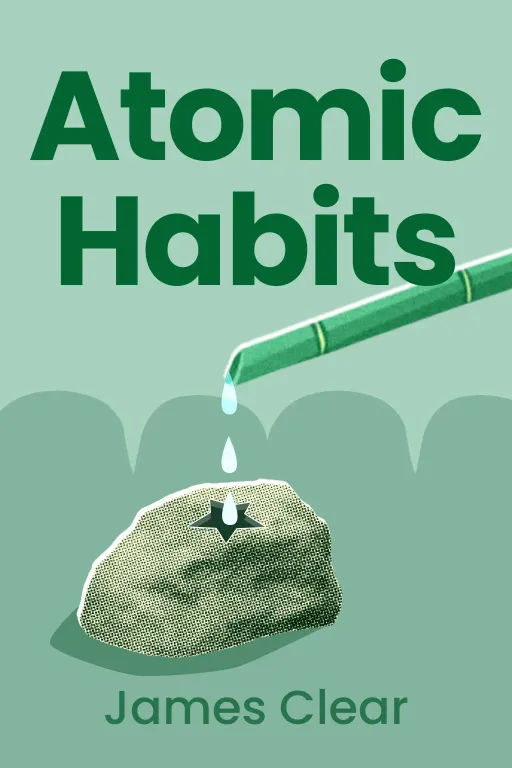
Nova: Exactly! And that’s why today, we’re diving into the brilliant minds of two authors who have fundamentally shifted how we understand and, more importantly, those invisible scripts. We're talking about James Clear’s "Atomic Habits" and Charles Duhigg’s "The Power of Habit."
Atlas: Ah, the architects of our daily routines! I'm curious, Nova, what makes these two books so foundational?
Nova: Well, James Clear, with his background in entrepreneurship and competitive weightlifting, brings a very practical, systems-oriented approach to habit formation. He’s all about the actionable steps. Charles Duhigg, on the other hand, as a Pulitzer Prize-winning investigative journalist, really digs into the scientific bedrock, showing us the neurological machinery behind what we do. They complement each other beautifully, one giving us the 'how' and the other the 'why.'
Atlas: So, it’s not just about willpower, then? It’s about understanding the underlying mechanics, which, for someone who seeks structure and clarity, sounds incredibly empowering. It’s like getting the blueprint for your own behavior.
Nova: Precisely. And that's where we start our journey today: by peeling back the layers to reveal the hidden architecture of habits.
The Hidden Architecture of Habits: Understanding the Cue-Routine-Reward Loop
SECTION
Nova: Because before you can redesign anything, you have to understand how it's built. Duhigg, in "The Power of Habit," gives us this incredibly elegant framework: the habit loop. It’s a three-step process: there's a cue, then a routine, and finally, a reward. Every single habit, good or bad, follows this pattern.
Atlas: So you’re saying every time I grab that second cup of coffee in the afternoon, there’s a specific cue and a specific reward driving it, even if I’m not consciously aware of it?
Nova: Absolutely. Think about Pepsodent, for instance. Before the 1900s, almost no one brushed their teeth. It wasn't a habit. Then, an advertiser named Claude Hopkins came along. He found the cue: a film on your teeth, that slightly fuzzy feeling. The routine was brushing. But what was the reward?
Atlas: Hmm, fresh breath? Clean teeth?
Nova: That’s part of it, but Hopkins tapped into something more subtle: the tingling sensation from the mint oil and chemicals. That tingle became the – it signaled "clean." People started craving that feeling, and Pepsodent became a household name because it created a for that specific reward. It wasn’t about cleaning, it was about the sensation.
Atlas: Wow. So it’s not always the obvious outcome that’s the reward. It’s often a deeper, almost psychological satisfaction. That makes me wonder about some of my own less-than-ideal habits. Like, when I reach for my phone first thing in the morning. The cue is waking up, the routine is grabbing the device. But what’s the reward there? Dread?
Nova: Not dread, but often a hit of novelty, social connection, or simply the alleviation of boredom. The brain craves novelty, and social media delivers that in spades. The reward is that fleeting sense of being "caught up" or entertained, even if it's ultimately unfulfilling.
Atlas: That’s actually really insightful. It’s like the brain is just looking for kind of payoff, and it doesn't always discriminate between a truly beneficial one and a temporarily distracting one. So understanding this loop—cue, routine, reward—is the first step towards feeling more intentional, rather than just being a puppet of our patterns. It's about seeing the strings.
Nova: Exactly. Once you see the strings, you can start to pull them yourself. You can intentionally design your environment and your responses, which leads us beautifully to our second core idea.
Becoming Your Own Architect: Designing Intentional Habits with the Four Laws
SECTION
Nova: Because knowing the loop is one thing, but James Clear gives us the practical toolkit to actually build habits. He distills it into four simple laws for creating good habits, and their inversions for breaking bad ones: Make it Obvious, Make it Attractive, Make it Easy, and Make it Satisfying.
Atlas: Okay, so if I’m an aspiring architect of my own life, and I want to cultivate a small habit, like reading for 15 minutes daily – which, honestly, sounds like a dream for a purposeful learner like me – how do these laws actually make that happen? Because the intention is there, but the follow-through can be… challenging.
Nova: That’s a fantastic question, Atlas, and it directly addresses the friction we all face. Let’s break it down. First, "Make it Obvious." This is about environment design. If you want to read, don't keep your book hidden on a shelf. Place it next to your coffee cup each morning, as our user profile suggests. Make the cue unavoidable.
Atlas: Right, so the book is literally staring me in the face. No excuses. What about "Make it Attractive"? Because sometimes, reading feels like work, especially after a long day.
Nova: This is where "temptation bundling" comes in. Pair the habit you to do with a habit you to do. So, maybe you only allow yourself to listen to your favorite podcast while you’re reading. Or, you only drink your special, fancy tea during your reading time. You're making the reading routine more appealing by linking it to something you already enjoy.
Atlas: Oh, I love that! So it’s like, I can only watch that one show I'm binging if I'm simultaneously folding laundry. That's clever. What about "Make it Easy"? Because 15 minutes can still feel like a mountain when you’re tired.
Nova: This is crucial for consistency. Clear talks about the "two-minute rule." When you start a new habit, make it so easy you can do it in two minutes or less. For reading, don't aim for 15 minutes initially. Just open the book and read one sentence. Or read for two minutes. The goal is to show up, to build the of a reader, not to achieve a specific outcome immediately. Reduce the friction to zero.
Atlas: That makes so much sense! It's about overcoming that initial inertia. And then, "Make it Satisfying." How do you make something like reading, which has a delayed gratification, feel immediately rewarding?
Nova: That's the trick. You need some immediate form of satisfaction. This could be a simple checkmark on a habit tracker, which gives your brain a little hit of dopamine. Or, for our reader, it could be a small, physical reward you allow yourself only after you’ve read – a square of dark chocolate, a moment of quiet reflection. The reward needs to be immediate and positive to reinforce the loop. It’s about giving your brain a little victory celebration.
Atlas: So it's about engineering that cue-routine-reward loop yourself, but with positive outcomes. It’s about designing your environment so that good habits are the default, and the "intentional life" isn't a struggle, but a natural outflow of well-designed systems. That's what an aspiring architect truly wants: a solid foundation.
Synthesis & Takeaways
SECTION
Nova: Exactly. What Clear and Duhigg show us is that you don't need superhuman willpower to build the life you want. You need a deep understanding of how habits work, and then the practical tools to design your environment and your actions to support your aspirations. It’s about becoming the architect of your own automatic progress, as we call it.
Atlas: And that ties so perfectly into the idea of "trusting your inner compass" and "starting small" – those growth recommendations. It’s not about grand, sweeping gestures, but consistent, tiny steps that, over time, compound into remarkable results. It’s the ultimate form of self-improvement for the purposeful learner.
Nova: Indeed. The beauty is that once you understand these principles, you see habits everywhere, and you gain the power to reshape them. From where you place your book to how you structure your morning, every detail becomes an opportunity for intentional design.
Atlas: So, for all our listeners who are aspiring architects of their own lives, who seek structure and clarity, I challenge you: pick just one small habit you want to cultivate. Think about its cue, routine, and reward. Then, use Clear’s four laws: how can you make it obvious, attractive, easy, and satisfying? Maybe it's as simple as putting your running shoes by the door, or only listening to your favorite podcast while you're tackling that one dreaded email. Start small, and watch the momentum build.
Nova: The power of habits isn't just about what you, but about who you through those consistent, intentional actions.
Atlas: This is Aibrary. Congratulations on your growth!