Building Unbreakable Habits for Success
Golden Hook & Introduction
SECTION
Nova: Forget willpower. Seriously, throw it out the window. Because what if I told you that building an unbreakable habit isn't about how much grit you have, but how cleverly you design your world?
Atlas: Whoa, Nova. That’s a bold statement right out of the gate. "Cleverly design your world" sounds a lot easier than "just try harder," which is usually the advice I get. But my gut reaction is, if it were that easy, wouldn't we all be habit-forming superheroes already?
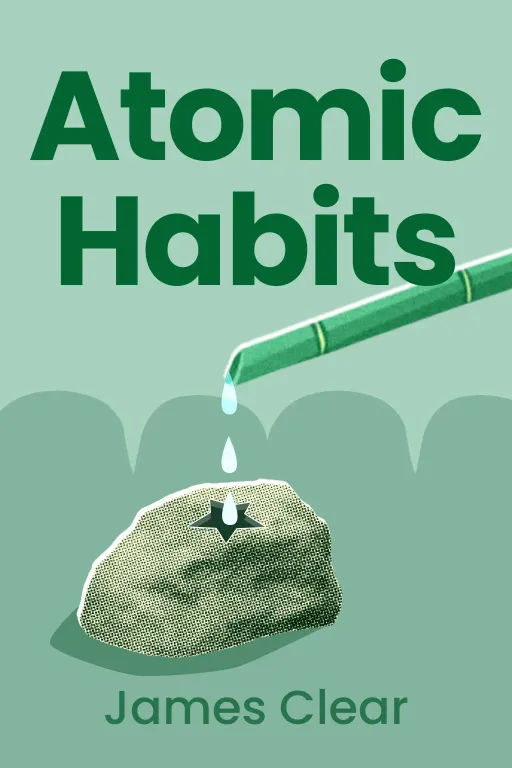
Nova: Exactly! That's the common misconception we're tackling today. We're diving into the brilliant minds behind two groundbreaking books: Charles Duhigg's and James Clear's. Duhigg, an award-winning investigative reporter, brought a journalist's eye to neuroscience, making the complex science of habit formation incredibly accessible. And Clear, an entrepreneur and speaker, distilled behavioral science into a practical, easy-to-implement system after overcoming a personal injury that forced him to rethink how change happens.
Atlas: So we’re looking at both the "why" and the "how" then. That’s crucial for anyone, like many of our listeners, who are strategic achievers and resilient learners. We want lasting change, not just a temporary burst of motivation. I imagine a lot of people feel that frustration of trying to build a good habit, only for it to fizzle out.
Nova: Absolutely. And that frustration often stems from not understanding the fundamental mechanics at play.
The Habit Loop – Understanding the 'Why' Behind Our Actions
SECTION
Nova: So, let's start with Duhigg. He pulls back the curtain on what he calls the "habit loop": a neurological process that underpins we have. It’s made of three parts: a cue, a routine, and a reward.
Atlas: A cue, a routine, and a reward. Okay, break that down for me. Give me an example that makes it vivid.
Nova: Think about Pepsodent toothpaste back in the early 20th century. It was one of the first mass-market toothpastes. Its success wasn't just about cleaning teeth; it was about creating a. The cue was the fuzzy feeling on your teeth. The routine was brushing. But the reward, the part, wasn't just clean teeth. It was the tingling sensation from the mint oil and detergents. That tingling signaled "clean" and created a subtle craving for that sensation every morning. That's the reward driving the loop.
Atlas: Oh, I get it! So it’s not just about the functional outcome, but the associated with it. I always thought that tingling was just… how toothpaste felt. But it’s a manufactured reward! That's fascinating. So, we're basically on autopilot, driven by these subtle cravings we might not even recognize?
Nova: Precisely. Duhigg argues that nearly all our daily choices, from what we eat to how we work, are influenced by these loops. Another great example is Febreze. When it first launched, it failed. People bought it, but didn't use it regularly. Why? Because the cue was a bad smell, but if your house smelled bad, you were often "nose blind" to it.
Atlas: So no cue, no routine. How did they fix it?
Nova: They changed the. Instead of eliminating bad smells, they positioned it as the to a cleaning routine. The cue became a freshly cleaned room, the routine was spraying Febreze, and the reward was the pleasant, clean scent that symbolized a job well done. It became a celebratory spritz, a small victory at the end of cleaning. That subtle shift turned it into a billion-dollar product.
Atlas: Wow. That's actually incredible. So it's not about forcing yourself to do something you hate, it's about identifying that deeper, often emotional, reward. For our listeners aiming for financial security or better work-life balance, it’s not just about "saving money" or "leaving work at 5 PM," but what deeper satisfaction or feeling those actions bring.
Nova: Exactly. And the "golden rule of habit change," according to Duhigg, is that you can't truly eradicate a bad habit; you have to it. You keep the old cue, you keep the old reward, but you change the routine. If your cue for stress is walking to the kitchen for a snack, and the reward is comfort, you don't eliminate the stress or the need for comfort. You change the routine to, say, a quick walk around the block or a few deep breaths.
Atlas: That makes so much more sense than just saying "don't eat that." It's acknowledging the underlying need. But if Duhigg gives us this powerful framework for why we do what we do, how do we actually those changes consistently?
Engineering Habits with Atomic Strategies
SECTION
Nova: That's where James Clear's comes in. If Duhigg gives us the "why," Clear gives us the incredibly practical "how." He argues that big results come from "atomic habits"—tiny, 1% improvements that compound over time. His framework is built on four simple laws of behavior change.
Atlas: "Atomic habits." So, not just small, but changes that build up. I like that. What are these four laws?
Nova: They're about making habits: one, obvious; two, attractive; three, easy; and four, satisfying.
Atlas: Okay, lay them out for me. "Make it obvious" sounds like a good starting point.
Nova: Right. Make the cues for your good habits visible. If you want to work out in the morning, lay your workout clothes out the night before. If you want to read more, put the book on your pillow. For bad habits, do the opposite: make them. Put your phone in another room to reduce distraction.
Atlas: So, environmental design. I imagine a lot of strategic achievers are already thinking about optimizing their environment, but maybe not in this specific habit-forming way. What about making it attractive?
Nova: This is where "habit stacking" and "temptation bundling" come in. Pair a new habit you to do with a habit you to do. Or, only allow yourself to do something you while doing a habit you to do. You're making the desired action more appealing by associating it with an immediate pleasure.
Atlas: That's clever! So, instead of dreading the treadmill, I associate it with my favorite show. My brain gets a little dopamine hit just thinking about it. And "make it easy"? This one often feels like the biggest hurdle for people with demanding schedules.
Nova: That's the "friction reduction" principle. The less effort a habit requires, the more likely you are to do it. Clear suggests the "Two-Minute Rule": when you start a new habit, it should take less than two minutes to do. Want to read more? Read one page. Want to exercise? Do one push-up. The goal is to just. For bad habits, increase the friction. If you're spending too much time on social media, delete the apps from your phone—you'll have to log in through a browser, which adds friction.
Atlas: That "two-minute rule" is powerful. It takes away the intimidation factor. It’s not about the intensity, but the consistency. But what about the fourth law, "make it satisfying"? Especially for big financial goals or long-term influence, where the reward feels so distant?
Nova: That's where immediate gratification comes in. Our brains are wired for instant rewards. For long-term goals, you need to create an, positive feeling. This could be checking off a box on a habit tracker, giving yourself a small, non-detrimental reward immediately after completing the habit, or even just seeing your progress visually. It's about building a sense of accomplishment right after the action, reinforcing the loop.
Atlas: So it's almost like a hack for our reward system, right? You're giving your brain a little treat to keep it motivated for the big reward later. This is incredibly practical for resilient learners who are always looking for systems to optimize their growth. And for empathetic connectors, could these principles even be applied to group habits, like making team meetings more productive or fostering a better company culture?
Nova: Absolutely. You can make team check-ins more obvious by having a dedicated time, more attractive by starting with a positive share, easier by keeping them short, and satisfying by celebrating small wins. The principles are universal.
Synthesis & Takeaways
SECTION
Nova: So, when we put Duhigg and Clear together, it's a powerful combination. Duhigg shows us the invisible forces—the habit loops—that govern our lives. He helps us understand we do what we do. Clear then gives us the toolkit to consciously, almost architecturally, our way into better habits. It’s about respecting the brain’s wiring and working it, not against it.
Atlas: That’s a profound insight, Nova. It's not about a grand overhaul or a massive act of willpower, but identifying one small thing and then intelligently designing your environment and your approach to make that one small thing inevitable. It's about making progress so easy you can't do it.
Nova: Exactly. It shifts the focus from a moral failing or lack of discipline to a design challenge. If your habits aren't serving you, it's not you that's broken; it's your system.
Atlas: That's a huge relief for anyone striving for work-life balance or meaningful growth. It means we don't have to burn ourselves out trying to be perfect. We can start small, be consistent, and trust the compound effect. It’s about making progress inevitable, not just possible.
Nova: And that brings us to our tiny step for the week. Pick just one small habit you want to cultivate. And then apply Clear's "make it obvious and easy" principles. Place a cue in your environment, reduce the friction for action, and watch how that small, atomic change starts to build momentum.
Atlas: So, for me, that might be putting my running shoes right by the door, so I literally trip over them.
Nova: Perfect! It’s about setting yourself up for success, one tiny, obvious, easy step at a time.
Atlas: I love that. It’s empowering.
Nova: This is Aibrary. Congratulations on your growth!