Beyond Time Management: Crafting Systems for Unstoppable Progress.
Golden Hook & Introduction
SECTION
Nova: What if I told you the secret to achieving your biggest dreams isn't about having more willpower, but about completely redesigning your life's operating system?
Atlas: Hold on, Nova. Are you saying all those 'just push harder' motivational posters, the ones that tell us to grit our teeth and soldier on, are actually setting us up for failure? Because honestly, that resonates with anyone who’s ever hit a wall trying to out-willpower their own exhaustion.
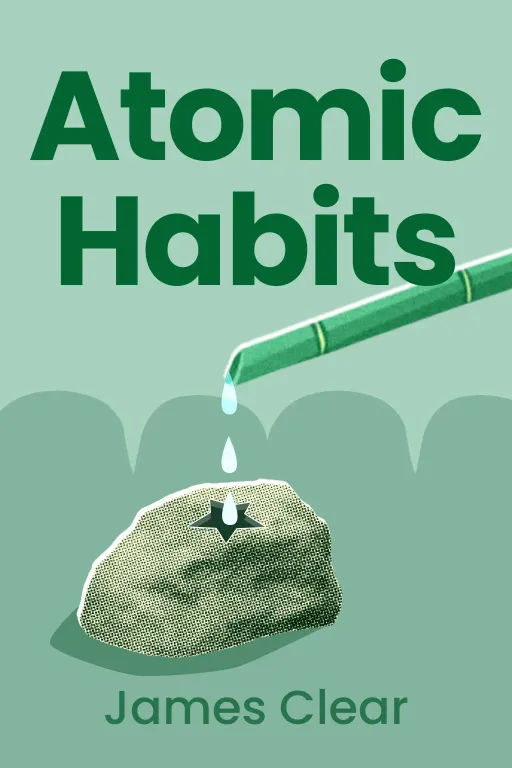
Nova: Absolutely, Atlas! That's the cold, hard truth we're diving into today. Good intentions often fall short without robust systems to support them. Relying solely on raw willpower? That’s a fast track to burnout and inconsistent progress, especially for driven professionals navigating complex goals. Today, we're moving 'Beyond Time Management' to truly craft systems for unstoppable progress. We’re drawing profound insights from two titans in this field: James Clear's groundbreaking 'Atomic Habits' and Charles Duhigg's deeply researched 'The Power of Habit.'
Atlas: Okay, so we're talking about a fundamental shift from individual grit to architectural design for our lives. That sounds pretty profound. Tell me a bit more about these architects.
Nova: Well, James Clear, for instance, came to this understanding through his own journey. He was a promising baseball player whose career was derailed by a severe injury. His recovery wasn't about one grand gesture, but about tiny, consistent efforts – a system. That personal experience fueled his practical, systems-based approach, making 'Atomic Habits' so relatable and actionable. And Charles Duhigg? He's a Pulitzer-winning journalist who took complex scientific concepts about habit formation and made them incredibly accessible, weaving in captivating narratives that show us we do what we do.
Atlas: That's a great way to put it – 'architects of our own lives.' It definitely feels more empowering than just trying to conjure up more discipline out of thin air. So, if willpower isn't the answer, where do we even begin to build these systems?
Nova: Exactly. And that's where James Clear really shines, showing us how to build those foundational blocks, one tiny step at a time.
The Science of Sustainable Habits: Clear's Atomic Approach
SECTION
Nova: Clear's core premise, the 'atomic' in Atomic Habits, is about the astonishing power of tiny changes. He argues that improvement isn't linear; it's exponential. A mere 1% improvement every day, compounded over a year, makes you 37 times better. It’s not about radical transformation overnight, but about consistent, almost imperceptible shifts.
Atlas: Wow, 37 times better? That’s incredible! But for someone trying to integrate a complex new skill, or even a new language, into an already packed schedule – say, an aspiring expat preparing for a US journey – how does this 'tiny' approach actually work? It feels like those goals demand leaps, not just tiny steps.
Nova: That's the beauty of it. Clear gives us four simple laws to make habits stick: make it obvious, make it attractive, make it easy, and make it satisfying. Let’s take 'make it obvious.' If you want to start a new exercise routine as a driven professional, instead of relying on memory, you place your running shoes and workout clothes right by your bed the night before. You literally trip over them. The cue is undeniable. For our aspiring expat learning a new language, it could be changing your phone's language settings, or having your flashcards sitting on your breakfast plate every morning. The environment screams 'practice!'
Atlas: Oh, I love that. It's like rigging the game in your own favor, instead of fighting against your own brain. So, you're not just hoping you'll remember; you’re making it impossible to forget. What about 'making it attractive'? Because let’s be honest, some habits, like filling out immigration paperwork, are anything but attractive.
Nova: That’s a perfect example. Clear suggests 'habit stacking' and 'temptation bundling.' Habit stacking is linking a new habit to an existing one. After I pour my morning coffee, I’ll spend five minutes reviewing healthcare ethics notes. Temptation bundling is pairing an action you to do with one you to do. So, you only allow yourself to watch your favorite Netflix show while you’re doing those dreaded immigration forms. Suddenly, the cue for the paperwork is linked to the reward of entertainment.
Atlas: That makes sense! So it's like micro-committing to a habit, rather than trying to swallow the whole elephant. That’s a huge mindset shift for anyone used to a 'go big or go home' mentality. It sounds less about discipline and more about smart design.
Nova: Exactly. And the other two laws, 'make it easy' and 'make it satisfying,' reinforce this. 'Make it easy' means reducing friction. If you want to eat healthier, pre-chop your vegetables on Sunday. If you want to journal, leave your journal open with a pen on your nightstand. 'Make it satisfying' is crucial because our brains crave immediate rewards. So, after completing that five minutes of language practice, give yourself a small, immediate win – perhaps a moment of mindful appreciation for your progress, or checking off a box on a tracker. That immediate positive reinforcement makes you want to do it again.
Atlas: I can see how that would be powerful. It’s not just about doing the thing, but feeling good doing the thing. That brings me to my next thought. While Clear’s approach is incredibly practical for building new habits, what about understanding the deeper science behind habits form and how we can break the ones that aren't serving us?
Nova: That’s a fantastic pivot, Atlas, because that naturally leads us to the second key idea we need to talk about, which often acts as a critical understanding to what we just discussed.
Engineering Your Environment: Duhigg's Habit Loop & System Design
SECTION
Nova: Charles Duhigg, in 'The Power of Habit,' takes us into the neurological and psychological underpinnings of habit formation. He introduces the 'habit loop': cue, routine, reward. Every habit, good or bad, follows this three-step pattern. The cue is the trigger that tells your brain to go into automatic mode. The routine is the behavior itself. And the reward is the positive feeling or outcome that reinforces the loop, making you crave it again.
Atlas: Okay, the habit loop makes sense intellectually. We feel stressed, we scroll through social media, we get a momentary distraction. But for someone navigating significant life changes, like an expat in a new country where everything is a new cue and a new routine, how do you even begin to consciously 'engineer' an environment that feels inherently chaotic?
Nova: That’s where Duhigg’s insights become incredibly powerful. He shows that you can't truly eliminate a bad habit; you have to it. The cue and the reward often remain, but you can consciously choose a different routine. Think about a professional who habitually checks email every five minutes, disrupting deep work. The cue might be 'a lull in concentration' or 'a notification sound.' The reward is a sense of 'being informed' or 'avoiding a bigger task.'
Atlas: Right, like that constant tug to check your phone, even when you know it's not productive.
Nova: Exactly. Instead of trying to stop checking email, you identify the cue and the reward. Then, you insert a routine. When that lull in concentration hits, instead of opening email, you might stand up and stretch for 30 seconds, or review your top priority task for the next 15 minutes. The key is that the new routine must deliver a similar reward – perhaps a feeling of control, or a small sense of accomplishment – to effectively replace the old one.
Atlas: That’s a much more proactive approach than just saying 'don't do that.' It’s about understanding the underlying cravings. So, it's not just about self-discipline, it's about being a master architect of your own daily life, consciously manipulating the cues and rewards around you. That's a much more empowering way to look at it.
Nova: Absolutely. And this is where Clear and Duhigg converge so beautifully. Clear gives you the practical steps to build new habits, and Duhigg gives you the profound understanding of those steps work, allowing you to strategically engineer your environment. For an expat, this means consciously setting up new cues in their new home – a specific spot for language study, a routine for connecting with a new community – to create new, positive habit loops that support their journey. It’s about designing systems that make consistent effort automatic, rather than relying on inconsistent willpower.
Atlas: So the environment isn't just a backdrop; it's an active participant in our progress. That really changes the game, especially for someone who wants to thrive, not just survive, in a new country or a demanding career. It’s about building a life where success is almost inevitable because of the systems you've put in place.
Synthesis & Takeaways
SECTION
Nova: Precisely, Atlas. The profound insight here is that consistency isn't a personality trait; it's a product of well-designed systems. When you combine Clear's 'atomic' approach of making habits obvious, attractive, easy, and satisfying with Duhigg's understanding of the habit loop – cue, routine, reward – you're essentially building a self-sustaining engine for progress. You're moving beyond the ephemeral nature of motivation and tapping into the enduring power of automaticity.
Atlas: It’s a complete reframing of how we approach personal growth, especially when you're trying to build a new life or excel in a new career. It’s not about being a superhuman, but about building a super system. This is going to resonate with anyone who’s ever felt stuck, despite their ambition. You’re telling us we can actually engineer our way to unstoppable progress.
Nova: You absolutely can. And the tiny step we encourage everyone to take today, right now, is this: choose one small habit you want to build. Just one. Then, identify its cue and its reward. Finally, make it so obviously attractive and incredibly easy to start that you can’t do it. Maybe it’s drinking a glass of water when you wake up, or spending two minutes on a new skill.
Atlas: So what's that one tiny habit you're going to make undeniable today, listener? It sounds like the smallest change can be the biggest lever.
Nova: It truly is. Thank you for joining us on this journey to understand the hidden architecture of progress.
Atlas: And remember, your ambition is a gift. Trust your process.
Nova: This is Aibrary. Congratulations on your growth!