Beyond the Algorithm: Why 'The Power of Habit' Is Your Secret Weapon for Agent Adoption.
Golden Hook & Introduction
SECTION
Nova: Building the smartest AI agent, the most sophisticated system with cutting-edge capabilities… that, my friends, won't guarantee a single user. We often think, "build it and they will come," right? But the graveyard of brilliant tech is absolutely littered with systems nobody bothered to use.
Atlas: Oh, I know that feeling. I’ve seen countless projects, engineering marvels really, just collect digital dust because the adoption never materialized. It’s a frustrating reality when you pour your heart into creating something genuinely powerful.
Nova: Exactly! And why does that happen? Because we often ignore the invisible operating system running humanity: habits. We focus on the logic, the algorithms, the data pipelines, but not the deep-seated behavioral patterns that dictate whether someone will actually our brilliant creations into their daily lives.
Atlas: That’s a powerful framing. So, you’re saying the problem isn't just about functionality, it's about fundamental human behavior? That sounds like a job for someone who’s really delved into the mechanics of how we operate.
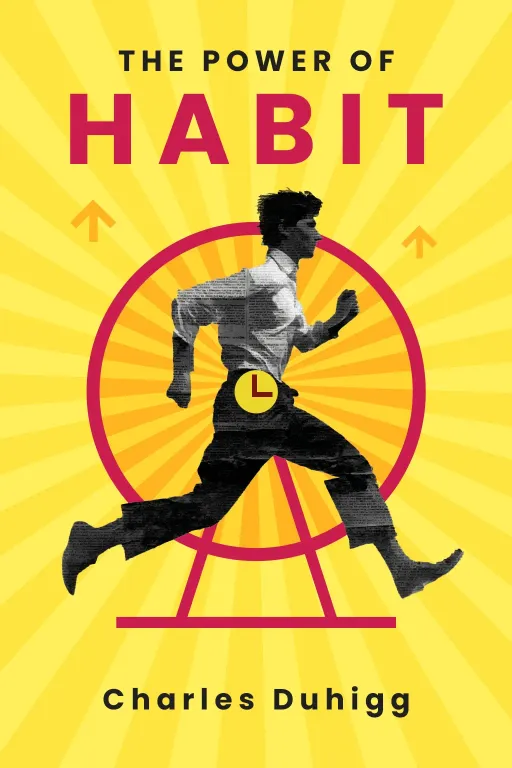
Nova: Absolutely. And that's why today, we're diving into a book that, while not explicitly about AI, is your secret weapon for agent adoption: by Charles Duhigg.
Atlas: Ah, Duhigg! I remember that book being a huge sensation.
Nova: It was, and for good reason. Duhigg, a Pulitzer Prize-winning investigative reporter, didn't just theorize about habits. He spent years meticulously researching the science behind their formation, synthesizing academic studies, corporate case studies, even neuroscience, to explain how habits shape our lives, from individuals to entire organizations. His journalistic approach made incredibly complex science accessible and profoundly relatable.
Atlas: That’s a crucial point. It means he’s not just giving us theory, he’s giving us a framework that’s been rigorously observed and documented in the real world. So, we're talking about making agents indispensable, not just intelligent? Making them feel like a natural extension of a user’s workflow, rather than another tool they to use?
Nova: Precisely. We're talking about understanding the very architecture of human behavior, and then, with that insight, designing agent interactions that become effortless, even automatic, parts of users’ daily lives. Think of it as engineering for human nature.
The Habit Loop: Designing Agents for Seamless Integration
SECTION
Nova: The core of Duhigg's insight, the fundamental building block, is what he calls the "habit loop." It’s a three-step psychological pattern that governs every single habit we have. It starts with a, then moves to a, and finally, culminates in a.
Atlas: Okay, so cue, routine, reward. Can you give me a classic, everyday example first, just to ground it? Because my brain is already jumping to agent interfaces, and I need to walk before I run.
Nova: Excellent point. Let's take something almost universally human: your morning coffee. The might be waking up, the alarm going off, or even the smell of brewing coffee if you have an automatic machine. That sensory input acts as a trigger.
Atlas: Right, that little spark that says, "It's time."
Nova: Exactly. The is then the series of actions you take: getting out of bed, walking to the kitchen, grinding the beans, brewing it, pouring it. It's the physical or mental action you perform.
Atlas: And the... that's the jolt of caffeine, the warmth of the mug in your hands, the feeling of being awake and ready for the day. That feeling of satisfaction.
Nova: You got it. That feeling of satisfaction, that little hit of pleasure or relief, is crucial. It tells your brain, "Hey, this was good. Let's do that again." Over time, that loop becomes so ingrained that the cue directly triggers the craving for the reward, bypassing conscious thought. It’s an incredibly efficient, yet often unconscious, system.
Atlas: Wow. So it’s about making the brain crave the of the routine, not necessarily the routine itself. That’s a subtle but powerful distinction. Now, let’s bring it back to our world. What does a "cue" even look like for an agent system? Is it just a notification popping up on a screen?
Nova: It can be, but it's so much more nuanced than just a generic ping. A truly effective cue for an agent needs to be specific, consistent, and ideally, already linked to an existing pain point or moment of need. Think about it: a cue for an agent could be a specific event in a workflow – a new email arriving that needs categorization, a calendar alert for a meeting that requires preparation, or even a query typed into a search bar. The key is that it's a predictable trigger for a specific need that the agent can fulfill.
Atlas: So, it's not just "agent wants attention," it's "agent knows you need it right now." That makes a lot of sense. It’s about context. It’s about leveraging an existing human trigger. And the "routine" – is that just the user interacting with the agent? How do we make that routine less friction-filled, almost automatic?
Nova: Precisely. The routine for an agent is the interaction itself. If that interaction is clunky, requires too many steps, or demands a high cognitive load, the habit loop breaks down. We need to design routines that are almost invisible. Think about voice commands for smart assistants: "Hey, put this on my calendar." That's a low-friction routine. Or a single-click action within a complex dashboard that an agent can automate. The smoother, the more intuitive, the less thought required, the stronger the routine becomes. It's about reducing the effort required to get to the reward.
Atlas: I see. So it’s not just about the agent something, it’s about how it is for the user to initiate and complete that action with the agent. But the "reward" is the trickiest part, isn't it? How do you make using an agent feel truly rewarding, beyond just getting a task done? Because if the routine is just a means to an end, it might not stick.
Nova: You’ve hit on the critical element. The reward is what closes the loop and reinforces the behavior. For an agent, the reward can be multi-faceted. It could be functional: saving time, providing unique insights, automating a tedious task, preventing an error. But it can also be emotional: the relief of offloading a burden, the satisfaction of a job well done, the feeling of being more organized or productive. Some of the best agents even provide social rewards, like helping you collaborate more effectively or sharing insights that elevate your team's performance. The reward has to be compelling enough to make the brain want to repeat the routine the next time the cue appears. It’s about creating a genuinely satisfying experience that makes the user think, "Yes, that was worth it. I want that feeling again."
Atlas: That’s a revelation. It shifts the focus from simply building a functional tool to designing a. It’s almost like we’re not just coding, we’re curating micro-moments of positive reinforcement.
Applying the Framework: Case Study & Overcoming Adoption Challenges
SECTION
Nova: It’s one thing to understand the theory, but how does this play out when we're actually building these sophisticated agent systems? Let's consider a common scenario: a brilliant internal knowledge-based agent, let's call it "InsightBot." It's packed with incredible capabilities, it can answer complex queries about company policies, project histories, best practices. But nobody uses it. Support tickets are still high, and employees are constantly asking the same questions in Slack channels.
Atlas: Ah, the classic "build it and they don't come" scenario we just discussed. I’ve seen that exact story play out. The tech is fantastic, but the human element is missing.
Nova: Precisely. So, let’s apply the habit loop to InsightBot. First, the. Right now, the cue might be "I have a question, so I'll ask my colleague" or "I'll search the old, clunky SharePoint site." InsightBot is just, waiting for someone to remember it exists.
Atlas: Yeah, it’s a solution without a clear, immediate trigger in the existing workflow.
Nova: So, to re-engineer this, we need to design a more effective cue. What if, every time an employee types a common query into Slack, InsightBot suggests, "Hey, I might have the answer to that, click here"? Or when they open a new project brief, it offers, "Based on this project, here are 3 relevant documents I can retrieve"? The cue becomes integrated into their existing workflow, at the moment of need.
Atlas: Oh, I like that. It’s not waiting to be found; it’s presenting itself at the precise moment of pain, almost like a helpful colleague whispering in your ear. Now, the. If InsightBot requires users to navigate a complex portal, type in precise keywords, and sift through results, that routine is going to be incredibly high-friction.
Nova: Exactly. The routine needs to be effortless. What if, once InsightBot presents itself, the routine is simply clicking a button in Slack, or asking a follow-up question via voice, and the answer appears instantly in a digestible format? Or even better, it the answer directly within the chat interface, instead of forcing them to click away. The routine becomes a seamless, almost thoughtless interaction.
Atlas: That makes perfect sense. Reduce the steps, reduce the cognitive load. Make it the path of least resistance. But then, the. If the reward is just "I got my answer," that might not be enough to override years of habit.
Nova: That’s where we get creative. Beyond just getting the answer, what else could be the reward? Maybe InsightBot not only answers the question but also cross-references it with their current project, saving them an hour of research. Or it provides a unique insight they wouldn't have found elsewhere, making them look smarter to their team. It could even be a small, positive affirmation, like "Great question! That saved you 30 minutes of searching." The reward needs to be compelling, immediate, and clearly superior to the old routine. It needs to make them feel more efficient, more knowledgeable, more empowered.
Atlas: That’s brilliant. So it's about engineering the of using the agent, not just its functionality. It’s not just "here's the information," it’s "here's how this information your day, your productivity, your sense of competence." But what about when users already have a 'bad habit' they need to break, like always defaulting to manual processes or asking colleagues directly, even when an agent could do it better?
Nova: That’s a fantastic question, and Duhigg addresses this directly. Breaking a habit is incredibly difficult if you try to simply the routine. The brain still gets the cue, and it still craves the reward. The trick is to identify the underlying reward of the old, less efficient habit – maybe it's the social interaction of asking a colleague, or the certainty of a manual check. Then, you keep the the same, and you keep the the same, but you.
Atlas: So, for InsightBot, if the old habit's reward was the social connection of asking a colleague, maybe the agent could facilitate that social connection it provides the initial answer, by suggesting, "Would you like to share this insight with John, who often works on similar issues?"
Nova: Precisely! Or if the reward of the manual process was a feeling of control, the agent could offer transparency into its process or allow for quick overrides, giving the user that sense of agency while still benefiting from automation. It's about replacing the old, inefficient routine with a new, agent-powered routine that delivers the same, or even better, reward. It’s not about forcing change, it’s about offering a more satisfying path.
Atlas: This sounds like we're not just building tech, we're subtly redesigning human workflows and even human psychology. That's a huge responsibility, but also an incredible opportunity to make our agents truly indispensable. It elevates the role of the architect from just building functional systems to designing behavioral ecosystems.
Synthesis & Takeaways
SECTION
Nova: It absolutely does. The core insight here, for anyone building or deploying agent systems, is that adoption isn't about feature lists or raw intelligence alone. It's fundamentally about integrating into existing human behavioral patterns, or creating new, more beneficial ones, by understanding the power of the habit loop.
Atlas: So, for our future architects and innovators listening, the takeaway is clear: stop thinking like a software engineer for a moment, and start thinking like a behavioral scientist. Your agent's success might depend less on its algorithms and more on its ability to become a seamless, rewarding part of someone's day.
Nova: Exactly. When you design with the cue-routine-reward loop in mind, you're not just building a tool; you're crafting an experience that, over time, becomes second nature. You're building systems that users to use, systems they feel lost without. That’s the true sign of indispensable technology.
Atlas: That’s a profound shift in perspective. It means every interaction, every notification, every outcome needs to be scrutinized through the lens of habit formation. What's the cue? Is the routine frictionless? Is the reward compelling enough to reinforce the behavior?
Nova: And that brings us to our tiny step for today. For all you innovators out there, choose one interaction your agent currently has with a user. Just one. Now, map its existing cue, routine, and reward structure. Then, ask yourself: How can you make that reward more compelling? Or how can you make that routine smoother, more intuitive, less effortful?
Atlas: Start small, experiment, and observe. And share your insights with us! Because understanding the power of habit isn't just about personal change; it's about building a future where technology truly serves humanity by integrating effortlessly into our lives.
Nova: It’s about building agents that don't just exist, but truly thrive.
Atlas: This is Aibrary. Congratulations on your growth!