Stop Guessing, Start Building: The Blueprint for New Trades.
Golden Hook & Introduction
SECTION
Nova: What if everything you've been told about starting a new business, about 'following your passion' and 'building it perfectly,' was actually the fastest way to fail?
Atlas: Oh, I like that. That sounds a bit out there, but you've got my attention. Are we talking about a complete paradigm shift here?
Nova: Absolutely, Atlas. Because for anyone diving into the exciting, often terrifying, world of a new trade, the conventional wisdom can feel less like a compass and more like a blindfold. That's why today, we're unpacking the ideas behind a truly essential blueprint: "Stop Guessing, Start Building: The Blueprint for New Trades."
Atlas: I imagine a lot of our listeners, especially those navigating new ventures, feel that 'blindfolded maze' feeling. It's not just about ambition; it's about turning that ambition into something tangible and profitable. So, what's this 'reliable map' look like?
Nova: Well, it's less a static map and more a dynamic navigation system. We're going to explore two fundamental pillars. First, the strategic mindset of truly understanding market needs and value creation, and then, the tactical agility of validated learning and rapid experimentation. These two ideas, when combined, are designed to minimize risk and maximize impact.
The Strategic Mindset: Understanding Value Creation and Market Needs
SECTION
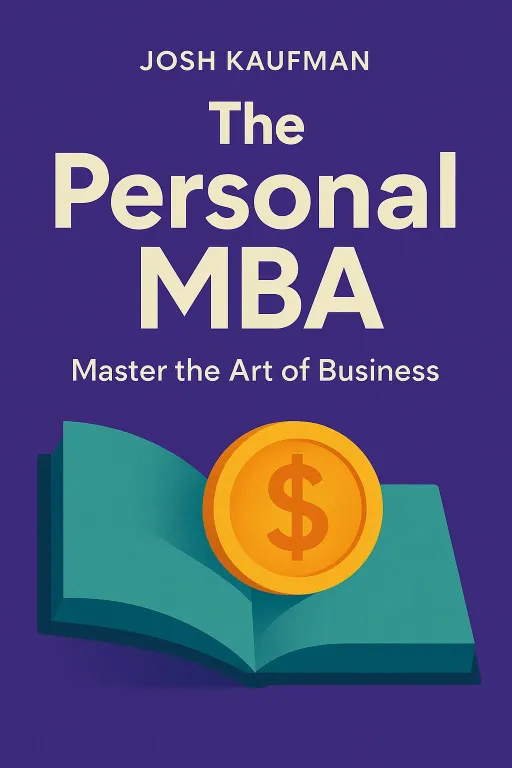
Nova: Let's start with that strategic mindset. The first powerful insight comes from the principles laid out in books like "The Personal MBA" by Josh Kaufman. Kaufman's genius was distilling core business concepts, stripping away all the academic jargon, and giving you the practical essence.
Atlas: Okay, but how does someone 'understand market needs' without a huge budget for market research? That sounds like a significant hurdle for someone just starting a new trade, maybe with limited resources.
Nova: That’s a brilliant question, and it’s precisely where Kaufman's approach shines. He breaks down every business into just five core processes: creating value, marketing, sales, value delivery, and finance. It sounds simple, but understanding these allows you to identify rather than just guessing.
Atlas: So you're saying, instead of just thinking "I'm good at X, so I'll start a business doing X," you first ask, "Who needs X, what problem am I solving for them, and how will I get it to them?"
Nova: Exactly! Think of it like this: imagine a supremely talented chef. Their passion is cooking, and they decide to open a restaurant. They pour all their savings into a beautiful kitchen, a fantastic menu. But they forget to ask: does anyone in want French haute cuisine? Can I it effectively to them? How will I it? And can I deliver it?
Atlas: Oh, I've seen that happen. All the skill in the world, but the business fails because the market wasn't there, or the price was wrong, or nobody knew about it.
Nova: Precisely. The chef in our example focused on their – the 'how to cook' – but neglected the fundamental 'what' the market truly desired and 'how' the entire business system would function. Applying "The Personal MBA" principles would mean, before even picking up a knife, they'd research the local demographic, perhaps start with a pop-up to test demand for specific dishes, understand their ideal customer's willingness to pay, and build a simple marketing plan.
Atlas: That’s a great example. So basically you're saying, before you even pick up your tools, you need to understand the entire ecosystem of value creation? It's about de-risking the fundamental 'what' before you get bogged down in the 'how.'
Nova: Absolutely. It’s about seeing the forest before you focus on carving a single tree. It transforms the overwhelming idea of 'starting a business' into a series of understandable, interconnected functions that you can analyze and optimize.
The Agile Builder: Validated Learning and Rapid Experimentation
SECTION
Nova: And that naturally leads us to the second key idea, which often acts as the engine for that ecosystem: validated learning, inspired by Eric Ries's "The Lean Startup."
Atlas: Ah, "The Lean Startup." I've heard that phrase. Isn't that just for tech startups, though? All about apps and Silicon Valley? I imagine a lot of our listeners are thinking, "How does that apply to my plumbing business or my custom jewelry trade?"
Nova: That's a common misconception, Atlas, and it's important to clarify. While Ries himself came from the tech world, the principles of validated learning are universal. It's about embracing uncertainty and treating your business ideas as hypotheses to be tested, not truths to be implemented blindly.
Atlas: So, it's like a scientific method for business. Instead of spending months building something nobody wants, you're constantly checking your hypothesis?
Nova: Exactly! Ries's core concept is the "build-measure-learn" loop. Instead of grand, expensive launches, you create a Minimum Viable Product – an MVP. This isn't a perfect product; it's the simplest version that allows you to start the learning process. You then test it with real customers, measure their reactions, and learn whether to "pivot" or "persevere".
Atlas: Give me an example outside of tech. I'm curious how a new trade could apply this.
Nova: Certainly. Let's think about a new online fitness coach. The conventional approach might be to spend six months building a comprehensive, beautifully designed 12-week course, complete with videos, meal plans, and a custom app. That's a huge investment based purely on assumption.
Atlas: And then they launch it, and crickets. Or worse, people buy it but don't finish, so they don't get results.
Nova: Exactly. A "Lean Startup" approach would be different. Our fitness coach might start by offering a single, live 60-minute workshop on a specific topic, say "Five Minute Morning Routines for Busy Professionals," to a small group for a low fee. They're testing demand for the topic, the price point, their coaching style, and the effectiveness of their content in a single, low-cost experiment.
Atlas: That makes sense. So, the workshop is their MVP. They're building something small, measuring the response, and learning before they commit to the full 12-week course.
Nova: Precisely. If the workshop is a hit, they know they're onto something. If it flops, they haven't lost months of work and thousands of dollars. They've gained valuable data to either pivot to a different topic or refine their approach. It’s about minimizing risk and maximizing impact by embracing uncertainty and treating your ideas as hypotheses to be tested, not truths to be implemented blindly.
Atlas: I still struggle with that myself. How do you overcome the fear of putting out something 'unfinished'? There's this natural desire for perfection, especially when you're trying to build a reputation in a new trade.
Nova: That's a very real and valid point, Atlas. It's a psychological hurdle. But the Lean Startup philosophy reframes "unfinished" not as a flaw, but as a feature. The MVP isn't meant to be perfect; it's meant to be a learning tool. The goal is to build the best product first, but to build the product first. And you discover the "right" product by learning from your earliest customers. It's about shifting from a fixed mindset of 'having all the answers' to a growth mindset of 'finding the right questions and testing them rapidly.'
Synthesis & Takeaways
SECTION
Nova: So, when you combine the strategic clarity from understanding value creation and market needs with the tactical agility of validated learning and rapid experimentation, you're no longer guessing. You're building with purpose and adapting with intelligence.
Atlas: That's actually really inspiring. It sounds like it empowers people to start, even with limited resources, because they have a framework to navigate the unknowns instead of just hoping for the best.
Nova: It absolutely does. The true blueprint for a new trade isn't a fixed, rigid plan; it's a dynamic system. It’s about cultivating a deep understanding of your market and then approaching every step of building your trade as a series of small, testable experiments. This drastically increases your chances of building something truly valuable and sustainable.
Atlas: For our resilient achievers and practical learners out there, what's a tiny, actionable step they can take this week to put these ideas into practice?
Nova: Here's your tiny step for the week: Identify one core assumption about your new trade. Maybe it's about who your ideal customer is, or what specific problem you're solving for them. Then, design a small, low-cost experiment to test that assumption. It could be as simple as interviewing five potential customers, or creating a single social media post to gauge interest in a specific service.
Atlas: I love that. Actionable, immediate, and low-risk. A perfect way to stop guessing and start building.
Nova: Absolutely. And that's what this journey is all about.
Atlas: This is Aibrary. Congratulations on your growth!