How to Design Your Integrated Portfolio for Maximum Impact Without Sacrificing Depth
Golden Hook & Introduction
SECTION
Nova: If you've ever been told to 'specialize' and focus on one thing, you've probably been given terrible advice. Your diverse passions aren't a weakness; they're your superpower.
Atlas: Oh, I love that. That's going to resonate with so many people who feel that constant pressure to pick a lane, right? Like, "Just choose one thing and be the best at it." But what if your "best" involves five vastly different things?
Nova: Exactly! And that's what we're diving into today. How do you take those seemingly disparate interests – let's say, a profound expertise in coffee innovation and a deep passion for musicology – and transform them into a cohesive narrative? A story that doesn't just list your skills, but how they make you uniquely brilliant.
Atlas: So, it's about going from a random collection of impressive things to a truly integrated vision of who you are and what you do. That feels like a huge leap for many.
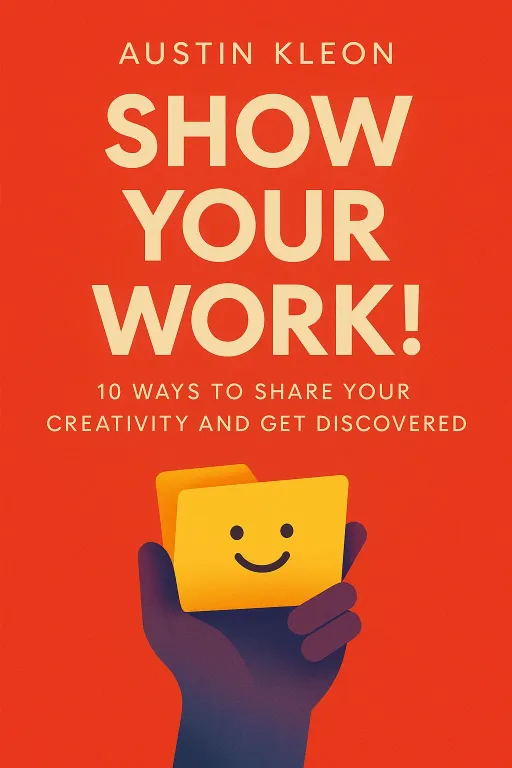
Nova: It is, and it’s a crucial one. To help us navigate this, we’re drawing wisdom from two incredibly insightful books. First, Austin Kleon's "Show Your Work!" Kleon, an artist and writer, has this amazing way of demystifying the creative process, making the 'how' just as important as the 'what.' He’s a master at showing us how to share our journey.
Atlas: That makes sense. It’s not just about the finished painting, but the sketches, the mistakes, the inspiration.
Nova: Precisely. And then we have Josh Kaufman's "The Personal MBA." Kaufman famously distilled years of business school education into a single, accessible volume, proving that you don't need a formal institution to master core business principles. He helps us understand value creation and effective communication.
Atlas: Okay, so one is about revealing the process, the other about articulating the value. How do these two seemingly different ideas come together to build this "superpower" portfolio?
Nova: Well, together with our own take, they form the essential blueprint. They teach us that an integrated portfolio isn't just a collection of work; it's a compelling story about your unique capabilities. Without a clear narrative, your brilliance might be overlooked.
The Integrated Portfolio as a Compelling Narrative
SECTION
Nova: The cold, hard fact is this: many people have incredible, varied skills. But if you just dump them all into a portfolio, it looks like a garage sale of genius. The viewer sees individual items, not a unified vision. Nova's Take: The key is not just you include, but you narrate the connections between your seemingly distinct expertise.
Atlas: That makes me wonder, though. For someone who might have, say, a deep, almost obsessive attention to detail in their coffee innovation work, and then an equally profound, almost academic approach to musicology… these feel like two entirely different universes. Where do you even begin to the narrative? It’s not always obvious.
Nova: That’s a brilliant question, because the connections aren't always glaring. Think of it like this: a master chef doesn't just throw a bunch of delicious ingredients into a bowl and call it a dish. They carefully select, prepare, and combine them, knowing how the acidity of the citrus will complement the richness of the protein, or how a hint of spice will elevate the sweetness. Each ingredient, though distinct, serves a purpose in the symphony of flavors.
Atlas: Oh, I like that. So, the "integrated portfolio" isn't just about having the ingredients, but about being the chef who understands how to blend them into a coherent, delightful experience.
Nova: Exactly! Your portfolio becomes a journey of discovery for the viewer. You're not just saying, "Here are my skills." You're demonstrating, "Here's how my deep understanding of sound theory from musicology informs my approach to the acoustics of a coffee grinding chamber, leading to a more consistent particle size and a superior cup."
Atlas: Wow. That's a leap. But it's also incredibly powerful. It takes what might look like a niche interest and suddenly elevates it into a transferable, almost architectural skill. So, the narrative isn't about forcing connections, but illuminating the underlying principles that span your different domains.
Nova: Precisely. It's about identifying those shared principles or approaches. Maybe it’s a meticulous research methodology, an innovative problem-solving framework, or a human-centered design philosophy that you apply across all your passions. These become the threads that weave your story together.
Atlas: Okay, so the first step isn't to create a new project that combines coffee and music. It’s to look at existing projects and articulate the and that connects them. But how do you narrating those connections? What's the first thread you pull when your passions feel genuinely disparate?
Narrating Your 'Why': Insights from Kleon and Kaufman
SECTION
Nova: That's where our tactical insights from Kleon and Kaufman become indispensable. First, Austin Kleon, with his mantra "Show Your Work!" He encourages sharing your process and passion, not just the finished product. This approach helps you reveal the 'why' behind your diverse interests.
Atlas: How does "showing your work" for something like Coffee Innovation or Musicology translate without just being a technical diary? How do you make that process for someone who isn't already an expert in those fields?
Nova: That's the art. Instead of just presenting the final, perfectly brewed cup, you might show the iterative design process of a new coffee machine – the sketches, the failed prototypes, the sensory evaluation sessions, the data you collected on grind consistency. For musicology, it's not just the published paper, but the journey of uncovering a lost manuscript, the challenges of transcribing ancient notation, the eureka moment when a pattern emerges.
Atlas: So, it's about making the invisible labor visible. Showing the curiosity, the resilience, the problem-solving that went into achieving the final outcome. That makes the portfolio a narrative because it's a story of creation, not just a display.
Nova: Exactly. It makes your portfolio a journey of discovery for the viewer. They see the passion, the dedication, the intellectual rigor you bring to you do. And that’s where Josh Kaufman steps in. His emphasis on understanding value creation and effective communication is directly applicable.
Atlas: Okay, but for someone deeply invested in, say, the cultural significance of obscure musical traditions, or the perfect roast profile for a rare bean, what’s the "value" there in a business sense? It sounds a bit… ethereal, perhaps.
Nova: That’s a common misconception. Kaufman helps you articulate the tangible benefits of your unique skill set. Think about it: the meticulous research and analytical frameworks used in musicology – that's incredible intellectual discipline. That same discipline can be applied to market analysis for a coffee startup, or to designing a robust quality control system.
Atlas: That’s a great way to put it. So, it's about translating your deep, internal passion into external, quantifiable impact or unique insight. Making the intangible tangible.
Nova: Absolutely. You frame your diverse background as a clear asset. You say, "My years analyzing complex musical structures have honed my ability to identify subtle patterns and anticipate outcomes, a skill I now apply to predicting market trends in specialty coffee." You’re not just listing skills; you’re drawing a direct line between them and demonstrating their transferability and unique synergistic power.
Atlas: I see. So, it’s not just about having a breadth of interests, but about the depth of understanding that allows you to see the and then articulate the unique value those intersections create. It’s about making the case for why your multi-faceted mind is a benefit, not a distraction.
Nova: Precisely. It’s about owning that unique weave of your expertise. The person who understands both the nuanced sensory experience of coffee and the intricate structures of music isn’t just two people in one; they bring a perspective that no single specialist could. That’s your competitive edge.
Synthesis & Takeaways
SECTION
Nova: So, to synthesize this, an integrated portfolio is about intentional storytelling – showing your process, revealing your 'why,' and articulating the unique value created by your interconnected passions. It’s about owning your diverse expertise and presenting it not as scattered interests, but as a powerfully cohesive narrative.
Atlas: That’s incredibly empowering. The 'superpower' isn't just having diverse interests, but actively how they connect and create unique value. It’s about making the invisible threads visible. For anyone who's ever felt their passions were too varied to be taken seriously, this is a game-changer. What's the smallest, most actionable step someone can take to start building this integrated narrative?
Nova: A tiny, yet mighty step. Create a simple mind map. Take your Coffee Innovation expertise and your Musicology passion, and identify at least three shared principles or approaches. Maybe it’s a shared methodology for analysis, a common approach to problem-solving, or even a similar aesthetic philosophy. Just three connections.
Atlas: I love that. It’s not asking for a complete overhaul, but just one small exercise to start seeing those connections. Because once you see one, you’ll start seeing them everywhere. It’s about shifting your mindset from "disparate" to "integrated."
Nova: Exactly. Embrace the weave. Trust your diverse experience. It is your unique strength. See the connections.
Atlas: That’s a fantastic way to end. A true invitation to embrace the full spectrum of our talents.
Nova: This is Aibrary. Congratulations on your growth!