The Overthinking Trap: Why Clarity Beats Constant Analysis
Golden Hook & Introduction
SECTION
Nova: Atlas, I'm going to throw out a few words, and you just hit me with the first thing that comes to mind. Ready?
Atlas: Oh, I like that. Always up for a mental sprint. Hit me.
Nova: Decision.
Atlas: Oh, man. Headache.
Nova: Analysis.
Atlas: More questions. Definitely more questions.
Nova: Clarity.
Atlas: Elusive. Almost painfully so, sometimes.
Nova: Exactly! Those are three words that, for so many of us, are tangled up in what we call "overthinking." And that feeling of "headache," "more questions," and "elusive" clarity? That's the trap. Today, we're diving into how to escape that mental maze.
Atlas: Oh, I know that feeling. It's like you're convinced if you just think about it, you'll crack the code. But often, you just end up more confused and exhausted. It feels productive, but it's really just draining.
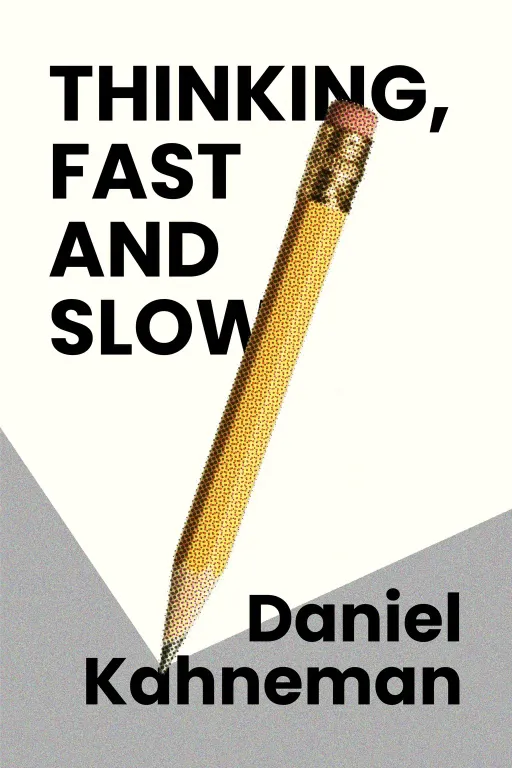
Nova: Absolutely. And to shine a light on this, we're going to pull insights from two seminal works: Daniel Kahneman's Nobel Prize-winning "Thinking, Fast and Slow," and Barry Schwartz's incredibly insightful "The Paradox of Choice." Kahneman literally redefined how we understand human decision-making, while Schwartz gave us the surprising truth about why having too many options can actually make us miserable.
Atlas: That makes me wonder, how do these academic, deep dives into psychology and economics actually help someone like me, or our listeners, who just want to stop endlessly replaying scenarios in their head and actually? Like, how do we operationalize these big ideas?
The Illusion of Productive Overthinking
SECTION
Nova: That's the core question, isn't it? The cold fact is, overthinking can feel incredibly productive. We're engaging our brains, we're analyzing, we're considering all angles. But it often drains energy and, crucially, prevents action. The real clarity doesn't come from thinking, but from understanding you think.
Atlas: But wait, for those of us who value a solid strategy, who want depth and understanding, isn't more analysis always better for big decisions? It feels almost irresponsible to overthink when the stakes are high.
Nova: That's the illusion! It's like buying a brand new, powerful car. You can spend weeks reading every review, every spec sheet, comparing every model. That's a lot of analysis. But true clarity, the ability to confidently drive that car, comes from understanding the road, understanding traffic patterns, and understanding – not just the car itself. Our minds work similarly.
Atlas: So, it's like we're constantly revving the engine without putting it in gear. But how do we even begin to understand our own internal "engine"? It feels so automatic, so ingrained.
Nova: That's where Kahneman's work in "Thinking, Fast and Slow" becomes incredibly illuminating. He brilliantly breaks down our thought processes into two systems: System 1, which is fast, intuitive, and emotional, and System 2, which is slow, deliberate, and logical.
Atlas: Can you give me a vivid scenario where these two systems are at play? Maybe something relatable to high-stakes environments where 'thinking fast' could be disastrous, but 'thinking slow' feels impossible?
Nova: Absolutely. Imagine a seasoned firefighter entering a burning building. Their System 1 is instantly assessing heat, smoke patterns, sounds – making lightning-fast, intuitive decisions honed by years of experience. A split-second decision to turn left instead of right could save lives. Now, contrast that with a city council meeting, debating a complex new zoning law. This requires extensive research, cost-benefit analysis, public consultations – pure System 2 work.
Atlas: Right, like trying to use your intuitive gut feeling to decide a city's multi-million dollar budget, or meticulously analyzing every single step when a building is collapsing around you. That makes a lot of sense.
Nova: Exactly. When we misapply these systems, we fall into cognitive biases that lead to poor decisions and self-doubt. Overthinking often happens when we force System 2 to endlessly chew on something System 1 could have decided quickly, or when we trust System 1 on a complex issue that demands slow deliberation.
Atlas: Wow, that's a powerful distinction. It makes me wonder if a lot of our 'overthinking' is really just System 2 trying to do System 1's job, or vice versa, in the wrong context. It's like using a sledgehammer to crack a nut or a scalpel to demolish a wall.
The Paradox of Choice & Simplifying Decisions
SECTION
Nova: That's a perfect analogy. And that naturally leads us to another fascinating trap our minds fall into, one that often fuels that System 2 overload, explored by Barry Schwartz in "The Paradox of Choice."
Atlas: The paradox of choice? I'm curious, because for someone who wants to make the 'best' decision, who values options and seeks depth, more choice seems like a good thing, not a paradox. It feels like freedom.
Nova: It does, intuitively! But Schwartz's central argument is counter-intuitive: too many options can actually paralyze us, leading to anxiety, dissatisfaction, and what he calls decision fatigue. He argues that while some choice is good, an excess of it can make us less happy, not more.
Atlas: Hold on, that sounds completely at odds with everything we're taught about progress and freedom. Like, isn't the entire modern economy, and frankly, the self-help industry, built on the idea of endless possibilities and choices? How does more choice make us happy?
Nova: Think about it this way: when you have only a few options, say two types of coffee, you pick one and you're generally content. But when you're faced with fifty types of coffee, each with subtle variations, your System 2 kicks into overdrive. You spend more time deciding, you worry about making the "wrong" choice, and even after you pick, you're more likely to regret it because you're acutely aware of all the "better" options you choose.
Atlas: That's actually really insightful. I can definitely relate to standing in front of a menu for ages, only to pick something and then wonder if I made the 'best' choice. It's that nagging feeling of "what if?"
Nova: Exactly. That "what if" is the cost of excessive choice. It increases the mental load, makes our System 2 work harder than it needs to, and often leaves us less satisfied with the outcome, even if it was a good one. Schwartz highlights how this constant pressure to optimize, to find the "perfect" choice, can be incredibly draining.
Atlas: So, what's Schwartz's solution? Just... have fewer choices? That feels a bit restrictive for someone who values autonomy and self-mastery.
Nova: Not necessarily fewer choices, but choices. It's about recognizing when "good enough" is, in fact, perfectly fine, and then moving on. It's about consciously setting boundaries for our choices, filtering out the noise, and understanding that the pursuit of the absolute "best" can often be the enemy of the good. This fosters greater self-acceptance, knowing you made a reasonable choice and then focusing your energy elsewhere.
Atlas: So, it's about setting boundaries for our choices, almost like a mental filter, to protect our mental energy and focus. That aligns perfectly with the idea of self-mastery and authentic expression – knowing when to say "enough."
Synthesis & Takeaways
SECTION
Nova: When you combine Kahneman's understanding of we think with Schwartz's insights on choices we can truly handle, you get a powerful toolkit. It's not about avoiding thought, but about becoming a more deliberate architect of your own cognitive processes.
Atlas: It sounds like the real goal isn't to stop thinking, but to become a more intelligent, confident decision-maker. To move from passive overthinking to active, focused intention, protecting our energy and building that inner foundation.
Nova: Precisely. These insights arm you with the knowledge to actively manage your thought processes, transforming mental clutter into focused intention. It's about recognizing when to trust your gut, when to engage in deep analysis, and when to limit your options to avoid paralysis.
Atlas: So, for our listeners who are constantly analyzing, seeking depth, and striving for self-mastery, what's a tiny, concrete step they can take right now to apply this? Something that builds momentum and celebrates each step.
Nova: For your very next decision, big or small, stop for a moment and identify: Are you using fast intuition, your System 1, or slow deliberation, your System 2? Just notice the difference. Are you overwhelmed by too many options, or are you trying to over-analyze something that an intuitive gut feeling could handle?
Atlas: That's a brilliant, simple way to start. It's about building that awareness first, trusting your inner voice, and then making those small, deliberate choices. It's not about judgment, it's about observation and understanding.
Nova: Exactly. And that awareness builds momentum. Each time you notice, you're strengthening that muscle of self-mastery, moving you closer to true clarity and confident action.
Atlas: This conversation has been incredibly clarifying. It's not just about stopping overthinking, but about cultivating a more intelligent, more intentional way of making choices. It's about being in control of your thoughts, not controlled by them.
Nova: Absolutely. It's about moving from being trapped by your thoughts to becoming the master of them.
Atlas: This is Aibrary. Congratulations on your growth!