Stop Task Reactivity, Start Strategic Flow: The Guide to Deep Work.
Golden Hook & Introduction
SECTION
Nova: Atlas, I have a challenge for you. Give me a five-word review of 'constant task reactivity.' Go!
Atlas: Oh, man. Hmm. "Endless emails, zero actual progress."
Nova: Ha! "Zero actual progress!" That hits home for so many people. It captures the essence of what we're talking about today. That feeling of being perpetually busy, yet somehow never moving the needle on what truly matters.
Atlas: Right? It's like being on a treadmill set to 'urgent' – you're running, sweating, but the scenery never changes. For anyone managing high-pressure teams or navigating complex processes, that feeling is a daily reality.
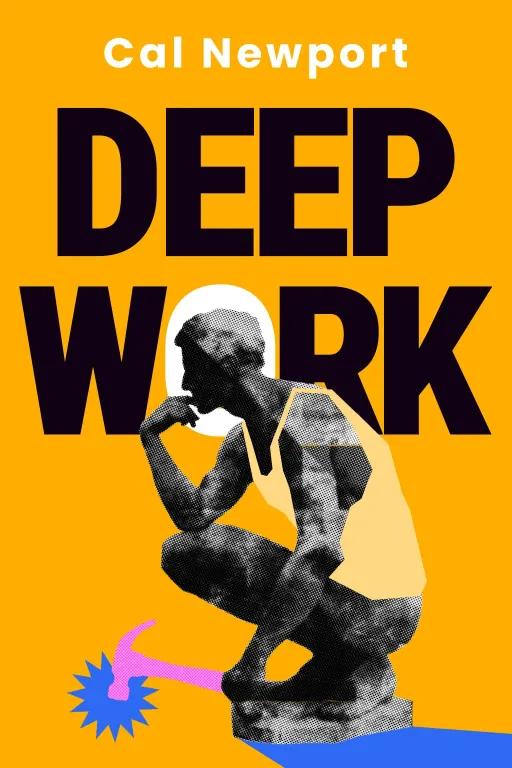
Nova: Absolutely. And that's exactly why we need to talk about two foundational books today: "Deep Work" by Cal Newport and "The One Thing" by Gary Keller and Jay Papasan. What’s fascinating about Newport is he is not just a self-help guru; he's a computer science professor who meticulously researched the cognitive science behind focus. That brings a unique blend of scientific rigor and practical advice to "Deep Work."
Atlas: That's a powerful combination. And Gary Keller, with "The One Thing," comes from the world of building one of the largest real estate companies. He brings that entrepreneurial, results-oriented perspective. I imagine a lot of our listeners, who are driven by a desire for order and impact, are already leaning in. But how do these academic and entrepreneurial insights actually help someone stuck in that reactive cycle?
Nova: That's the core question, Atlas. And it starts with understanding the insidious trap of what Newport calls 'shallow work.'
The Myth of Constant Reactivity: Why Busyness Isn't Productivity
SECTION
Nova: Imagine Sarah, a project manager. Her calendar is a dense, colorful block of meetings. Her inbox? A relentless torrent of new messages. She's always "on," always responding, always putting out fires. She checks her phone every five minutes, jumps from a team chat to a client call, then tries to draft a strategic proposal in between. She often works late, feels exhausted, and genuinely believes she's being incredibly productive because she's constantly.
Atlas: I know that feeling all too well. I imagine a lot of our listeners do too. You look at the clock, it's 5 PM, and you think, "I've been going non-stop all day, why do I feel like I accomplished nothing of real substance?" It's a survival instinct to just keep reacting, isn't it? Like if you don't answer that email immediately, everything will fall apart.
Nova: Precisely. That's the illusion. Sarah feels busy, but her core strategic initiatives—like developing that new market entry plan, which could genuinely transform her department—remain untouched, or she tackles them in fragmented, ineffective bursts. She's constantly context-switching, and our brains are terrible at that. Every time you switch from drafting that proposal to answering an email, your brain leaves 'residue' from the previous task.
Atlas: "Residue?" What do you mean by that?
Nova: Think of it like this: if you're trying to build a complex Lego castle, and every five minutes someone asks you to sort a pile of socks, then bake a cake, then respond to a text message, you're constantly pulling your focus away. Even when you return to the Lego castle, a part of your brain is still thinking about the socks or the cake. That lingering mental effort, that residue, severely degrades your ability to concentrate deeply on the castle.
Atlas: So, it's not just about the time lost, it's about the quality of the thinking that gets completely diluted. That makes sense. For people who enhance processes or need to solve complex problems, that kind of fractured attention must be devastating. How do they even begin to push back against that current when the urgent always seems to scream louder than the important?
Nova: That's where the insights from both Newport and Keller become revolutionary. They say you have to be intentional. You have to your time, not just react to it. It’s about recognizing that true efficiency isn't about doing tasks, but about achieving outcomes.
Designing Your Deep Work Sanctuary: Strategies for Intentional Focus
SECTION
Atlas: Okay, so if we acknowledge that constant reaction is a trap, how do we actually this 'deep work' space, this sanctuary you're talking about, especially when the demands are relentless? For someone who has to navigate complex inter-departmental interactions, just saying 'don't answer emails' sounds a bit like wishing for a unicorn.
Nova: It’s not about wishing for a unicorn, Atlas, it’s about training it to only appear at certain times! From Newport, the strategy is blocking out dedicated, distraction-free time. From Keller, it’s about identifying your "One Thing." Let’s look at David, a software developer. Historically, he'd come in, check emails, respond to bug reports, get pulled into stand-ups, and then try to code. His code was okay, but often rushed, leading to more bugs.
Atlas: That sounds like a familiar cycle. The reactive loop creates more reactivity.
Nova: Exactly. David decided to implement a deep work block. He now comes in, and for his first 90 minutes, he focuses solely on coding a critical new feature. His email is closed, his phone is on silent, and his office door clearly indicates he's in a 'deep work' session. He communicates this to his team, letting them know he'll respond to non-urgent messages after his block.
Atlas: That’s a game-changer. I can see the tangible results: fewer errors, faster development cycles, and a real sense of accomplishment. But what about someone in a role that inherently involves a lot of interaction, like a team lead or a consultant? Their 'one thing' might actually communication and collaboration. How do they find their 90 minutes and protect it without alienating everyone?
Nova: That's a brilliant question, and it's where Keller's "The One Thing" becomes crucial. Your "one thing" isn't necessarily a solitary task. It's the that, if you do it, makes everything else easier or unnecessary. For a team lead, their "one thing" might be strategizing the next quarter's goals, or having focused, one-on-one coaching sessions with their direct reports, not just reacting to every Slack message.
Atlas: So, it's about ruthless prioritization, not just of tasks, but of. It's almost like an athlete's training regimen—they don't just jump into a game; they have dedicated, focused practice time for specific skills.
Nova: A perfect analogy! They design their training for maximum impact. For David, his "one thing" is that critical coding block. For the team lead, it might be that dedicated strategic thinking time, away from immediate tasks. It’s about intentionally designing your time for maximum impact and strategic thinking, instead of letting your inbox or calendar design it for you. It's a mindset shift, trusting your ability to lead change by focusing on insights, rather than just managing the day-to-day.
Synthesis & Takeaways
SECTION
Nova: So, what we've really explored today is that deep work isn't just a productivity hack; it's a strategic imperative. It's a profound shift from merely managing time to intentionally designing it for maximum impact and personal well-being. It's about taking back control of your attention in a world that constantly demands it, to truly drive strategic change rather than simply reacting to the urgent.
Atlas: I love that framing. It’s not about being selfish with your time; it's about being strategic with your impact. For anyone who feels like they're enhancing processes but still struggling with persistent overwhelm, this idea of carving out a 'deep work sanctuary' is a beacon. It's a way to reclaim not just time, but mental clarity and purpose.
Nova: Exactly. It empowers you to elevate your insights and execute on them.
Atlas: So, for our listeners who are ready to stop the reactive cycle and start building that strategic flow, what's one tiny step they can take, perhaps even tomorrow?
Nova: Here's your tiny step, Atlas: Block out your first 90 minutes tomorrow. Just 90 minutes. Dedicate that time to one single, high-impact task that moves your most important goal forward. And during those 90 minutes, absolutely zero distractions. No email, no social media, no phone. Just you and your 'one thing.'
Atlas: That’s direct application. I imagine a lot of listeners will feel a sense of liberation from just that one small change. It’s about trusting your ability to lead change, one focused block at a time.
Nova: This is Aibrary. Congratulations on your growth!