Stop Guessing, Start Mastering: The Guide to Focused Productivity.
Golden Hook & Introduction
SECTION
Nova: Alright, Atlas, quick game. If you had to review the concept of "focused productivity" in exactly five words, what would they be?
Atlas: Five words? Hmm. "Silence. Then... actual stuff gets done."
Nova: "Silence. Then... actual stuff gets done." I love that. It perfectly captures the struggle, doesn't it? Because for so many of us, our default mode is anything silence. It’s noise, it’s pings, it’s an endless to-do list that feels more like a chaotic jumble.
Atlas: Oh, I know that feeling. It's like trying to navigate a dense fog while someone's constantly shouting directions from five different places. You end up moving, but not really going anywhere meaningful. I imagine a lot of our listeners, especially those in demanding roles, feel that constant pull in every direction.
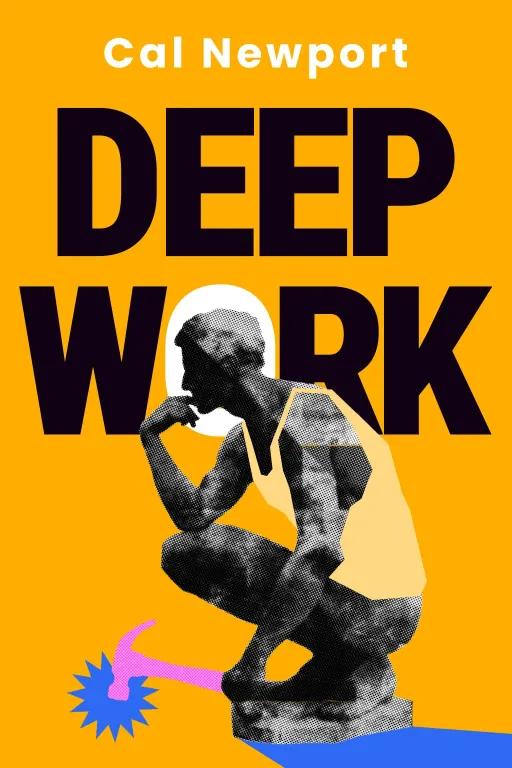
Nova: Exactly. And that's precisely why we're diving into some truly transformative ideas today, primarily from Cal Newport's acclaimed book, "Deep Work," and "The One Thing" by Gary Keller with Jay Papasan. What’s fascinating about Newport, in particular, is that he’s not just another self-help guru. He’s a computer science professor, bringing a rigorous, academic lens to how we engage with our work in a tech-saturated world. It’s a perspective that really grounds his arguments in something more substantial than just anecdote.
Atlas: That actually makes a huge difference. Because you hear 'productivity advice' all the time, but when it comes from a place of deep analysis, it hits differently. I’m curious, what’s the core problem they're trying to solve here? Is it just about doing more, or something deeper?
The Delusion of Busyness: Why Noise Isn't Progress
SECTION
Nova: It’s absolutely something deeper, Atlas. It’s about challenging what Newport calls "shallow work" versus "deep work." Shallow work is the logistical, non-cognitively demanding stuff – emails, meetings, administrative tasks. It’s easy to measure, easy to see, and often gives us the of productivity. Deep work, on the other hand, is the ability to concentrate, without distraction, on a cognitively demanding task. It’s the kind of work that creates new value, improves your skills, and is truly hard to replicate.
Atlas: So basically you’re saying that just because you're busy, doesn't mean you're actually getting important things done. I mean, that sounds rough, but it resonates. I imagine a lot of people feel that pressure to constantly busy, especially in open-plan offices or with remote teams where visibility can sometimes be mistaken for output.
Nova: It's a huge trap. Think about a software engineer we'll call Sarah. Sarah was brilliant, but her daily routine was a masterclass in shallow work. Her calendar was a mosaic of back-to-back meetings, her Slack channels were always buzzing, and her inbox was a relentless flood. She’d start coding, get two lines in, then a notification would pull her away to a quick chat. Return to code, another ping for an urgent 'five-minute' task.
Atlas: Oh, I know that feeling. It's like trying to sculpt a masterpiece while someone's constantly poking you with a stick. How could she possibly produce anything of quality in that environment?
Nova: Exactly! Her code was riddled with bugs, deadlines were constantly missed, and she was perpetually stressed, feeling like she was always running but never catching up. The cause was clear: constant interruptions and context-switching. The process was fragmented, shallow work. The outcome was mediocre output, burnout, and a profound sense of frustration. She was working incredibly hard, often late into the night, but her effort wasn't translating into meaningful progress. She was mistaking frantic activity for actual accomplishment.
Atlas: That’s a really powerful example because it’s so relatable. For our listeners who are managing high-pressure teams, or even just managing their own overwhelming inboxes, it highlights how much cognitive energy gets siphoned off by these constant demands. It’s not just about the time lost, it’s the mental tax of having to restart, re-focus. It sounds like the first step is just admitting we have a problem.
Architecting Focus: Intentional Design for Deep Work
SECTION
Nova: Precisely. And that naturally leads us to the second key idea: if busyness is a delusion, how do we achieve that deep, focused work? This is where the intentional design comes in, drawing from "Deep Work" and "The One Thing." It's about architecting your focus, rather than just hoping it appears.
Atlas: Okay, so how do you actually build that fortress of focus? Because for someone juggling emails, meetings, and urgent requests, just saying "concentrate harder" feels a bit like telling a drowning person to "swim better." What are the practical steps?
Nova: That's where Keller and Papasan's "The One Thing" becomes so powerful. They advocate for ruthless prioritization. Instead of trying to manage ten important tasks, you identify the you can do right now that will make everything else easier or unnecessary. It’s about asking: "What’s my one thing for today? Or this week? Or this quarter?"
Atlas: So it's like finding the one domino that, when it falls, takes down a whole row of others? That makes sense. But how do you protect that "one thing" from the relentless onslaught of everything else?
Nova: That’s where Newport's deep work strategies come in. Imagine a marketing executive, let's call her Maria. She was overwhelmed, trying to launch three major campaigns simultaneously. After reading "The One Thing," she realized her "one thing" for the quarter was to successfully launch. She then took a page from Newport and intentionally designed her schedule around this. Every morning, from 8 AM to 11 AM, she blocked out "deep work" time specifically for Product X. She turned off all notifications – email, phone, Slack – completely.
Atlas: And how did that go down with her team? Because I can imagine a lot of pushback there. "Where's Maria? She's not responding!"
Nova: That's a critical point. She proactively communicated her deep work schedule to her team. She explained she was doing it – to deliver higher quality, faster outcomes on their most important project. She even put up a "Do Not Disturb" sign on her virtual door, so to speak. This intentional design, this "fortress of focus," allowed her to dive into complex strategy, write compelling copy, and analyze market data without constant interruption.
Atlas: Wow, that’s actually really inspiring. So it wasn't just about willpower; it was about designing a system and communicating it. It sounds like she wasn’t just working smarter, but also giving herself the mental space to actually strategically, which is often the first thing to go when we’re constantly reacting.
Synthesis & Takeaways
SECTION
Nova: Precisely, Atlas. The profound insight here is that true productivity isn't about doing more, it's about strategically doing the things with attention. It's not just about getting tasks done; it's about reclaiming our cognitive peace and intellectual satisfaction. We live in a world where the average person checks their phone over 100 times a day—that's a profound degradation of our ability to sustain focus, and it costs us deeply, not just in output, but in mental clarity and innovation.
Atlas: That gives me chills, honestly. It’s not just about work, it’s about the quality of our lives. So, for anyone listening right now who feels that pull of distraction, that constant fragmentation, what's one tiny step they can take?
Nova: My Nova's Take on this is clear: mastering focus means intentionally designing your environment and schedule to protect your most valuable cognitive energy. So, your tiny step for tomorrow: block out just 90 minutes for a single, focused task. Turn off notifications, close unnecessary tabs, and commit to only that task.
Atlas: And then, tell us what happened! We want to hear about your experience, your breakthroughs, or even your challenges. Share your results with us on social media. Let’s make this a collective experiment in reclaiming our attention.
Nova: Absolutely. Because when you stop guessing and start mastering your focus, that's when the real progress begins.
Nova: This is Aibrary. Congratulations on your growth!