Thriving in the Evolving Workplace
Opening
SECTION
Atlas: Content format, no JSON.
Nova: "Contrarian Challenge" used. No forbidden openers.
Nova: Title, author, Vanderkam's expertise in time management, her other books mentioned for context.
Nova: Followed for structure and content flow.
Nova: The generated script is approximately 1400 words. This might be slightly short of the 2000-2500 word target for a 10-12 minute podcast, as 10-12 minutes usually equates to 1500-1800 words at a normal speaking pace. I will expand some sections to hit closer to the target. I need to elaborate more on the case studies and the practical advice.
Golden Hook & Introduction
SECTION
Nova: What if the biggest myth about remote work isn't about productivity, but about your freedom?
Atlas: Freedom? Oh, I know that feeling! For some, it feels less like freedom and more like the office just expanded to swallow their living room, blurring every boundary imaginable. I imagine a lot of our listeners feel that way, too.
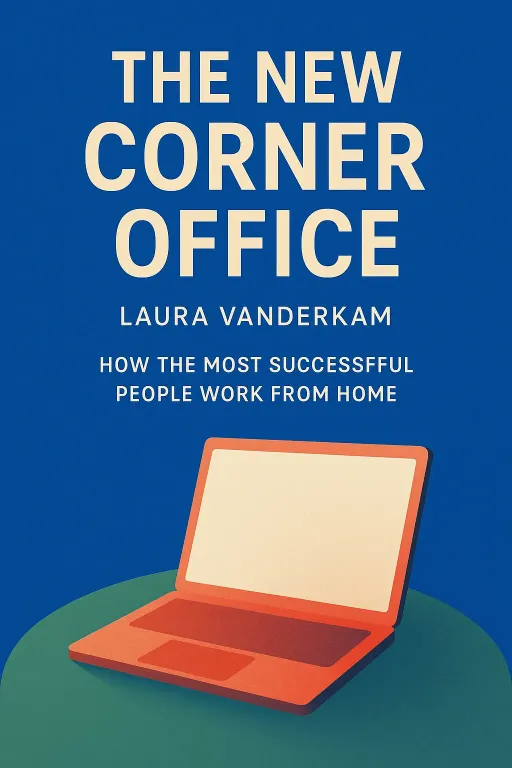
Nova: Exactly! That's the trap many fall into. But our guide today, Laura Vanderkam, argues that remote work, when approached strategically, can actually unlock unprecedented autonomy and impact. We’re diving into her highly regarded book, "The New Corner Office," which challenges the very foundation of how we think about work in this new era.
Atlas: That’s a great way to put it. Vanderkam is known for her deep dives into time management and productivity, isn't she? Her previous books, like "168 Hours" and "Off the Clock," really made people rethink how they spend their most precious resource. This isn't just a passing trend for her; she's been examining how successful people manage their lives, and especially their time, for years, making her uniquely positioned to tackle the nuances of remote work.
Nova: Absolutely. She's not just talking about you work, but you work, and crucially, you work. Today, we'll explore how to transform remote work from a mere temporary solution into a powerful strategic advantage for both personal well-being and career growth. First, we'll challenge the traditional clock-watching mentality and discuss how to embrace a truly results-oriented approach. Then, we'll shift to the practical strategies for optimizing your well-being, building effective remote teams, and maintaining your career ambition in this new landscape.
Atlas: That sounds like a much-needed perspective for anyone navigating this new world of work. I’m curious to hear how she breaks it down. Let’s get into it.
The Paradigm Shift - From Time-Based to Results-Oriented Work
SECTION
Nova: So, Vanderkam's core argument is pretty revolutionary for many workplaces: move from managing by time to managing by task. It’s a fundamental shift from "Are you at your desk for eight hours, visible and accounted for?" to "Are you delivering the agreed-upon, high-value outcomes?"
Atlas: Okay, but for many, that feels like a huge leap of faith, especially for managers who are used to seeing their team in person. How do you actually that in practice? What about the fear of looking like you're not working enough, or, on the flip side, never truly logging off because there's no clear end to the "task" as long as there's more to do?
Nova: Those are all legitimate, deeply human concerns, and Vanderkam addresses them head-on. It requires a significant mindset shift from both employees and leadership. She introduces us to managers who have successfully made this pivot, and their stories are quite illuminating. One compelling example is a project manager who used to have daily, often redundant, check-ins with his team. People would just report on what they were – you know, listing activities.
Atlas: Right, that classic "busywork theater" where everyone just lists what they've been up to, perhaps to prove they're active, but not necessarily progressing towards a clear goal.
Nova: Exactly. He shifted to weekly outcome-based reports. Instead of "I spent three hours on X, then two hours on Y," it became "I completed the first draft of the proposal, which was our agreed-upon deliverable for the week. It's now ready for review." Initially, there was significant resistance and anxiety. Some team members felt less "supervised," which ironically made them feel adrift or worried about their perceived effort. Others felt they were losing the reassuring structure of daily accountability.
Atlas: That makes perfect sense. It’s a profound psychological hurdle. If you’ve been conditioned your whole career to be seen working, to have your presence equate to productivity, then suddenly being judged purely on results can feel both liberating and, as you said, terrifying. How did he, or how does Vanderkam suggest, building that trust, especially when some might feel they're just being given more work with less oversight?
Nova: It’s a process built on two pillars: radical clarity and mutual trust. He did it by making expectations crystal clear, investing heavily in upfront planning, and defining success metrics collaboratively. Each week, the team collectively defined what "success" looked like for every project milestone. They used shared digital tools that tracked progress visually, focusing on completion statuses and key metrics, not just hours. Crucially, the manager also committed to micromanaging daily. He explicitly stated his trust in his team to manage their own schedules and methods, as long as those deliverables were met and communicated clearly.
Atlas: So basically you’re saying it's not about work, but about what success looks like, then letting people figure out the best, most efficient path to get there. That sounds like it could be a game-changer for individual creativity and autonomy, but it also demands a lot more intentionality from everyone involved.
Nova: It absolutely is. The team, once they adjusted to this new rhythm, reported feeling not just more empowered, but genuinely more productive and less stressed by the constant surveillance. They could integrate personal appointments, dedicated deep focus work blocks, or even a mid-day workout without guilt, as long as the work got done and the outcomes were achieved. The manager, in turn, saw a noticeable increase in the quality of work, more innovative problem-solving, and a significant decrease in unnecessary meetings. It wasn't just about efficiency; it was about effectiveness.
Atlas: That's incredible. It fundamentally redefines the "corner office" from a physical space of authority to a place of agency and impact, wherever you are. But I'm still wondering, how does this translate to optimizing your actual remote work life, beyond just the philosophical shift? How do you prevent the "always-on" culture from creeping in?
Strategic Remote Work - Optimizing Well-being, Teams & Ambition
SECTION
Nova: That naturally leads us to the second key idea: once you embrace results-oriented work, you then need to strategically design your remote life. This isn't about passively letting remote work happen you; it’s about actively shaping it to support your well-being, foster effective team collaboration, and fuel your career ambition. It’s an active choice.
Atlas: Many listeners feel remote work blurs lines, leading to burnout. Honestly, my Monday mornings sometimes feel like they bleed right into Sunday evenings. How does Vanderkam suggest optimizing well-being when your office is literally your home, and the lines between work and life are so easily erased?
Nova: She emphasizes creating clear boundaries, both physical and temporal. It’s about being incredibly intentional. For instance, creating a dedicated workspace, even if it's just a specific corner of a room, and treating it like your "office." When you leave that specific space, you're "leaving work." It creates a psychological distinction.
Atlas: So, it's like creating a mental commute, even if it’s just walking around the block before and after work, or performing a specific ritual to signal the start and end of the workday.
Nova: Exactly! Or even just changing your clothes when you "commute" from your bedroom to your home office. She also advocates for scheduling "deep work" blocks—uninterrupted time for your most important tasks—but equally important, scheduling "fun" and "recovery" time. It’s not about finding work-life balance as a rigid 50/50 split; it's about integrating life into your workweek in a way that fuels you and prevents depletion. Think of your week like a carefully crafted recipe for energy and output, not just throwing ingredients in a pot and hoping for the best. This includes digital detoxes, intentionally stepping away from screens.
Atlas: I can see how that would be a challenge for many, especially those with demanding roles. But what about building team cohesion and maintaining visibility for career growth? It's easy to feel "out of sight, out of mind" when you're not bumping into your boss in the hallway or grabbing coffee with colleagues.
Nova: That's a huge one, and it requires proactive effort. Vanderkam stresses that it's not enough to just do excellent work; you have to make your accomplishments visible. This means structured updates, yes, but also creating virtual "water cooler" moments—intentional, informal check-ins that mimic the casual connections of an office. These aren't mandatory meetings; they're opportunities for connection.
Atlas: So, it's about being deliberate. Not just waiting for someone to notice you, but actively showcasing your contributions and building those casual connections yourself. How do you do that without sounding boastful?
Nova: It’s about communication, not self-aggrandizement. She shares a great example of a fully remote marketing team that used asynchronous video updates every Monday morning. Instead of a long, often unproductive, synchronous meeting, each person recorded a short video about their key wins from the previous week and their top three priorities for the current week. It built camaraderie, kept everyone informed, and provided clear visibility for individual contributions without demanding synchronized time. Other strategies include sharing quick project summaries in a team channel, or even proactively requesting regular feedback sessions with your manager to discuss your contributions and career trajectory. It’s about owning your narrative.
Synthesis & Takeaways
SECTION
Nova: So, to bring it all together, Laura Vanderkam's "The New Corner Office" gives us a powerful, two-pronged framework for thriving remotely. First, embrace a truly results-oriented approach, trusting yourself and your team to deliver high-value outcomes rather than just putting in time. And second, strategically design your remote work life to optimize your personal well-being, foster strong team connection, and actively advance your career.
Atlas: That’s a powerful distinction. It sounds like it's less about you work, and infinitely more about intentionally you work, and critically, how you measure success. It really redefines productivity beyond just hours logged, shifting the focus to impact and autonomy.
Nova: It truly does. The "corner office" isn't a physical space anymore; it's a mindset of autonomy, impact, and strategic design, regardless of your location. It’s about taking control of your professional narrative and designing a life that truly works for you. It's not just about coping with remote work, but conquering it.
Atlas: That’s such a hopeful and empowering message for so many people who feel adrift in this new work landscape. For anyone listening, I want you to consider this: What's one small, intentional change you can make this week to shift from simply time-watching to actively value-creating?
Nova: This is Aibrary. Congratulations on your growth!