The Growth Trap: Why You Need Customer-Centricity, Not Just Growth Hacks.
Golden Hook & Introduction
SECTION
Nova: Atlas, I want you to give me a five-word review of a company that grew too fast and then imploded. Any company, any industry. No pressure, just five words.
Atlas: Oh, that's easy. "Rocket ship, no parachute, splat!"
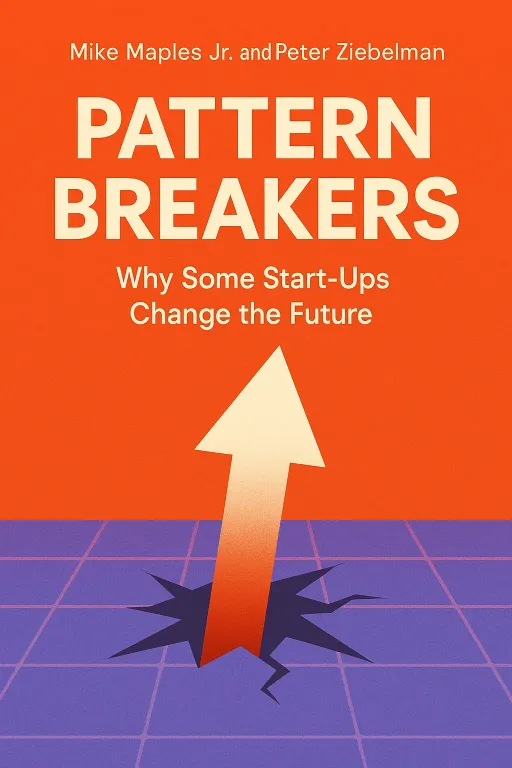
Nova: "Rocket ship, no parachute, splat!" I love that, it's visceral, it's tragic, and it perfectly encapsulates the core idea behind what we’re calling "The Growth Trap: Why You Need Customer-Centricity, Not Just Growth Hacks." We’re talking about a synthesis of crucial business philosophies today, echoing the wisdom of foundational thinkers like Rob Fitzpatrick, author of 'The Mom Test,' and Geoffrey A. Moore, who gave us 'Crossing the Chasm.' These aren't just trendy buzzwords; these are timeless principles that often get overlooked in the relentless pursuit of scale.
Atlas: Right? It's fascinating how many businesses still fall into this. You see the headlines, the massive valuations, and then poof—it's gone. It makes you wonder, what were they chasing?
Nova: Exactly. And that's where we dive in today. We'll explore the peril of chasing blind growth, then discuss how to unlock authentic customer insights, and finally, we'll focus on navigating the customer journey from early adopters to mainstream success. Because the cold fact, as our synthesized insights reveal, is that chasing growth without deeply understanding your customers is like building a house on sand. You need to know who you're serving and why, to ensure sustainable success. It's not about the speed of the rocket; it's about the stability of the launchpad.
The Peril of Blind Growth: Why Customer-Centricity is Non-Negotiable
SECTION
Atlas: That analogy of the house on sand really hits home. But wait, Nova, isn't growth always the goal? We're constantly told to scale, to acquire more users, to expand. What's the real trap here? What does "blind growth" even look like in practice?
Nova: That’s a brilliant question, Atlas, because on the surface, growth good. It’s intoxicating. Imagine a startup, let's call them "FlashyFeeds," a social media app. They secured massive funding, hired aggressively, and their daily active user count skyrocketed thanks to viral marketing stunts and a hefty ad spend. They were a rocket ship in every sense. Investors were thrilled. Everyone was high-fiving.
Atlas: Sounds like a dream, honestly.
Nova: It was, for about six months. FlashyFeeds was obsessed with one metric: user acquisition. They added features requested by a vocal minority, tweaked algorithms to boost engagement numbers, but they never truly understood their users were there in the first place, or more importantly,. They had a million users, but those users were only sticking around for a few weeks before churning out.
Atlas: So they were pouring water into a leaky bucket, just faster and faster.
Nova: Precisely! They focused on the —how to get more users—without asking the and the —who were these users, and why did they actually need FlashyFeeds? They built a house, a very flashy one, but without a solid foundation of genuine user need. They assumed if they just built features, or acquired users, the underlying problems would magically disappear. They never stopped to ask the fundamental questions that Rob Fitzpatrick brilliantly outlines in 'The Mom Test.'
Atlas: Okay, but how do you even you’re building on sand before the whole structure collapses? What were the early warning signs that FlashyFeeds missed?
Nova: The warning signs were in the of engagement, not just the quantity. High churn, features being adopted for a week and then abandoned, and a growing disconnect between what the product team users wanted and what users were doing. They were getting polite affirmations in surveys—"Oh yes, I'd definitely use a feature that lets me filter my feed by emoji!"—but those features went unused. They were chasing vanity metrics, not true value creation. The trap isn't growth itself; it's growth at any cost, decoupled from deep customer understanding. It’s a systemic issue, a cultural blind spot that prioritizes the illusion of progress over genuine impact.
Unlocking Authentic Customer Insights: Beyond Superficial Feedback
SECTION
Atlas: That makes perfect sense. If chasing growth blindly is a trap, how do we actually it? How do we build that solid foundation? Because it sounds like asking customers what they want isn't enough.
Nova: You've hit on the crux of it, Atlas. This is where 'The Mom Test' by Rob Fitzpatrick becomes absolutely indispensable. Most people, when you ask them about your idea, they want to be nice. They'll give you polite affirmations, tell you your idea is brilliant, and say they’d definitely buy it. But those are "polite lies," and they'll lead you straight to that house on sand.
Atlas: Wait, so you're saying I shouldn't ask customers if they'd buy my amazing new widget? That feels incredibly counterintuitive! My instinct is always to get that enthusiastic "yes!"
Nova: Exactly! And that's the trap. Fitzpatrick's core principle is profound in its simplicity: don't ask about future intentions or opinions. Instead, ask about. Ask about their, not your solutions. For example, a hypothetical car manufacturer, "FutureDrive," wanted to build the fastest electric sports car. They asked potential customers, "Would you buy a luxury EV that goes 0-60 in 2 seconds?" Of course, everyone said yes! It sounds cool.
Atlas: Naturally! Who wouldn't want that?
Nova: But then they applied 'The Mom Test' principles. They started asking, "Tell me about the last time you felt frustrated with your commute." "What's the most annoying part of your current car?" "How do you usually decide what route to take to avoid traffic?"
Atlas: And what did they find?
Nova: They found that while speed was a nice-to-have, the pain point for their target market wasn't just getting from A to B faster, but the of the journey itself. Traffic, parking, the mental load of driving. The underlying need wasn't a faster car; it was a more. This led them to invest heavily in self-driving capabilities, advanced navigation systems that predicted and avoided stress points, and even in-car wellness features, rather than just raw horsepower.
Atlas: So they shifted from "faster car" to "less stressful journey." That’s a powerful reframing. But how do you prevent those polite lies? What are some good versus bad questions?
Nova: A "bad" question is, "Do you think this new feature would be useful?" A "good" question is, "Tell me about a time you tried to do X, and what challenges did you face?" A bad question is, "Would you pay for this?" A good question is, "How much did you spend last month trying to solve problem Y?" The key is to focus on concrete, verifiable past actions and existing struggles, not hypothetical scenarios. It's about uncovering the truth through behavioral evidence, making the customer the expert on their own life, and you the curious anthropologist.
Navigating the Customer Journey: From Early Adopters to Mainstream Success
SECTION
Atlas: That's a fantastic toolkit for getting to the real customer pain points. So, once you know who your customer really is, the next challenge is how to keep serving them as you grow. Because the people who loved FlashyFeeds at the start might not be the same people who would make it successful long-term, right?
Nova: Precisely, Atlas. And that's where Geoffrey Moore's 'Crossing the Chasm' becomes incredibly insightful. Moore explains that there's a huge gap, a "chasm," between the early adopters—the innovators and visionaries who love new technology for its own sake—and the early majority, the pragmatists who want proven solutions, reliability, and ease of use. What works for the bleeding edge often alienates the mainstream.
Atlas: So the same product has to be sold differently to different people? Does that mean you need two different products?
Nova: Not necessarily two different products, but definitely a different approach, a shift in strategy. Think about early electric vehicles. Innovators loved them for the technology, the novelty, the environmental statement. They were willing to overlook range anxiety, limited charging infrastructure, and higher costs.
Atlas: My tech-enthusiast friends were all over that. They loved showing off the charging port.
Nova: Exactly! But for the early majority, those "pragmatists" Moore talks about, those were deal-breakers. They wanted a car that was just as convenient, reliable, and affordable as their gasoline car, but electric. The chasm was crossed not by making the car innovative, but by making it for everyday life. Companies had to build out charging networks, lower prices, and demonstrate long-term reliability. The messaging shifted from "look at this cool new tech!" to "this is simply a better, more convenient way to drive."
Atlas: So the focus changes from the "wow factor" to the "it just works" factor. That takes a lot of strategic empathy, understanding that different segments have fundamentally different needs and motivations. And I guess that's where our "tiny step" comes in, right? Before your next customer conversation, write down three things you absolutely need to learn from them, focusing on their problems, not your solutions.
Nova: Absolutely. That tiny step is a direct application of both Fitzpatrick and Moore. It forces you to be intentional about understanding the customer's world, whether they're an early adopter or a pragmatist. It's about going into every interaction with genuine curiosity, not just trying to validate your own assumptions. That's how you bridge chasms and build products that resonate deeply, ensuring a solid foundation for growth that actually lasts.
Synthesis & Takeaways
SECTION
Nova: Ultimately, Atlas, 'The Growth Trap' isn't just about avoiding failure; it's about building something truly meaningful and sustainable. It’s a profound shift from a transactional view of customers to a relational one. The ultimate trap isn't just failed growth, but the immense waste of resources, passion, and time spent building something that nobody truly needs or values in the long run. It elevates customer-centricity from a buzzword to the bedrock of any successful venture.
Atlas: Wow, that’s actually really inspiring. It’s not just about business, it’s about genuine connection and understanding. I imagine a lot of our listeners, whether they're launching a startup, managing a team, or even just trying to connect better with their friends and family, can take that tiny step. Before your next important conversation, write down three things you absolutely need to learn from the other person. Focus on their problems, their world, not your agenda. It's a simple act of curiosity.
Nova: It is. And it's a powerful one. Because when you truly understand, that's when you can truly serve. And that, my friends, is the only kind of growth that truly matters.
Atlas: Beautifully put, Nova.
Nova: This is Aibrary. Congratulations on your growth!