Stop Guessing, Start Validating: The Guide to Product-Market Fit
Golden Hook & Introduction
SECTION
Nova: Everyone says follow your passion, build your dream. But what if that passion is leading you straight to a concrete wall of customer indifference?
Atlas: Oh, I know that feeling. The entrepreneurial dream is often painted as this glorious, intuitive leap of faith. You have a brilliant idea, you build it, and then... crickets. That's a brutal wall.
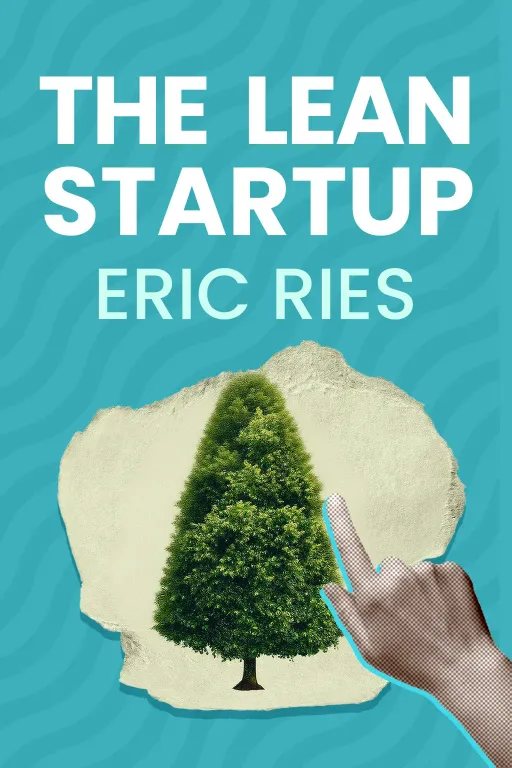
Nova: Exactly! And that, Atlas, is the cold, hard fact at the heart of so many promising ideas failing. It’s not about bad execution; it's about building something nobody truly wants. Today, we're diving into the essential antidote to that gut-wrenching experience with insights from two foundational texts: Eric Ries's game-changing and Rob Fitzpatrick's deceptively simple.
Atlas: I guess that makes sense. These aren't just business books; they're almost philosophical guides to understanding human needs. Ries, for instance, really shifted how we think about innovation from a big bang to a continuous cycle, and Fitzpatrick... well, he taught us that even our own mothers can't be trusted for honest feedback.
Nova: Well, not that they be trusted, but that their love might be a little too strong for objective product critique! Both authors fundamentally solve the problem of market uncertainty by providing a structured, almost scientific approach to discovery and validation. It's about moving from intuition to iteration.
The 'Build-Measure-Learn' Loop: A Scientific Approach to Innovation
SECTION
Nova: So, let's kick off with Eric Ries and his revolutionary concept: the Build-Measure-Learn feedback loop. Forget the image of the lone genius toiling away in a garage for years, only to emerge with a perfect, world-changing product. Ries argues that true innovation is a rigorous, iterative scientific process.
Atlas: Hold on. You’re saying the romanticized notion of the brilliant inventor is actually a trap? That sounds a bit out there. What does this "scientific process" actually look like in the messy world of startups?
Nova: It's all about the Minimum Viable Product, or MVP. The idea is to build the smallest possible version of your product that allows you to start the learning process. It's not about launching a finished product; it's about developing just enough to gather validated learning. Think of it like a scientist designing an experiment to test a single hypothesis.
Atlas: But wait, isn't "minimum viable product" just a fancy way of saying "ship a half-baked product"? I imagine a lot of our listeners struggle with that balance. How do you define 'minimum' without sacrificing quality or looking unprofessional?
Nova: That’s a brilliant question, and it’s where many misunderstand the MVP. The 'minimum' isn't about being shoddy; it's about focusing on the and stripping away everything else. Take Zappos, the online shoe retailer. Their legendary MVP story involved the founder simply taking photos of shoes in local stores and posting them online. When someone ordered, he'd go buy the shoe and ship it.
Atlas: Oh, I like that! So, he wasn't building a complex e-commerce platform with automated inventory and logistics. He was testing one core assumption: "Will people buy shoes online?"
Nova: Exactly! And the 'viable' part means it has to deliver enough value to attract early adopters and allow you to learn from them. Another classic is Dropbox. Before they even built their syncing technology, they created a simple explainer video demonstrating how it would work. That video went viral, proving there was immense demand before they wrote a single line of complex code.
Atlas: That makes sense. So it's not about making a bad product, it's about making a product to test a assumption. What's the biggest mistake people make when trying to implement the MVP concept?
Nova: The biggest mistake is often confusing an MVP with a "Minimum Product." They spend too much time polishing features that haven't been validated, or they try to build too much into that first version, fearing negative feedback. The whole point is to get feedback, learn, and adapt. It's about humility – accepting that your initial assumptions are probably wrong in some ways, and that's okay. The quicker you find out, the better.
The Art of Asking: Uncovering True Customer Needs
SECTION
Nova: Now, once you have your MVP, or even before you start building it, you need to talk to customers. And this is where Rob Fitzpatrick's becomes absolutely indispensable. It's about the art of asking questions that reveal true problems and needs, avoiding the polite but misleading feedback that can sink your venture.
Atlas: The Mom Test. So, literally, don't ask your mom? I mean, I love my mom, but she'd tell me my podcast idea was brilliant even if it was just me mumbling into a tin can. What are the common pitfalls when talking to potential customers?
Nova: You’ve hit the nail on the head! The central premise is that everyone, especially your mom, will lie to you if they think it'll make you happy. They'll say "that's a great idea!" or "I'd totally buy that!" but their actions, or lack thereof, tell a different story. The pitfalls come from asking leading questions, questions about future hypothetical behavior, or questions that focus too much on your idea rather than their problems.
Atlas: Okay, but how do you get past the polite smiles and get to the truth? It sounds like you need to be a detective. Give me an example of a "bad" question versus a "good" question.
Nova: Absolutely. A bad question would be, "Do you think my new app, which helps you track your daily water intake with gamified rewards, is a good idea?" Almost everyone will say yes. A better question, following the Mom Test principles, would be: "Tell me about the last time you tried to increase your water intake. What was difficult about it? What did you try that didn't work?"
Atlas: Wow, that’s such a fundamental shift. You're not asking them to validate; you're asking them to talk about. So, the rules are: talk about their life, not your idea; talk about past behavior, not future predictions; and listen way more than you talk.
Nova: Precisely. It's about gathering facts about their lives and problems, not opinions about your solution. You want to hear stories, not just "yes" or "no." For instance, if you're building a new productivity tool, don't ask, "Would you pay for an app that organizes your tasks?" Instead, ask, "How do you currently manage your tasks? What's the most frustrating part of your current system? Have you ever tried to solve that problem, and if so, how did it go?"
Atlas: That makes me wonder, what if you don't even have a problem to solve yet, just a vague idea? How do you even start with the Mom Test then?
Nova: You start by observing and listening to people in the area you're interested in. If you're passionate about health tech, you might just talk to people about their daily health routines, their struggles with fitness, their nutrition challenges. You're not pitching anything; you're just trying to understand their world. The problems will emerge naturally if you're truly listening. It’s about building empathy before you build a product.
Synthesis & Takeaways
SECTION
Nova: So, bringing Eric Ries and Rob Fitzpatrick together, what we see is a powerful, integrated philosophy. Both are about radically reducing uncertainty, eliminating guesswork, and grounding your ideas in the undeniable reality of what customers actually need and want. It's a call for humility, scientific rigor, and deep, empathetic listening.
Atlas: I can definitely relate. It's easy to fall in love with your own ideas, but these insights really force you to confront the market, not just your imagination. So, for our curious listeners who are brimming with ideas, what's one tiny, tangible thing they can do this week to stop guessing and start validating?
Nova: Here's your tiny step, listeners: identify one core assumption about your current idea – just one. Maybe it's "people want X feature," or "people will pay Y for this." Then, design a tiny, cheap experiment to test it with potential users this week. This could be as simple as crafting three "Mom Test" questions and having a conversation with five people who fit your target audience.
Atlas: That’s a perfect example. It's not about a grand launch; it's about that first, small, deliberate step to gather real data. It's about moving from "I think" to "I know."
Nova: And that shift, Atlas, is where true innovation happens. It's where you build with purpose, reduce risk, and ultimately create something truly valuable. It's about being a learner first, and a builder second.
Atlas: Honestly, that’s actually really inspiring. It frames the entire entrepreneurial journey not as a gamble, but as an ongoing quest for truth.
Nova: Absolutely. It’s about building a future based on validated learning, not just hopeful wishes.
Atlas: This is Aibrary. Congratulations on your growth!