Stop Guessing, Start Building: The Guide to Product-Market Fit
Golden Hook & Introduction
SECTION
Nova: Your most brilliant, groundbreaking idea? The one you've poured your heart and soul into? It's probably doomed to fail. Not because it's bad, but because of one critical, often overlooked mistake.
Atlas: Whoa, Nova! That's a pretty bold opening. You're telling me all that passion, all that ingenious thought, could just… fizzle out? That's going to hit home for anyone trying to build something meaningful. How can you be so sure?
Nova: Because, Atlas, the world is littered with what I call 'brilliant failures.' Ideas that were fantastic on paper but never connected with real user needs. And that's exactly what we're tackling today, drawing insights from a powerful guide that synthesizes foundational works: "Stop Guessing, Start Building: The Guide to Product-Market Fit." It's a deep dive into the systematic process of finding product-market fit.
Atlas: That's fascinating. So, we're talking about more than just a business book here, right? We're talking about a way to build anything with genuine impact.
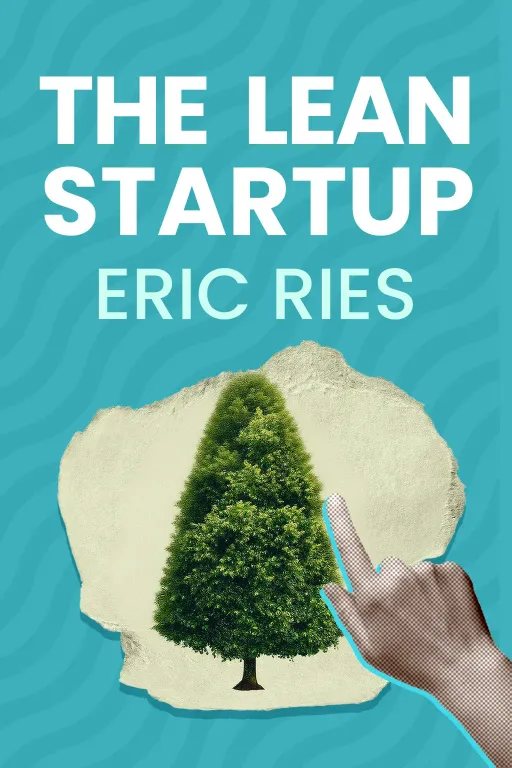
Nova: Absolutely. Take Eric Ries, for instance, whose 'Lean Startup' principles are central to this. He came from the tech startup world, witnessing firsthand the colossal waste of resources, time, and emotional energy poured into products nobody wanted. He realized the traditional approach was fundamentally flawed. So, he championed a systematic, scientific method for building, measuring, and learning. It’s about building a solid foundation, not just hoping for the best.
Atlas: That makes perfect sense. For anyone who values competence and wants to build lasting change, avoiding that kind of wasted effort is crucial.
The Silent Killer of Innovation: Why Brilliant Ideas Fail
SECTION
Nova: Exactly. And that brings us to our first core idea: the silent killer of innovation, which is simply guessing. We fall in love with our ideas. We spend months, sometimes years, perfecting them in a vacuum. We assume we know what people want, what problems they have, what solutions they'll embrace.
Atlas: But how do you you're guessing? Isn't some intuition necessary for innovation? I mean, great architects don't just ask people what kind of building they want; they have a vision, right?
Nova: That's a great point, Atlas. It's not about stifling vision, but grounding it in reality. The problem arises when intuition replaces investigation. Let me give you a classic, albeit hypothetical, example: 'The Grand App That No One Needed.' Imagine a team of brilliant developers, self-proclaimed fitness fanatics, who decide to build the ultimate, most comprehensive workout tracking app. They spend a year coding, designing, perfecting every pixel. They add every feature they a fitness enthusiast could ever want: nutrition tracking, social sharing, AI-powered workout generation, integration with every wearable device under the sun.
Atlas: Sounds impressive on paper! I can almost picture the slick launch event.
Nova: It was slick! They poured millions into marketing, got great press. But when users downloaded it, they found it overwhelming. Too many features, too complex to navigate. They people wanted everything, when in reality, most just wanted a simple, reliable way to log their runs. The app crashed and burned, not because it wasn't brilliant, but because it was built on a mountain of unvalidated assumptions about user behavior and preferences. The emotional and financial cost was immense.
Atlas: Wow, that's kind of heartbreaking. For someone trying to build lasting change, whether it's a product or even a new habit, getting caught in that assumption trap feels like a huge risk to your self-worth. You invest so much, and then it just… fails. How do you avoid that feeling of building on quicksand?
Nova: That's where the systematic approach comes in. The core problem is that we often mistake polite affirmation for genuine interest. People tend to be nice, especially to someone passionate about their idea. They'll say, "Oh, that sounds interesting!" or "I'd totally use that!" But those aren't commitments; they're just polite responses.
Atlas: I know that feeling. I've definitely pitched ideas and gotten enthusiastic nods, only to realize later those nods meant very little in terms of actual commitment. So, how do we get past the polite nods and into actual validation?
Building with Conviction: The Systematic Path to Product-Market Fit
SECTION
Nova: The antidote to guessing isn't being less creative; it's about being more deliberate and systematic. This brings us to our second core idea: building with conviction through validated learning. This is where the insights from "The Lean Startup" and "The Mom Test" become so powerful. They fundamentally solve the problem of uncertainty by providing a structured approach to validate your assumptions and build products people truly want.
Atlas: Okay, so if guessing is the problem, what's the antidote? It sounds very systematic, but where's the 'self-worth' in testing assumptions? I'm curious how these tactical steps actually build inner conviction.
Nova: That's the beautiful part, Atlas. It builds conviction, not just hopeful conviction. "The Lean Startup" introduces the 'build-measure-learn' feedback loop. Instead of building the 'Grand App,' you build a Minimum Viable Product, an MVP. It's the simplest version of your idea that still allows you to learn from real users. You launch it, you measure how people interact with it, and then you learn what works and what doesn't. Then you iterate. It's about being nimble, not rigid.
Atlas: So, it's like building a small prototype of your confidence first, seeing if it holds up, and then strengthening it, rather than trying to build a skyscraper from day one without any foundation testing.
Nova: Exactly! And Rob Fitzpatrick's "The Mom Test" provides the secret sauce for the 'measure' and 'learn' part, especially when it comes to talking to potential customers. He teaches you how to ask questions that reveal honest insights, not just polite affirmations. Because your mom, bless her heart, will always tell you your idea is brilliant, even if it's not.
Atlas: Oh, I see! So, it's about getting past the 'nice answers' and into the actual truth. But how do you ask questions that don't just get you polite answers, especially when you're emotionally invested in your idea?
Nova: Fitzpatrick's core principle is to ask about their past behavior, not their future intentions. Don't ask, "Would you buy an app that tracks workouts?" Ask, "Tell me about the last time you tracked a workout. What did you use? What was frustrating about it?" You're looking for concrete facts, not opinions or hypothetical promises. You want to understand their existing problems and how they currently solve them.
Atlas: That's a great way to put it. So, you're not leading the witness, you're observing the scene. Can you give me an example of how this plays out in a real-world scenario, maybe something more tangible than an app?
Nova: Of course. Let's use a contrasting example to our 'Grand App' – 'The Neighbourhood Bakery That Listened.' A small bakery owner wants to introduce a new line of artisanal sourdough. Instead of just baking 100 loaves and hoping for the best, she bakes a few small batches and offers samples, but here's the key: she doesn't ask, 'Do you like my sourdough?' That's the 'Mom Test' trap. Instead, she asks, 'When was the last time you bought artisanal bread? What did you look for? What was the price point that made you hesitate?' Or even better, 'If you had a special occasion coming up, what kind of bread would you serve, and why?'
Atlas: I see! She's getting at their actual habits, their values, their pain points around bread, not just whether they think bread is good.
Nova: Precisely. And she learns that while her sourdough is delicious, people in her neighborhood actually prioritize convenience and a slightly sweeter, softer bread for everyday sandwiches, even if they occasionally splurge on artisanal. She adapts, perhaps offering smaller, pre-sliced sourdough loaves alongside her traditional ones, and also introducing a line of gourmet sandwich breads. She's not guessing; she's building based on validated learning. This iterative process, fueled by honest feedback, builds genuine competence and, yes, inner conviction. You're no longer hoping; you're because you've tested and learned.
Synthesis & Takeaways
SECTION
Nova: So, what we're really talking about here is a profound shift in mindset. It's about moving from the anxiety of unvalidated ideas to the clarity and confidence that comes from systematically testing your assumptions. This isn't just about building better products; it's about building a better, more resilient approach to any project, any goal, and ultimately, building a stronger sense of self-worth based on actual, validated progress.
Atlas: That's actually really inspiring. It connects the dots between tactical business advice and what it means to build genuine inner conviction. It's less about avoiding failure and more about learning rapidly and reducing the emotional stress of uncertainty. Each small, tested step reinforces your foundation.
Nova: Exactly. It replaces the exhausting cycle of guessing and hoping with the empowering rhythm of building, measuring, and learning. It's a journey of continuous validation, where every piece of feedback, even negative, becomes a brick in your confident foundation.
Atlas: That's a powerful image. So, for our listeners who are aspiring architects of their own lives and projects, what's a small step they can take this week to stop guessing and start building with conviction?
Nova: Here's your challenge: identify one core assumption about any project, goal, or even personal habit you're trying to build. Then, design a simple, low-cost experiment to test that assumption this week. It could be as simple as asking one direct, 'Mom Test'-approved question to a potential user, or trying out a tiny, minimal version of your idea. Start small. Learn fast.
Atlas: That's actionable, and it aligns with building that foundation, one brick at a time. I love that.
Nova: This is Aibrary. Congratulations on your growth!