From Data to Deep Meaning: Uncovering Qualitative Gold
Golden Hook & Introduction
SECTION
Nova: Most people think they're great at listening. They nod along, they say 'uh-huh.' But what if I told you that 90% of the feedback you're getting, even from your most enthusiastic customers, is actually useless and actively misleading you?
Atlas: Whoa. That's a bold claim, Nova. I mean, isn't feedback better than no feedback? How could something people genuinely offer be actively misleading?
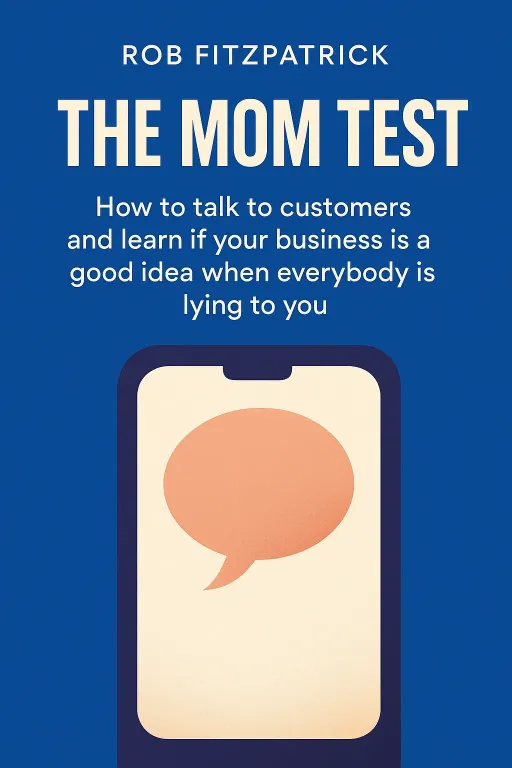
Nova: It's a fantastic question, Atlas, and it's precisely what we're diving into today. We're exploring a book that utterly reshaped how I think about listening and understanding people: The Mom Test: How to Talk to Customers & Learn if Your Business is a Good Idea when Everyone is Lying to You by Rob Fitzpatrick. What’s fascinating is that Fitzpatrick didn't write this as some ivory tower academic treatise. He wrote it as a raw, honest-to-goodness survival guide, born from his own painful experiences building startups and getting absolutely terrible, sugar-coated advice.
Atlas: Right. So this isn't just theory for him. He lived the pain of building something based on what people they wanted, only to find out they didn't really want it at all. I imagine a lot of our listeners, especially those acting as strategic architects, can relate to the frustration of pouring resources into a solution that ultimately doesn't solve a real problem.
Nova: Exactly. And that's where the real qualitative gold lies. It's not in the 'what' people say they want, but the 'why' behind what they.
Unlocking the 'Why' with The Mom Test
SECTION
Nova: So, why is traditional feedback so often useless? It boils down to a few core human truths. People want to be nice. They don't want to hurt your feelings. They often lie to themselves about their own intentions, or they simply don't know what they actually want until they see it. Imagine you've got this brilliant, complex app idea. You show it to your friends, your family, your potential customers. They all say, "Oh my gosh, that's amazing! I'd totally use that!"
Atlas: Yeah, I've been there. You walk away feeling like a genius, ready to conquer the world. But then, crickets. No downloads, no purchases.
Nova: Precisely. That's the trap. You've gotten positive feedback, but it's not feedback. It's polite enthusiasm. And this is where The Mom Test comes in. It's not about trying to trick people, Atlas, but about asking better questions that bypass that natural human tendency to be nice or to hypothesize about a future that never arrives.
Atlas: That makes sense. For our listeners who are ethical innovators, the idea of "tricking" someone might feel a bit off. But you're saying it's more about building trust through genuine inquiry, right? Getting to the actual truth of their experience?
Nova: Absolutely. It's about designing your questions to uncover past behaviors and real problems, not just opinions. The core principles are surprisingly simple: First, talk about their life and their problems, not your idea. Second, ask about specifics in the past, not generics or hypotheticals in the future. Third, listen more than you talk. And fourth, this is a big one: don't ask if they'd buy it; ask if they've tried to solve this problem, and how much they for a solution, either in time, money, or effort.
Atlas: That's a great way to put it. That last point resonates deeply with anyone trying to measure impact. For a strategic architect, knowing if someone has actually put skin in the game to solve a problem is far more valuable than a hypothetical "yes, I'd buy that." But what if I to validate a new product idea? How do I use this framework without revealing my hand too much, or influencing their answers?
Illuminating Case Study: A Real-World Application of The Mom Test
SECTION
Nova: That's a fantastic real-world challenge, and it brings us to a classic scenario. Let's say a founder—we'll call her Sarah—is convinced she has the next big thing: an AI-powered personal assistant for busy parents that handles everything from school pickups to dinner planning. She talks to dozens of parents, and they all say, "Oh, I need that! My life is chaos!" Sarah is ecstatic. The cause of her initial positive outlook? Her leading questions and the parents' natural desire to be polite and supportive.
Atlas: So far, this sounds like every startup story ever told.
Nova: Right? But then Sarah reads The Mom Test. She shifts her approach. Instead of, "Would you use an AI assistant for planning?" she starts asking, "Tell me about the last time you felt overwhelmed by scheduling. What did you do to solve it? Did you hire a babysitter? Did you use a spreadsheet? Did you just give up and order pizza?"
Atlas: Oh, I see. She's not asking about solution, she's asking about existing problem and how they cope.
Nova: Exactly. And the process of asking these Mom Test questions revealed something crucial. While parents they were overwhelmed, their past behaviors showed they rarely spent money or significant effort on solving the problem in a structured way. They cobbled together free apps, relied on family, or simply accepted the chaos. The outcome? Sarah realized the pain wasn't strong enough for parents to pay for a complex, premium solution. The problem was real, but their willingness to invest in a dedicated solution wasn't. This led her to pivot, focusing instead on a much simpler, free tool that integrated with existing family communication apps, which had much higher adoption because it fit into existing behaviors.
Atlas: Wow, that's a tough pill to swallow, but incredibly valuable. So it's about validating the, not just the? For our listeners who are constantly dealing with data, how do they know when they're asking a "Mom Test" question versus a "bad" question? Can you give us a quick litmus test?
Nova: Absolutely. Here's a simple litmus test: if you can answer 'yes' or 'no' to your question without having to recall a specific memory or past action, it's probably a bad, leading question. If it forces you to think about what you last Tuesday, or last month, that's a good question. It’s about anchoring in reality.
Synthesis & Takeaways
SECTION
Nova: Ultimately, The Mom Test is a profound reminder that the true gold in qualitative research isn't in what people they want, but in what they and. It's about uncovering the truth that lies beneath pleasantries and good intentions, the truth that will actually drive behavior. It moves you from understanding the 'what' to truly understanding the 'why.'
Atlas: So, for anyone trying to build something meaningful, or just trying to understand human behavior, this isn't just a tactic; it's a fundamental shift in how you approach understanding people. It's about building strong brands and ethical practices by truly knowing your audience, not just hearing what they think you want to hear.
Nova: That's why the tiny step from this book is so powerful: apply Mom Test principles to your next customer conversation. Focus on past behavior and concrete details. It's about building trust by genuinely listening, not just hearing. And that's where true impact comes from, whether you're an insight seeker, a strategic architect, or an ethical innovator.
Atlas: It sounds like a simple shift, but one that could save years of wasted effort and build much stronger connections. I encourage everyone to try it out in their next interaction and see what surprising truths you uncover.
Nova: This is Aibrary. Congratulations on your growth!