Unlocking Your Deepest Potential: The Brain-Gut Connection You Can't Ignore
Golden Hook & Introduction
SECTION
Nova: We often talk about 'mind over matter,' but what if 'matter' – specifically, the matter in your gut – has far more 'mind' over you than you think?
Atlas: Whoa. That’s a bold claim, Nova. I mean, we're taught the brain is the command center, right? The gut just… digests. Are you saying my breakfast burrito has a say in my mood?
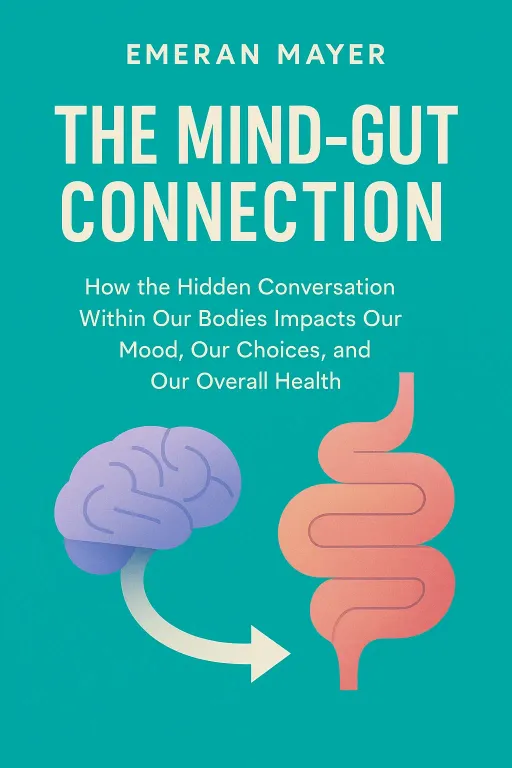
Nova: Absolutely, Atlas. And it's not just your mood. We're talking about a fundamental, bidirectional conversation happening constantly between your brain and your gut. Today, we're cracking open two seminal works that fundamentally shift this perspective: David Perlmutter's and Emeran Mayer's. What’s truly fascinating is that Mayer, a leading gastroenterologist, has dedicated decades to researching this very axis, bringing clinical rigor to this often-overlooked field. He's not just theorizing; he's showing us the science behind this incredible internal dialogue.
Atlas: Okay, so this isn't just some wellness fad. This is deeply researched. But if this connection is so vital, why does it feel like such a blind spot for so many of us? We separate brain health from physical health, almost instinctively.
The Hidden Highway: Unveiling the Brain-Gut Axis
SECTION
Nova: Exactly. That separation is the blind spot. We treat symptoms like anxiety, brain fog, or even chronic disease, but we often miss the underlying system. Imagine your body as a sprawling, hyper-connected city. Your brain is the mayor’s office, handling all the big decisions, the strategic planning, the complex thought. Your gut, on the other hand, is the city's entire infrastructure management system – resource allocation, waste disposal, even some manufacturing.
Atlas: So, the gut is like the city's operations department, processing all the incoming goods, managing the energy grid. I get that. But how do these two, the mayor and operations, communicate beyond just a casual phone call?
Nova: That’s where the "hidden highway" comes in. It's not just a phone call; it's a high-speed, multi-lane data network. Think of the vagus nerve, for instance, as a direct fiber-optic cable. But it's also communicating through neurotransmitters – like serotonin, which 90% of is produced in your gut – hormones, and even immune signals. When the gut's operations are running smoothly, the mayor's office gets clean, reliable data. Clear decisions, stable mood, sharp focus.
Atlas: I see. So, if the operations department is sending faulty reports or is in disarray, the mayor's office – my brain – starts making bad decisions, feeling overwhelmed, or just being generally sluggish. That makes me wonder, what are some of the immediate, tangible effects of this "bad data" from the gut?
Nova: Well, consider the common experience of "brain fog." It's not just about lack of sleep. It can be a direct result of inflammation in the gut, which then sends inflammatory signals to the brain, disrupting cognitive function. Or anxiety – many people with irritable bowel syndrome, for example, also experience heightened anxiety or depression. It's not a coincidence; their gut is literally signaling distress to their brain.
Atlas: That’s fascinating. From a strategic planning perspective, reliable data is paramount. If our internal systems are compromised and sending unreliable signals, how can we possibly plan for sustained mental and physical performance? It's like trying to build a skyscraper on a shifting foundation.
Nova: Precisely. This connection isn't just about avoiding discomfort; it's about optimizing your core operating system for peak function. It highlights that true mental clarity and resilience aren't just cultivated through sheer willpower; they're deeply intertwined with our internal biology.
Rewiring for Resilience: Optimizing the Gut for Peak Performance
SECTION
Nova: And that naturally leads us to the second key idea: if we understand this hidden highway, we can strategically optimize it. It's not about fixing a single broken part, but about cultivating a thriving internal ecosystem. Perlmutter and Mayer both emphasize the microbiome – the trillions of bacteria, fungi, and other microbes living in your gut – as the true orchestrator of much of this communication.
Atlas: So, my gut isn't just a processing plant; it's a bustling, diverse ecosystem. And just like any ecosystem, it needs the right conditions to flourish. What are the modern threats to this internal rainforest? Because I imagine our fast-paced lives aren't exactly doing it any favors.
Nova: You're spot on. Modern diets, for instance, with their reliance on processed foods, high sugar content, and lack of diverse plant fibers, are like clear-cutting that rainforest and replacing it with a monoculture. Antibiotics, while life-saving, can also indiscriminately wipe out beneficial species. The result is a less diverse, less resilient microbiome, which then struggles to produce those vital neurochemicals and maintain a healthy gut barrier.
Atlas: That sounds like a serious design flaw in our modern approach to health. As someone who thinks about building robust, resilient systems, I’m curious about the "materials" we need to rebuild this. What are the key design principles for a resilient gut, especially for someone in a high-pressure environment who needs consistent, peak performance?
Nova: It really comes down to three main pillars, often highlighted by both Perlmutter and Mayer. First, diet: emphasizing whole, unprocessed foods, abundant in diverse plant fibers, and incorporating fermented foods like kimchi or sauerkraut. These act as both fuel and diverse new "residents" for your gut. Second, reducing exposure to things that harm the microbiome, like unnecessary antibiotics or environmental toxins. And third, managing stress, because the brain-gut axis is a two-way street; chronic stress directly impacts gut health.
Atlas: So it's not a quick fix, it's a long-term strategic investment in our internal infrastructure. I imagine for someone looking to make lasting contributions, whether in their field or through mentorship, this foundational health is non-negotiable. It’s not just about avoiding illness; it's about building a robust platform for sustained mental acuity and emotional stability.
Nova: Exactly. It's about proactive resilience. It's moving beyond simply reacting to symptoms and instead architecting a biological system that supports your highest cognitive and physical potential. It’s an ongoing strategy, not a one-time project. Think of it as continuous optimization for your most valuable asset: your brain and body acting in concert.
Synthesis & Takeaways
SECTION
Nova: So, what we've really uncovered today is that the brain-gut axis isn't just a scientific curiosity; it's a profound strategic lever. Recognizing this hidden highway and then actively working to optimize your gut health is perhaps one of the most powerful things you can do to enhance mental clarity, mood stability, and overall resilience.
Atlas: It fundamentally shifts how I'd approach planning for sustained performance. It's not just about intellectual strategy or willpower; it’s about ensuring the foundational biological systems are operating optimally. It means the 'architect' in me needs to pay as much attention to my internal blueprint as I do to external projects.
Nova: And that's the profound insight: true mastery of self and strategy begins not just in the boardroom or the library, but deep within our own biology. It's a reminder that our most cutting-edge thinking, our most impactful contributions, are utterly dependent on the quiet, complex symphony playing out in our gut.
Atlas: That gives me chills, honestly. It’s a powerful call to action, to look inward and understand that our internal ecosystem is paramount. For anyone listening, I encourage you to consider what small, strategic shifts you can make to nurture that vital connection. How might understanding your own brain-gut axis change your daily planning and long-term vision?
Nova: A fantastic question to ponder. This is Aibrary. Congratulations on your growth!