The Forgotten Connection: Why Your Gut is Your Second Brain (and How to Listen)
Golden Hook & Introduction
SECTION
Nova: What if I told you that the butterflies in your stomach aren't just a metaphor for nerves, but a very real, biochemical conversation happening between your gut and your brain, dictating your mood, your focus, even your sense of self? It’s a literal gut feeling, but far more profound than we ever imagined.
Atlas: Whoa, really? That's quite a claim, Nova. I mean, we talk about 'gut feelings' all the time, but you’re suggesting it’s less a vague intuition and more a direct line? For someone who seeks depth, that’s a fascinating reframe.
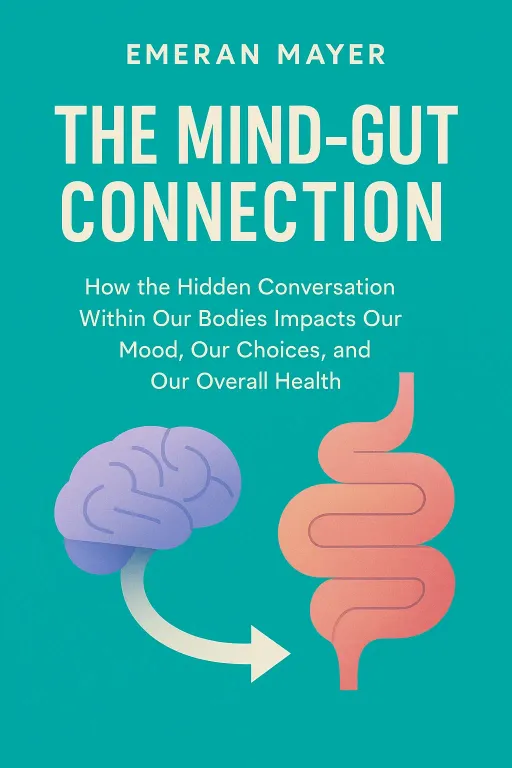
Nova: Absolutely, Atlas. And it’s not just a philosophical idea; it’s cutting-edge science, explored brilliantly in books like by Emeran Mayer and by David Perlmutter. What's particularly compelling about Mayer's work is his journey. He started his career as a traditional gastroenterologist, but became so fascinated by the neurological connections that he pioneered research bridging these two seemingly disparate fields. He essentially showed us the scientific receipts for this profound link.
Atlas: That’s amazing. I imagine a lot of our listeners, especially those who dissect complex systems, might wonder how two such distinct areas of the body could be so intimately connected. It sounds like a new frontier in understanding human health.
Nova: Precisely. And today, we’re going to dive deep into that. First, we'll explore the intricate biological dialogue between our gut and brain, then we'll discuss practical, actionable steps listeners can take to nurture this vital connection for better health and mood.
The Intricate Two-Way Street: How Gut and Brain Communicate
SECTION
Nova: So, let's pull back the curtain on this 'conversation.' What exactly is this two-way street between our gut and brain? Think of it like a superhighway, a constant, bustling exchange of information. The most famous route is the vagus nerve, a massive cranial nerve that runs all the way from your brainstem down to your abdomen. It’s like the internet cable between your two command centers.
Atlas: Okay, so a biological internet cable. I can see that. But what kind of 'information' are we talking about? Is it just a simple signal, or something more complex?
Nova: It's incredibly complex. Your gut, particularly your gut microbiome – the trillions of bacteria living there – actually produces many of the same neurotransmitters that your brain does. We're talking about serotonin, dopamine, GABA… up to 90% of your body's serotonin, for example, is produced in your gut. These aren't just idle chemicals; they directly influence your mood, your stress levels, even your cognitive function.
Atlas: Whoa. So the 'butterflies' aren't just nerves, they’re literally little microbial messengers dictating our emotional state? That's incredible. But for someone who's used to dissecting complex systems, how does this actually? Is it like a direct phone line, or more of a nuanced, atmospheric influence that shapes our brain chemistry?
Nova: It’s both, actually. The vagus nerve provides that direct phone line, transmitting signals bi-directionally. But the microbes also produce metabolites and other compounds that enter the bloodstream and can cross the blood-brain barrier, creating a more 'atmospheric' or systemic influence. Emeran Mayer’s research, for instance, has shown how specific gut bacteria can influence the activity of genes involved in stress responses, making us more or less resilient to anxiety.
Nova: Let me paint a picture. Imagine a high-stakes executive preparing for a critical presentation. They've been feeling unusually anxious, despite meticulous preparation. It’s not just typical nerves; their gut microbiome, perhaps disrupted by recent stress, a few too many late-night processed meals, and lack of sleep, is sending distress signals up that vagus nerve. This imbalance is influencing neurotransmitter production, amplifying their anxiety, making focus incredibly difficult, and even affecting their memory recall.
Atlas: I imagine a lot of our listeners, especially those in high-pressure roles, feel that exact kind of unexplained anxiety. So, what you're saying is, their gut isn't just reacting to the stress, it's actually to it? That fundamentally shifts how we understand stress and anxiety. It means we’ve been looking in the wrong place for solutions.
Nova: Exactly. It's a physiological response originating from within, from this forgotten connection. It’s not just 'in their head'; it's a very real, measurable biological process involving their gut.
Listening to Your Gut: Practical Steps for Holistic Well-being
SECTION
Atlas: That's a profound shift in perspective. If our gut is this influential, then the next logical step for our truth-seeking listeners is: what do we about it? How do we start 'listening' to this second brain and nurturing it for better mental and emotional outcomes?
Nova: That’s where David Perlmutter’s work in becomes so valuable. He focuses heavily on actionable dietary advice. It's not about radical deprivation, but thoughtful cultivation. A cornerstone is incorporating fermented foods into your diet. Think kimchi, sauerkraut, kefir, kombucha. These are rich in beneficial probiotics, which are essentially live, friendly bacteria that can help repopulate and diversify your gut microbiome.
Atlas: Okay, so this isn't about some radical detox, but more about thoughtful cultivation. For someone who dissects information, what's happening on a microbial level when we introduce these foods? Are we just feeding the 'good guys,' or is there a more complex ecological shift happening?
Nova: It's an ecological shift, a rebalancing. You're not just adding 'good guys'; you're creating an environment where a diverse range of beneficial bacteria can thrive. Perlmutter also stresses the importance of prebiotics – the dietary fiber that acts as food for these good bacteria. You find them in foods like onions, garlic, asparagus, bananas, and whole grains. And crucially, he advocates for reducing processed foods, refined sugars, and artificial sweeteners, which can feed harmful bacteria and disrupt the delicate balance.
Nova: Let me share another illustrative scenario. Consider a young professional who struggled with persistent brain fog, afternoon energy crashes, and subtle mood swings, impacting their analytical work and focus. They decided to make a conscious effort to incorporate a small serving of fermented vegetables, like kimchi, with their lunch daily, and consciously reduced sugary snacks and highly processed foods.
Atlas: That sounds like a manageable step. But for someone who values tangible results, what kind of change did they observe?
Nova: Over a few weeks, they noticed not just improved digestion – which is often the first sign – but a subtle yet consistent lift in mood. Their afternoon brain fog became less frequent, they had sharper focus during complex tasks, and a greater sense of emotional stability. Their gut, once a source of internal chaos, became a foundation for mental clarity and resilience. It wasn't a magic bullet, but a gradual, profound shift.
Atlas: That resonates with the idea of connecting eras – how ancient practices like fermentation are now validated by cutting-edge neuroscience. But for an analyst, the question becomes: how quickly can we expect to see these shifts? Is this a long-term strategy, or are there immediate benefits that can keep us motivated?
Nova: It’s a long-term strategy, absolutely, but you can feel subtle shifts relatively quickly. Improved digestion might be noticed within days or weeks. Mood and cognitive benefits often take a few weeks to a few months to become truly noticeable, because you're rebuilding an ecosystem. It’s like tending a garden; you don’t plant a seed and get a forest overnight, but you do see sprouts. Consistency is key.
Synthesis & Takeaways
SECTION
Nova: So, what we're really talking about here is a profound paradigm shift. Our gut isn't just about digesting food; it's a foundational pillar of cognitive and emotional health. Nurturing it isn't a fad; it's a fundamental act of self-care with cascading benefits for mental clarity, stress resilience, and overall well-being. It’s about empowering ourselves from within, understanding that our internal ecosystem directly shapes our external experience.
Atlas: It makes you wonder, doesn't it, how many of our daily struggles could be rooted in this forgotten connection? For our listeners, especially those driven by a quest for truth and informed perspectives, this offers a tangible pathway to understanding and improving their own holistic health. What tiny, gut-friendly habit could you start today that might just transform your emotional and mental landscape?
Nova: That’s the core question. Start small, be consistent, and listen to your body.
Atlas: We'd love to hear your insights and experiences. Share your thoughts with us, and let's keep this conversation going about how our understanding of the gut is reshaping our view of holistic health and personal well-being.
Nova: This is Aibrary. Congratulations on your growth!